A newly hired salesperson who immediately produces impressive sales numbers and brings in a stream of customers might seem like a welcome addition to a dealership. But police investigators say it can also be a warning sign worth a closer look.
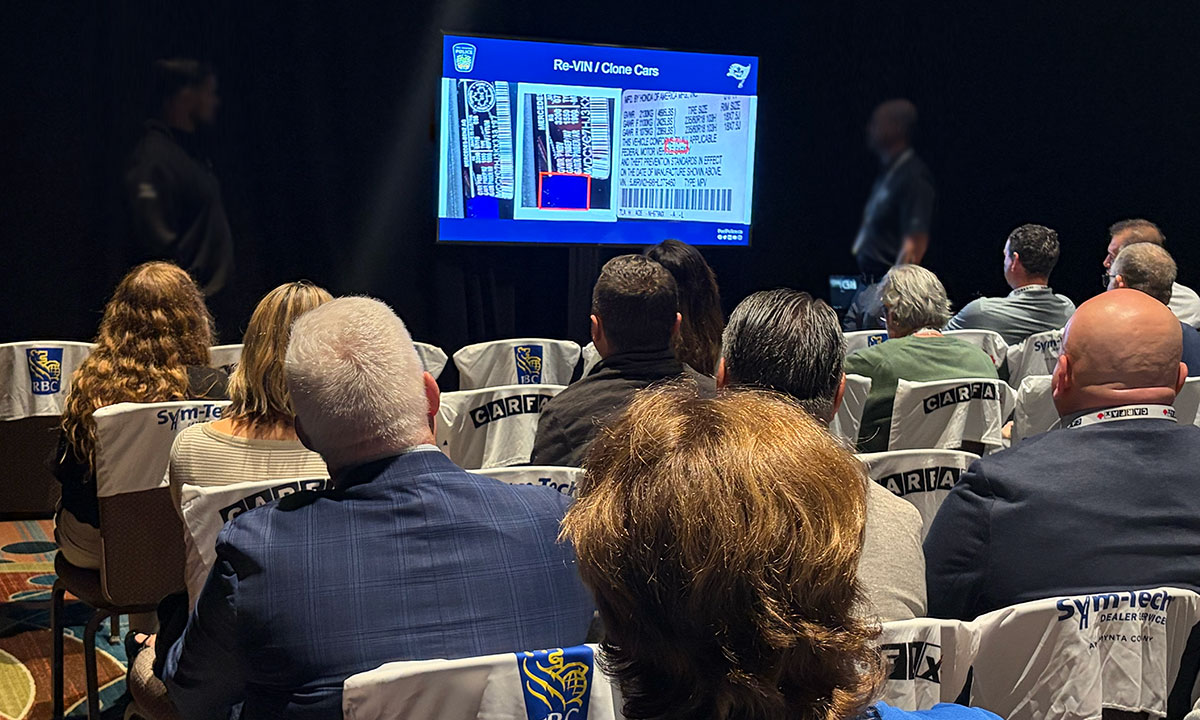
That was among the messages delivered by Peel Regional Police Detective Constables James Ewles and Ian Paradis during a workshop at the Automotive Conference & Expo (ACE) in Niagara Falls on Friday, October 16.
Their session, Theft, Fraud, and Risk: A Dealer’s Guide to Modern Auto Crime, was presented by Peel Regional Police’s Auto Crime Division and examined the growing sophistication of organized criminal activity targeting dealerships.
The officers discussed fraudulent financing, criminal involvement within dealerships and vehicle theft, offering practical advice to help dealers protect their businesses. They urged dealers to strengthen internal controls, conduct thorough checks on prospective employees and watch for unusual sales patterns.
“It’s growing and you can see patterns,” said Paradis. “You have to be a police officer within your own dealership.”
Paradis warned dealers against assuming that criminal activity always originates outside their businesses.
“You have to do your own due diligence with your own employees,” said Paradis.
He encouraged dealers to pay particular attention to employees with questionable references or unusual employment histories, including those who frequently move between dealerships.
Ewles offered the example of a newly hired salesperson with little experience or poor references who suddenly produces 20 to 30 customers within the first two weeks on the job. Such activity should prompt management to take a closer look at the transactions, particularly when sales volumes or financing arrangements appear unusual.
Ewles also cautioned that customers can be drawn in by deals that seem unusually attractive.
The detectives said fraudulent vehicle financing can have serious financial consequences for dealerships and lenders, particularly when suspicious transactions are not detected before vehicles are delivered.
Ewles said that in some cases, a dealership and its lender may not realize they have been defrauded until four, five or six months later, when missed loan payments reveal a problem.
Paradis emphasized the need for better communication between dealerships and financial institutions, along with more rigorous verification of customer identities and supporting documents.
“You guys have to talk to each other, big time,” said Paradis. “The ID verification has to get better.”
He said stronger checks and balances are needed before financing is approved, including closer scrutiny of supporting documents such as employment letters and T4 slips.
The detectives also stressed the importance of physical security. While surveillance cameras, fencing and other conventional security measures remain useful, Paradis said dealers should consider how they position valuable vehicles on their lots, particularly models frequently targeted by thieves.
He said organized criminals can defeat fencing and other security measures, but physically preventing a vehicle from being driven off the property creates another obstacle.
“Box in your expensive cars that get stolen regularly,” said Paradis.
Ewles agreed, suggesting that concrete barriers, steel posts and other physical obstacles can make it much more difficult for thieves to remove vehicles.
“A car is a car, you have to be able to drive it, so if you can physically stop it from getting out, that’s really your only defence,” said Ewles. “Everything else can be defeated.”
The overall message was that protecting a dealership requires more than cameras and locked gates.
Dealers also need to know who is working in their stores, pay attention to suspicious transactions and work closely with lenders to prevent fraudulent deals from slipping through.