New ownership models and mobility trends can be an opportunity for dealers.
Car sharing is on the rise in Canada, but does it spell disaster for dealers? According to panelists at a downtown Toronto event dubbed “Mobility & Innovation: the Future of Car Sharing in our Cities” it doesn’t.
Hosted by Turo Canada, the discussion focused on the car sharing economy, trends in mobility and innovation, and the impact it will have on cities in the future.
The ride-sharing economy is gaining ground in Canada, especially with millennials. “More and more younger people are choosing not to go the path of vehicle ownership. If we look at the data from 2015, car ownership remained fairly stagnant in Canada. When we look at the actual demographic breakdown — 50 per cent of car ownership was owed to people 50 plus. If you look at those 18-34, it’s less than 10 per cent. And we’ve seen a decline in those people even bothering to get their driver’s licences. From the data, car ownership is likely to remain stagnant or potentially decline going forward with the millennial generation. So there’s lots of opportunities for ride-sharing to fill that gap,” said Alexandra Cutean, Director of Research and Policy, Information and Communications Technology Council (ICTC).
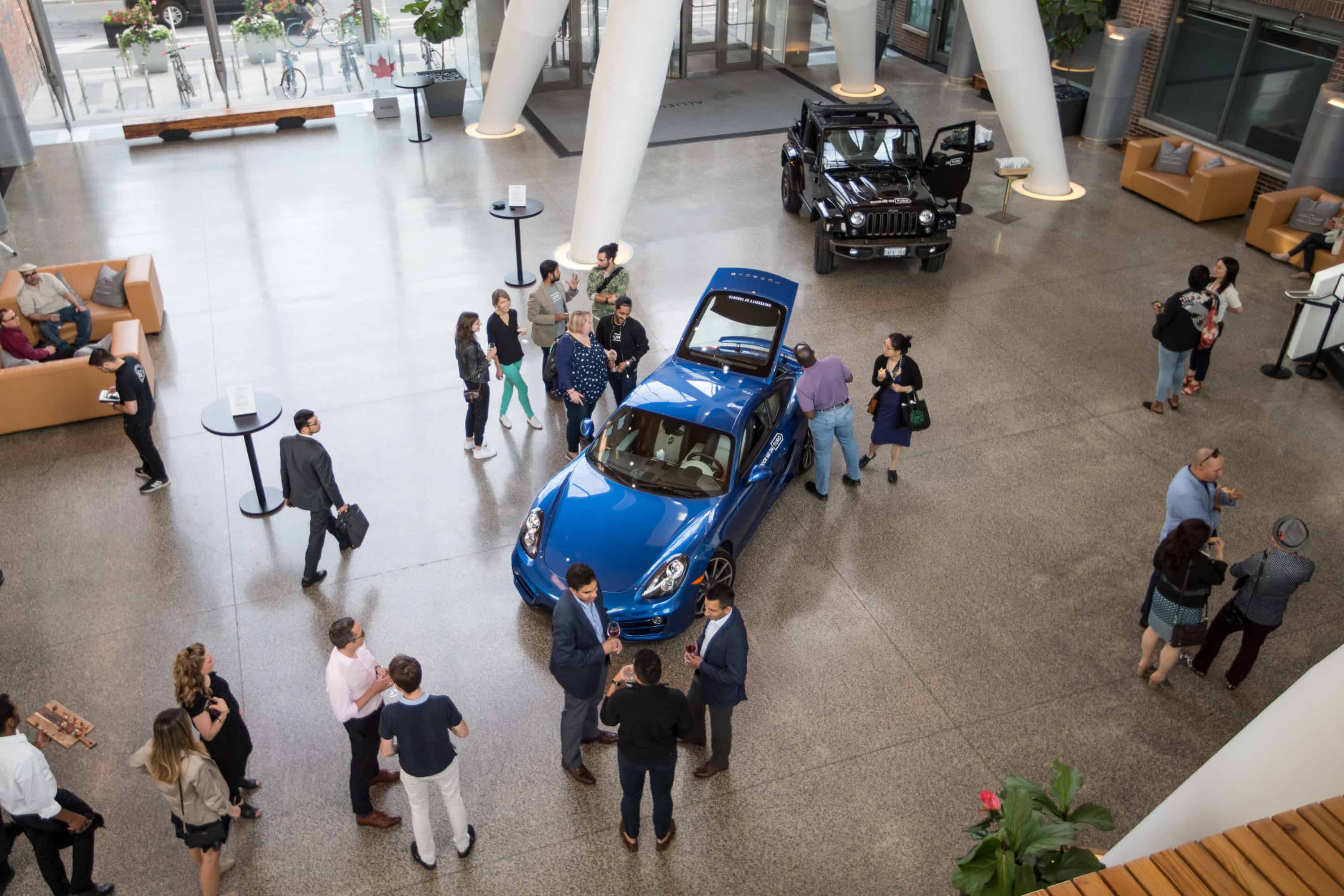
But the rise in ride-sharing doesn’t mean gloom and doom for dealers, according to Turo, a peer-to-peer car-sharing service celebrating its second anniversary in Canada. There are opportunities to seize despite the drop in car ownership. “Dealerships have a lot to gain by participating in the sharing economy,” said Cedric Mathieu, Director, Turo Canada. “Auto dealers should encourage their customers to participate in the sharing economy as their earnings will allow them to purchase a nicer make, model, or trim than what they had originally budgeted for. Dealerships can also use the potential earnings a car will generate on Turo as a selling point for customers,” he added. Turo’s platform allows owners to rent out their cars, when not in use, to other individuals, to make money and offset some of the costs of vehicle ownership.

According to ICTC, the sharing economy is key when it comes to new technology, such as autonomous vehicles and electric vehicles — designed to reduce road accidents and fatalities and improve mobility. “We see autonomous vehicles on the street tested in a lot of jurisdictions in the world right now. We could potentially see them in Canada within the next 5-10 years. That’s Level 5 where the human is just a passenger and you can sit back and read, watch TV, talk to your friends and it’ll drive itself. We’re not really going to see the benefits of these vehicles — whether it’s to reduce congestion or our carbon footprint or offer more mobility options for people who live in remote communities or underrepresented groups. We’re not going to have any of those benefits if we’re just simply adding more cars in the streets. It really needs to go hand-and-hand with those vehicles being shared,” said Cutean.
The ride-sharing economy is gaining ground in Canada, especially with millennials.
Aaron Zifkin, Managing Director at Lyft Canada agrees. “I don’t think it’s necessarily just autonomous, I think it’s the convergence of many things. I get really fired up over electric vehicles coming together as shared rides to improve occupancy in cars and autonomous vehicles. When you think about all of these technologies that are coming together — we’re right on the cusp of change,” he said.
But change does take time, especially when it comes to consumer adoption. Even though data points to autonomous vehicles being safer than human drivers, there are still challenges to overcome. “We did a study looking at the results from Canada in terms of how consumers perceive autonomous vehicles — if they were comfortable to ride in one and own one. The results were fairly low — about 30 per cent of people in Canada were willing to get into one, which is a bit irrational if you look at the data. There’s definitely some work to be done. We can’t expect perfection. There’s going to be incidents, but ultimately there’s going to be a lot fewer incidents,” said Cutean.