 Thanksgiving in Canada, is one of those events when traditionally, it’s time to put down our work and be with our families. Yet, as many dealers know, time doesn’t stand still and neither does the competition. To stay ahead in the game you need to constantly be learning, adapting and implementing. And that’s why, on this Thanksgiving Sunday (October 12), a good number of auto retailing professionals found themselves in Las Vegas, taking in some really meaty content during the Canada Day session of this year’s DrivingSales Executive Summit.
And make no mistake, this was a Canadian event, providing digital marketing information specific to Canadians, by Canadians.
Presenters covered the gamut from mastering Initial Quality Response, what you really need to know about social media; critical communication strategies to win more customers, understanding what metrics you should be following in your dealership and why an effective marketing “ecosystem” can translate into significantly higher sales.
Quality and relevance count

John Currado and Jeremy Wyant
John Currado, Executive Team Leader of Technology and Jeremy Wyant, Manager of Dealer Performance at SCI MarketView, discussed the objective of an Initial Quality Response and how it leads to better connectivity with a dealership’s customers.
“The best technology is useless if you don’t spend time with your people and enable the process for them to use it,” says Currado.
He notes that when a lead comes in and is received, there is a measurement that can be placed around it, including response time, the quality of response, how many connections you’re getting as a result of that lead, how many appointments you’re getting and how many of those translate into test drives and sales.
Currado said it’s important for dealers to understand the need to make that connection, to provide a quality response to the customer’s inquiry and build proper dialogue with them.
Jeremy Wyant, referencing the fact that in terms of IQR scores, Canadians ranked 38.7 out of 100, notes there’s plenty of room for improvement.
Wyant talked about the “battle of the inbox,” in other words, delivering an effective subject line that makes the customer more likely to open your email response amid the thousands of other messages that clog their inboxes.
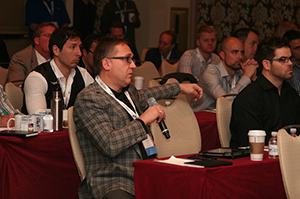
Dealers from across Canada attended
He said dealers need to make sure they include specific criteria in order to build real engagement: Introduction, vehicle value proposition; an engaging question; dealership value proposition and signature.
“Make sure you always include the person’s name in the introduction, always include the vehicle they’re looking for and always introduce yourself.”
Wyant says that the quality question really counts, especially when it comes to the vehicle value proposition. “This is an area where you can build the relationship by asking fun stuff about the vehicle and why they are looking at it.”
He says that demonstrating an interest in the customer’s needs is absolutely critical but at the same time, dealers need to make these quality questions direct, not bury them in the email or wait until the end of the message.
Currado added that, dealers need to think less about price and more about the value they bring to the customer. “Simplify the process,” he says. “Be common where it’s possible and custom where it counts.”
Social media: the need for profitability
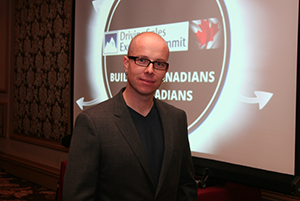
Robert Karbaum
Robert Karbaum, E-Commerce Manager for Weins Canada, gave a very interesting and eye-opening presentation on the hard truth about social media — the fact that for dealers, it needs to be profitable in order to be used effectively.
He says that a big problem is that while social media has become a buzzword of modern marketing, for dealers it tends to do absolutely nothing in terms of generating sales. “We are in an industry that monitors everything, from cups of coffee procured to people coming in our showrooms and yet social is this big grey area.”
Karbaum says that for dealers, most experts talking about social media don’t really have much relevance to the dealer in small town Canada who is just trying to sell more vehicles. “We have to scale it down,” he says.
He says that social media channels like Instagram and Pinterest, don’t provide much mileage for dealers because there is no way to actually advertise on them. “It’s like being a walrus at a penguin party. We are trying to sell motor oil to a group focused on knitting — it just doesn’t work.”
On the other hand, Karbaum says that Facebook can provide dealers with an effective way to sell more vehicles through paid search. “With paid search we can see exactly what happens,” he says. “We can target men between 25-34, those who speak Spanish or those that have finished school and love cats.”
Karbaum notes that a $348 ad spend on Facebook can yield 700 visits to a dealer website, while it would take approximately $5,000 to achieve the same via print ads, which can’t be measured in the same way.
“With paid advertising on Facebook we know exactly what happens,” he says, “so why would you even bother doing anything else?” Karbaum talked about the three phases of social media that dealers need to understand. Phase one, be on it; phase two, advertise and phase three make a profit.
“If social media isn’t profitable then you shouldn’t be doing it,” he says.
Communicate, integrate
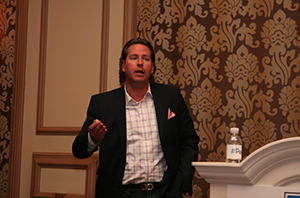
Bill Wittenmyer
Bill Wittenmyer, Partner with leading BDC, CRM and digital marketing provider ELEAD1ONE, talked about how Canadians have among the highest mobile usage rates in the world. “Your buyers are researching online before they visit your store,” he says.
Wittenmyer talked about how 47 per cent of mobile users are actually researching on a dealer’s lot and why it’s so important to give customers the information they want and as quickly as possible.
“Buyers won’t wait. You have to be engaged and answering them or you have lost them.”
Wittenmyer says that to provide that level of communication customers are looking for, dealers need to have a service website as well as a sales website. “Not a link, but a website. Everything you are doing in sales you should be doing in service.”
He also stressed the need for dealers to know what their stock plan is, so that service advisors understand the dealership’s need for used cars and present an option to purchase for every customer that comes in. “In Canada, two per cent of vehicle registrations turn over every month. These are people in your service lanes and they are your first opportunity.”
Measuring, learning and implementing

John Germani
John Germani, Group Moderator, CDK Global Performance Solutions, talked about the need for dealers to understand web performance through numbers, to cut through the noise and regularly monitor website analytics. He stressed the importance of having images and unique content on VDPs and the fact that many dealers in Canada are still struggling with click throughs and engagement because they don’t.
Grant Gooley, Director of Marketing at the Zanchin Automotive Group, delivered a version of his presentation from Canadian Digital Dealer 6 back in September, in which he talked about the Marketing “Ecosystem,” and how by taking effective steps to put all the different elements together, dealers can really see an increase in sales.
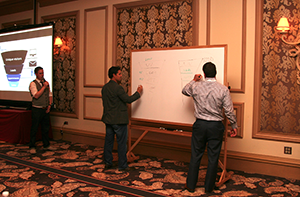
Grant Gooley, analyses the sales funnel with assistance from Jason Craine, Mills Motors and Jim Williamson, Williamson Chrysler
Gooley drew a chart analysing the web sales funnel, from Unique Visitors, to Leads, Appointments and Sales. Asking two dealers in the audience to participate, the results from their own analysis presented some very interesting findings.
“Go through the funnel with your sales team and they will start to understand what it does.” He says that at the end of the day it’s a numbers game and that if your sales to appointment ratio is low, you have work to do.
For more content regarding Canada Day and the 2014 DrivingSales Executive Summit, make sure you read the November/December issue of Canadian auto dealer magazine.