Sym-Tech Dealer Services is betting that better-trained people and a better customer experience lead to stronger F&I outcomes
In dealership F&I, performance is usually measured in results: revenue, product penetration, and consistency from one manager to the next. But Derek Sloan, President and CEO of Sym-Tech Dealer Services, says those outcomes are strongest when the process begins somewhere else — with a better customer experience.
That idea sits at the centre of how Sloan describes Sym-Tech today. The company, founded in 1971 by car dealers as a rust-proofing business, has evolved into a national F&I provider serving OEMs, dealer groups and individual retailers across Canada. Since becoming part of the Amynta Group in 2019, it has also grown significantly. Sloan said the business is now roughly three times the size it was several years ago.
For him, that growth reflects what dealers are looking for: not just products or software, but support that improves performance in a measurable way.
A broader story to tell
Sym-Tech remains a familiar name to many dealers, but Sloan wants the company to be understood more broadly than its legacy roots or product suite alone.
He describes the business today as built around products, technology and training, with the strongest emphasis on training and in-store support. In his view, that is where the company separates itself from others in the F&I space.
The company’s associates do not just explain a sales process or share best practices. They work alongside store staff, sometimes handling the first deals themselves and then coaching F&I managers through live transactions.
Before a Sym-Tech field associate becomes a district manager responsible for dealer relationships, Sloan said that employee goes through an extensive 12-month national training program. Those trainees, known internally as F&I Specialists, are trained on products, process and technology, then work in stores across the country to support dealerships directly.
“They can sit in the chair,” said Sloan. “They can take deals, they can train by showing, and they can support the dealership right in the store.”
Sym-Tech’s model is built less around teaching theory from a distance and more around coaching in real dealership conditions. The company’s associates do not just explain a sales process or share best practices. They work alongside store staff, sometimes handling the first deals themselves and then coaching F&I managers through live transactions.
For Sloan, that is where the real change happens.
Training designed to stick
The company also puts unusual emphasis on retention of what is taught. Sloan said Sym-Tech’s classroom training is deliberately intensive, including mock scenarios, video review and detailed feedback. The idea is not only to train F&I managers on a four-step process, but to make sure they retain it and can apply it as soon as they return to the dealership.
That effort continues in-store, where Sym-Tech staff reinforce the process in real time.
The goal, said Sloan, is to make sure a store performs better after Sym-Tech leaves than it did before.
That focus on what he calls residual value also extends into the company’s coaching tools. CoachAI, for example, is meant to reinforce training and process discipline between in-person visits, while allowing managers to role-play, review performance and work on specific areas of improvement.
Sloan described it less as surveillance than as support.
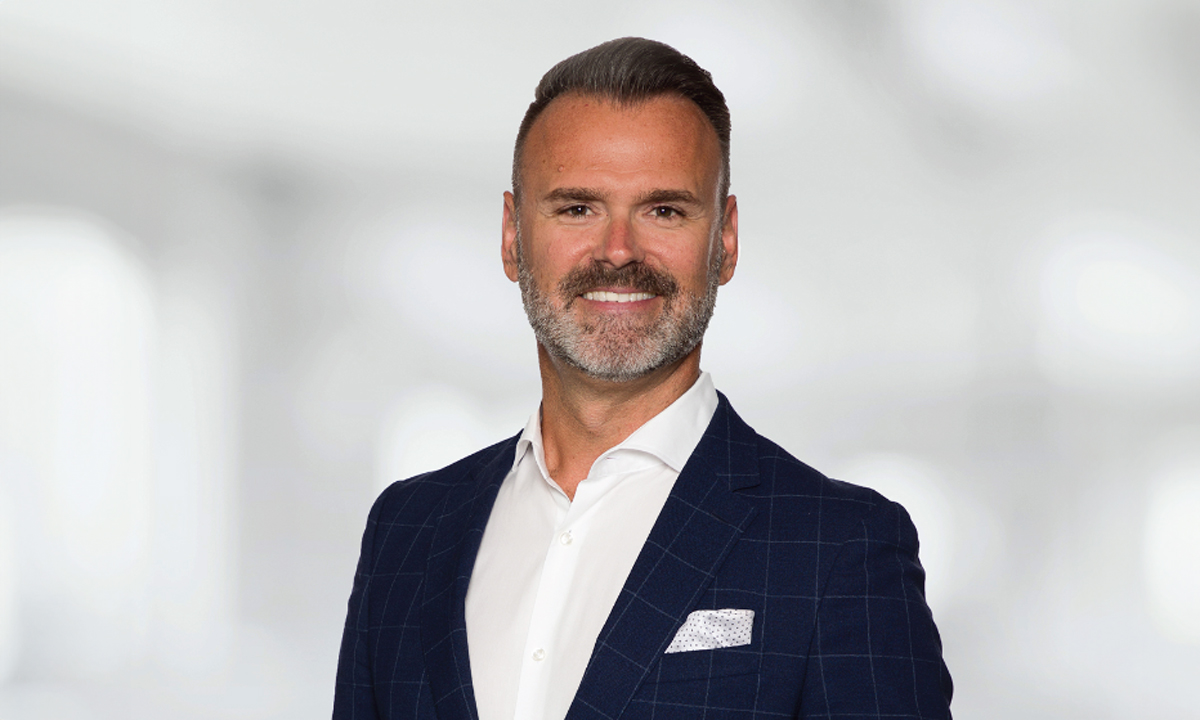
Derek Sloan
Performance with a guarantee attached
While other companies in the F&I space promise training and stronger results, Sloan argues Sym-Tech goes further by tying its methods to a guaranteed performance improvement.
He said the company guarantees a 20 per cent lift when a dealership switches to its performance model. He also pointed to the results achieved by Sym-Tech’s own F&I specialists when they work in stores during training and rollout.
Those are bold claims, but Sloan said they are backed by a structured process.
Rather than walking into a store with a generic pitch, Sym-Tech begins with what it calls a profit gap analysis, reviewing the dealership’s current process, philosophy and opportunity. From there, the company builds a 12-month F&I performance plan and then manages the transition with a structured kickoff.
That rollout includes training dealership staff while Sym-Tech associates help keep the business office operating. “We make it easy to switch because we do a lot of the heavy lifting,” said Sloan.
That could matter for dealers who see changing F&I providers as disruptive or operationally difficult. Sloan’s view is that the transition becomes manageable if the incoming partner has the products, the people and the process to handle it.
Technology as part of the package
Sloan is careful not to make technology the whole story, but it is still an important part of the Sym-Tech offering.
Its menu platform, built around its proprietary daveplus software, remains a core tool for F&I managers, helping them build relevant presentations, support multiple payment options, and generate reporting without duplicate entry. The company also offers Lilly, a learning management platform that houses training resources, and CoachAI, which is being developed to provide more personalized coaching and curriculum support.
Sloan’s larger point, though, is that the technology is only effective when paired with strong process and training. In his telling, software helps reinforce discipline and consistency, but people still drive the outcome.
Making the process easier for customers
The strongest part of Sloan’s argument may be the simplest one: F&I works better when the experience works better for customers.
He said Sym-Tech’s process is built around transparency, relevance and efficiency. That means presenting products that fit the customer’s needs rather than mechanically walking through every possible option. It also means keeping the process moving.
Sloan said the company aims to keep the F&I experience to 30 minutes or less, recognizing that most customers have already spent significant time selecting a vehicle and arranging terms before they enter the office.
“It’s all actually focused around the customer’s experience,” said Sloan.
That perspective may also resonate with dealers trying to balance profitability with CSI, retention and long-term trust. Sloan’s argument is that customers are more likely to buy when they feel informed and in control, not pressured.
Sloan also points to culture as part of the story. He describes Sym-Tech as having a performance culture, both internally and in the field, and sees that as a competitive advantage.
For dealers, the takeaway is less about any single product or piece of software than about a model: Train people thoroughly, support them in the store, reinforce the process over time, and build the experience around the customer.