PBS Systems is betting that support, flexibility and long-term relationships matter more than a list of features
For most dealers, the question is no longer what a DMS can do.
At this point, every major platform can point to a long list of features, integrations and enhancements — and increasingly, some version of an AI story layered on top. The real decision tends to come down to something less tangible: how the system fits the business, and who’s behind it.
That’s where PBS Systems is trying to differentiate.
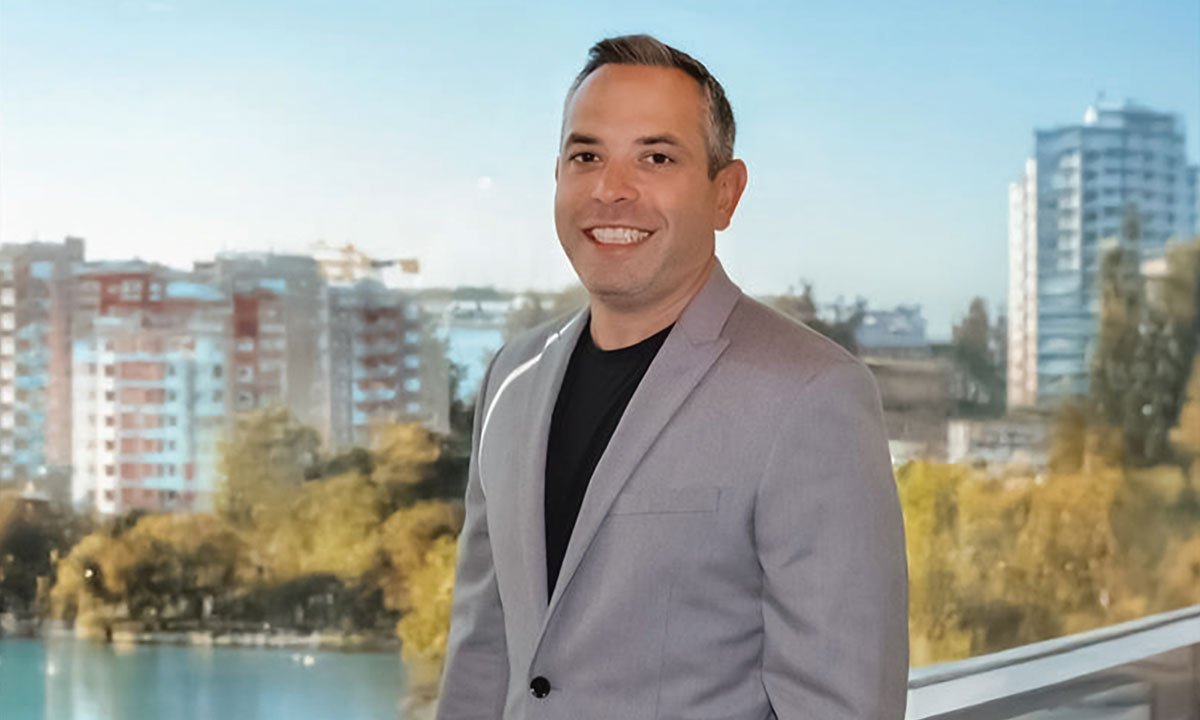
“If someone asks why they should choose PBS, they’re expecting us to feature-preach 15 things,” said Kevin Preston, Vice-President Sales. “That’s not really the answer.”
Instead, Preston points to culture — how the company supports dealers, how it builds its product, and how it shows up in the market — as the reason many stores ultimately choose to work with PBS.
That long-term perspective is rooted in the company’s history.
Founded in 1988 as an F&I platform, PBS transitioned into a full DMS provider in the mid-1990s and has since rebuilt its system from the ground up four separate times. That willingness to start over, Preston said, reflects a focus on long-term usability rather than incremental patchwork.
“You can’t just keep layering things on forever,” he said. “At some point, you take what you’ve learned about the business and build it properly again.”
Today, the company supports roughly 1,500 dealers in Canada, as part of a network of more than 3,500 dealerships across North America, and continues to expand its footprint.
Despite that scale, PBS remains privately held and family-run — something Preston said still shapes how the company operates day to day. “We’re not driven by quarterly pressures,” he said. “We’re trying to do what’s right for the customer over the long term.”
Building around the dealer, not the system
On the product side, PBS has focused on creating a single, integrated platform built around one data structure. Rather than forcing a one-size-fits-all approach, Preston said the goal is to give dealers flexibility in how they operate.
“Some stores want everything in one system, others want to keep certain partners,” he said. “Our job is to support both paths.”
That flexibility has become more important as dealerships balance consolidation with existing vendor relationships. In some cases, PBS can replace multiple third-party tools. In others, it becomes the core system that everything else connects to.
“The dealer is the boss,” Preston said. “We’re there to make it work the way they want it to work.”
Taking a measured approach to AI
Like most providers, PBS is investing in AI — but not in the same way.
Rather than building standalone AI layers or promoting external tools, the company is focused on embedding intelligence directly into its core platform. The aim is to deliver useful prompts and insights in real time, as staff interact with customers.
“Why pull the data out into another system just to push it back?” Preston said. “We want those outcomes happening within the workflow.”
He describes the goal less as automation and more as augmentation: giving employees guidance that improves decision-making without disrupting the customer interaction.
At the same time, Preston is cautious about what he calls “artificial interaction” tools designed to replicate conversations with customers.
“There’s a place for those tools,” he said. “But we’re more focused on what actually improves the experience in the store.”
Keeping development grounded in reality
One of the risks in any software business is drifting too far from the customer, something Preston said PBS works actively to avoid.
In some cases, that means placing developers directly into dealership environments during installations, so they can see how the system is used in real conditions. “You need to understand what a busy Saturday looks like,” he said. “Or what happens in service at seven in the morning.”
That exposure, he said, leads to more practical decisions about what to build, and what not to.
“It’s not about adding something because it sounds good,” Preston said. “It’s about whether it actually helps the dealership operate better.”
Training that adapts to the dealer
PBS has also expanded how it engages with dealers after installation.
In addition to its long-running annual user conference, the company runs regional workshops designed to be more interactive and tailored to specific dealership needs. “What we’ve found is every group is different,” Preston said. “A lot of the value comes from the discussion in the room.”
Those sessions allow staff to step away from day-to-day operations and focus on improving processes, while also sharing ideas with peers.
Support remains one of the most scrutinized aspects of any DMS relationship.
Preston said PBS has made a deliberate choice to keep its development and support teams based in North America, supporting its Canadian base and growing U.S. operations.
“We understand the business here because we’re part of it,” he said.
The company also emphasizes cross-training within its support teams, so staff can handle issues that span multiple departments — a common reality in dealership operations.
That approach, Preston said, improves response times and reduces the need for multiple handoffs.
Culture as the differentiator
Ultimately, Preston comes back to culture.
In a market where feature sets increasingly overlap, he said the real question for dealers is not what a system can do, but who they want to work with.
Beyond the platform itself, PBS has focused on building relationships within the dealer community — hosting events, supporting training initiatives and opening its facilities to industry groups.
“The way we look at it, we’re part of the same community,” he said. “We’re all working toward the same goal.”
That approach appears to resonate, even at scale. Preston said the company maintains a close rate of roughly 73 per cent when engaging prospective dealers — suggesting that once stores take a serious look, many choose to move forward.
In a category where capabilities continue to converge, that may be the real distinction.
“Technology is always going to evolve,” Preston said. “The question is who you want to evolve with.”