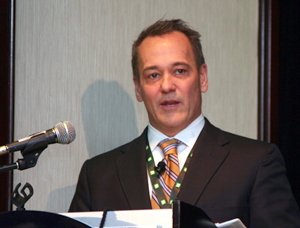
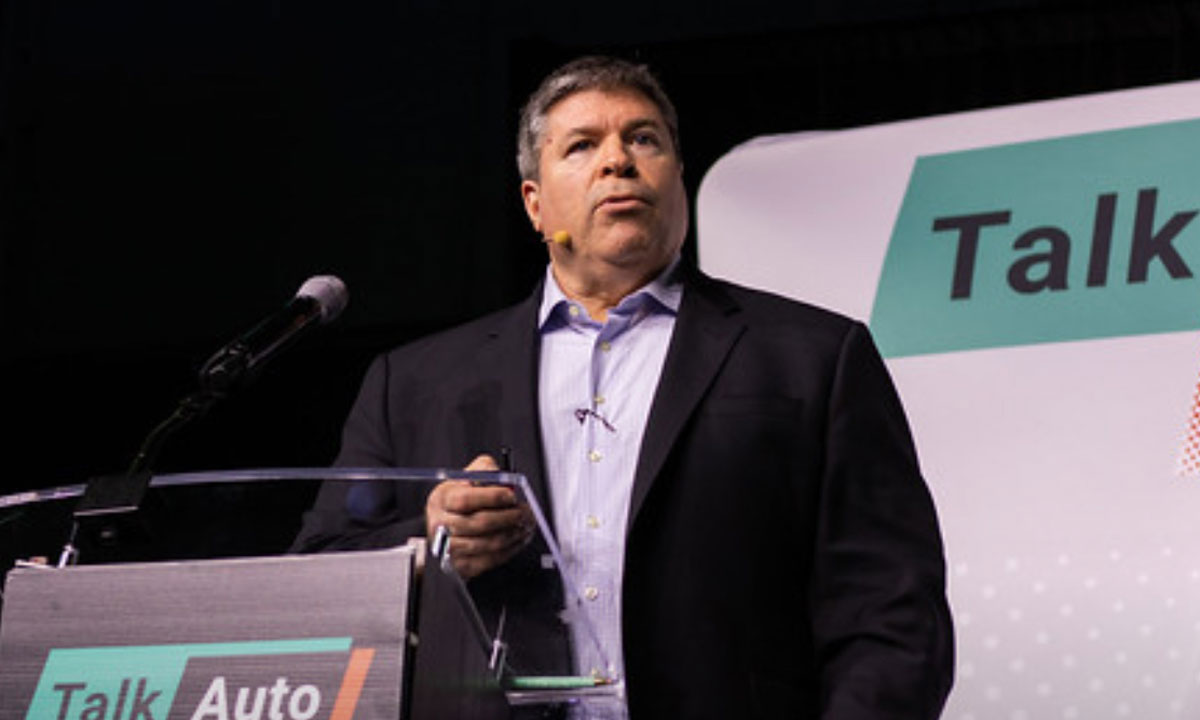
JUST PRIOR TO THE 2014 CADA SUMMIT, CANADIAN AUTO DEALER HAD A CHANCE INTERVIEWED ONE OF THE EVENT’S MOST ANTICIPATED KEY NOTE SPEAKERS, ROBERT KURNICK JR., PRESIDENT OF PENSKE AUTOMOTIVE GROUP (ONE OF THE LARGEST PUBLIC DEALERSHIP GROUPS IN THE U.S).

Robert Kurnick Jr.
Robert Kurnick Jr.’s focus during the summit was on dealer consolidation (a popular topic in Canada at the moment. He shared some thoughts with us on Penske’s own experience, both in the U.S. and Europe where the company has expanded operations.
HE: Can you tell us a little about Penske Automotive Group?
RK: Penske has been involved in automotive retail since 1965. We’re also involved in truck rental, truck leasing, logistics, motorsports, manufacturing and commercial vehicle distribution. Motorsports brings a bond to the entire organization and the lessons we learn from competing permeates into all of our business. Automotive retail is part of our DNA and the Penske Legacy.
HE: Can you tell us about some of the growth and changes witnessed at Penske since you joined the company?
RK: When I joined Penske more than 20 years ago there was an opportunity to take the organization to the next level. We did this by accessing the public markets, diversifying the company’s revenues and looking at assets that were perhaps undervalued and underappreciated. One of those assets was United Auto Group which we acquired in 1999. That was when we really started building “scale” in the automotive retailing space.
HE: Can you tell us a little about the growth of public dealer groups in the U.S. and what has driven it, especially over the last two decades?
RK: In the U.S., auto retailing is still largely unconsolidated and remains dominated by the mom and pop dealer. Succession planning at the mom and pop level and selling to dealer groups is often the only way to really monetize the value of the franchise. Other factors include estate planning, valuations, the difficulty in finding somebody to take on the business and costs needed to complete facility upgrades, which are beyond the scope of many mom and pop stores. Even today, with over 30,000 franchises and 18,000 dealerships in the U.S., large, public dealer groups still represent less than 10 per cent of the market.
HE: From your perspective, what are some of the advantages that public ownership brings for a dealer group?
RK: There are a number of advantages. These include access to capital, quarterly reports, regulations which require periodic reporting, greater transparency, corporate governance that builds honesty, integrity and public confidence in our business, a board of directors and succession planning at all levels of the organization.
HE: Based on your own experiences, do you think that dealer groups tend to have more leverage with original equipment manufacturers (OEMs) than single-point stores?
RK: When the topic of dealer consolidation first appeared in the early 1990s there was a consensus that OEMs were afraid of large dealer groups gaining leverage and fundamentally changing the franchise system. The OEMs wanted to ensure the time-tested franchise system was protected, so they established framework agreements by which we still operate today. Over the years we have built partnerships with OEMs to generally alleviate many of these concerns and today, because of state franchise laws in the U.S. I would say dealer groups and independent stores have the same footing. Outside the U.S., where those franchise laws don’t exist, bigger dealer groups can perhaps leverage their OEM relationships more easily than independents.
HE: Penske has expanded outside of the U.S. and into Europe. Can you tell us a little about this and perhaps the experience so far?
RK: We generate approximately 35 per cent of our worldwide revenue from dealership operations in Europe, namely Germany, Italy and the UK. We viewed our international expansion as an extension of our overall relationship with the OEMs and the results have been extremely rewarding. We’ve also been at the forefront of changing the automotive retail model in the UK.
HE: Can you tell us a little about that?
RK: One of the things we did was to modernize facilities, helping to improve the overall customer experience at the dealership level. On the service side, many dealers’ shops were seen as afterthoughts and dealers were losing market share to independent garages. We were the first dealership group to build service drives and saw the need to make investments to ensure the back end of the business was as prominent as the sales floor. Franchise agreements don’t exist over there, so if you don’t perform, your dealership may be terminated by the OEM.
HE: Getting back to the U.S., how do you think the growth in dealer groups has impacted the landscape?
RK: Personally, I believe the growth in dealer groups has helped improve the landscape in a major way. Today, there is more focus than ever on customer loyalty and satisfaction. There’s been big improvements in facilities and in marketing transparency, as well as in the recruitment and training of people.
HE: Do you think that eventually we’ll see the vast majority of dealerships become part of a group, perhaps rendering the idea of an independent operator as a thing of the past?
RK: Specifically in the U.S. I don’t see that happening — at least not for a very long time. With over 18,000 dealerships and 30,000 franchises, individual operators are very much entrenched in the automotive retailing framework, because of state franchise laws. OEMs establish rules to prevent multiple-point ownership in contiguous markets of the same brand, so I believe the local dealer will still be a very important part of the landscape over the next 25 years.
HE: As costs continue to rise in the industry, what are some of the strategies dealers should look for to drive profits and retain value?
RK: Some of the key factors include developing market scale, leveraging best practices, focusing on customer relationship management and looking at costs to attract and retain employees. For example, are you able to acquire the best talent and are you able to keep that talent within your organization? Others include diversification — expanding your sources of revenue and looking to increase your share of the wallet with your customers, as well as enhancing your partnerships/relationships to give you an edge. An example of that are partnerships with captive finance companies for floorpan lending.
HE: On a final note, is there anything else you’d like to mention?
RK: It’s important to remember that this business is all about people and no matter how large you get, automotive retailing is still about being a “local” business. It’s about the relationships you build in your town/city, about being part of the community and about generating repeat and referral business.