 The Trillium Automobile Dealers Association presented a report recently before an all-party committee of Ontario MPPs at Queens Park. The group in question is studying gridlock in the Greater Toronto and Hamilton areas.
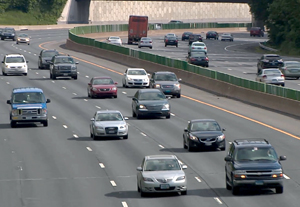
Traffic congestion has become a significant problem in the GTA and Golden Horseshoe and with the Ontario Government forecasting an increase of the GTA’s population by three million by 2036, that problem is only likely to increase. The trouble is, that inadequate spending on Ontario roads and other aspects of transportation infrastructure make the problem a tough one to tackle.
TADA presented a number of proposals which include reversing last year’s $229 million budget cuts. These would see previously approved highway expansion projects (including additional High Occupancy Vehicle lanes) put back on track.
Additional proposals also include moving forward on the GTA West Corridor, designed to relieve congestion on the 401, already one of the busiest highways in North America, plus completion of a Niagara to GTA expressway.
The idea of building or expanding roads is currently a hot political potato, especially in view of current trends toward sustainable mobility and funding public transit. The Ontario government has put forward a proposal to expand public transit in the GTA and Golden Horseshoe, known as the Big Move, with an allocated budget of $50 billion. The problem is how it will be paid for. The idea of adding road tolls and other taxes to fund such programs has been considered by the Wynne Government, however Frank Notte, Director of Government Relations at TADA says that only $11.5 billion of the proposed $50 billion has so far been allocated to get some of these projects underway, including expansion of the Eglinton subway line. The rest, remains unaccounted for.
“We have a problem with that,” Notte said during an exclusive interview with Canadian auto dealer. “We did a study that showed that in a given year, drivers pay about $15 billion dollars a year to the government, of which $10 billion goes to the province. You buy a car, you pay tax, you fill your tank, you pay four different taxes.” Currently around $3 billion of that amount gets used to fund transportation-based programs such as roads and bridges, the rest goes into the general coffers. As a result, as Notte says, there is already a $7 billion discrepancy between taxes that motorists pay and funds actually used for road building.
“Motorists send $10 billion a year to the province and we get a third of that back. Now [the provincial government] is asking for a massive ramp up in more taxes and tolls, but there is nothing that talks about dedicated funds,” says Notte. He refers to the fact that the $11.5 billion initially allocated for the Big Move, came from general revenue not a dedicated transit fund. He also says that when the Harmonized Sales Tax was phased in during 2010, and the provincial portion was added to the price of fuel it resulted in a significant windfall for the government. Using a benchmark rate of $1.20 per litre of gasoline, TADA calculated that based on the amount of fuel sold in the province, an eight per cent hike would result in an additional $1.5 billion a year going into government coffers. He says that if there was a dedicated transportation fund for that money, it would help significantly toward roads and public transit projects.
Notte also says that the Drummond Report, commissioned by former premier Dalton McGuinty, provided more than 360 recommendations to generate revenue without raising taxes. To date, he says, the province has barely implemented any of them.