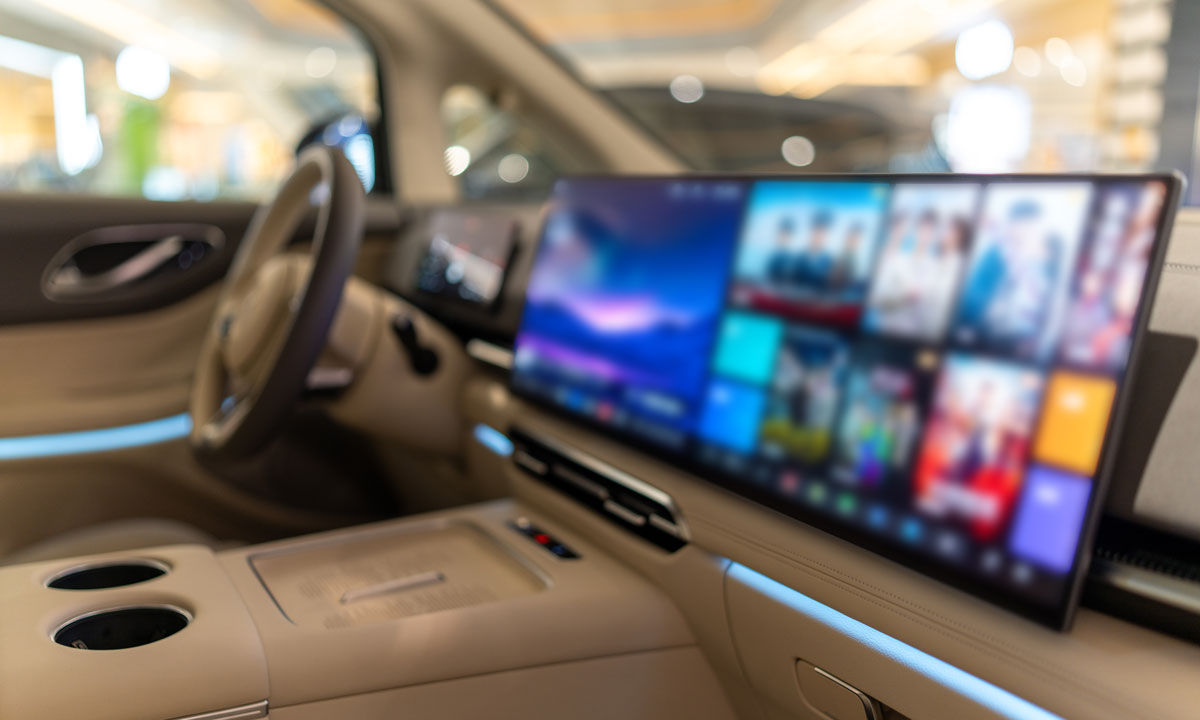
 In recent years, the rapid growth of in-vehicle information has been triggering a revolution in the design of display systems in the automotive infotainment market.
The ubiquitous presence of Smartphones has led to a demand for the same functionalities to be present inside cars. Technologies such as touch screens and large displays have become a commodity in the automotive infotainment domain. As vehicles rely more and more on sophisticated forms of technology, the requirements for onboard information displays are becoming increasingly comprehensive and diverse.
New analysis from Frost & Sullivan’s “Strategic Analysis of European and North American Markets for Display and Instrument Clusters,” finds that in Europe, the market size for central displays, touch screens and head up displays is estimated to reach 9.5 million, 2 million and 0.5 million, respectively, by 2017. In North America, the market size for central displays, touch screens and head up displays is anticipated to reach 6 million, 3 million and 0.4 million, respectively, by 2017.
“The availability of Internet connectivity has led to the proliferation of various web services, Smartphone applications and entertainment-related functions inside vehicles,” notes Frost & Sullivan Research Analyst Krishna Jayaraman. “This has led to the need for large and intelligent information display systems, which could house all the information content.”
The ever-growing consumer demand for in-vehicle information related to comfort, convenience and safety has led to an information overload. It has spurred the development of new technologies and bigger displays to portray this information.
“Information management is a big challenge and is closely related to driver distraction,” remarks Jayaraman. “Automotive original equipment manufacturers (OEMs) are in a situation where they have to achieve a balance between offering new technologies to stay ahead of the competition and keeping the human machine interface (HMI) as easy as possible; prioritization and splitting information to different in-vehicle displays is the need of the hour.”
Driver distraction, fuelled by information overload, highlights the need for HMI solutions, which not only store additional information, but also limit the amount of information projected to the driver by prioritizing it.
There is an increased need for large central displays to house more information. However, multi-modality of input interfaces alone will not help; information will have to be split to different display options, according to priority.
“For instance, functions which are vehicle-specific and necessary while driving should be projected on the head up displays and instrument cluster, while other entertainment features can reside on central displays,” suggests Jayaraman. “Additionally, restricting the freedom to access web-based content to limit distraction will be pivotal.”
Visit http://www.automotive.frost.com for more details