New-vehicle inventory in the U.S. declined in July as stronger sales absorbed vehicles faster than automakers replenished dealer lots, according to Cox Automotive’s vAuto Live Market View.
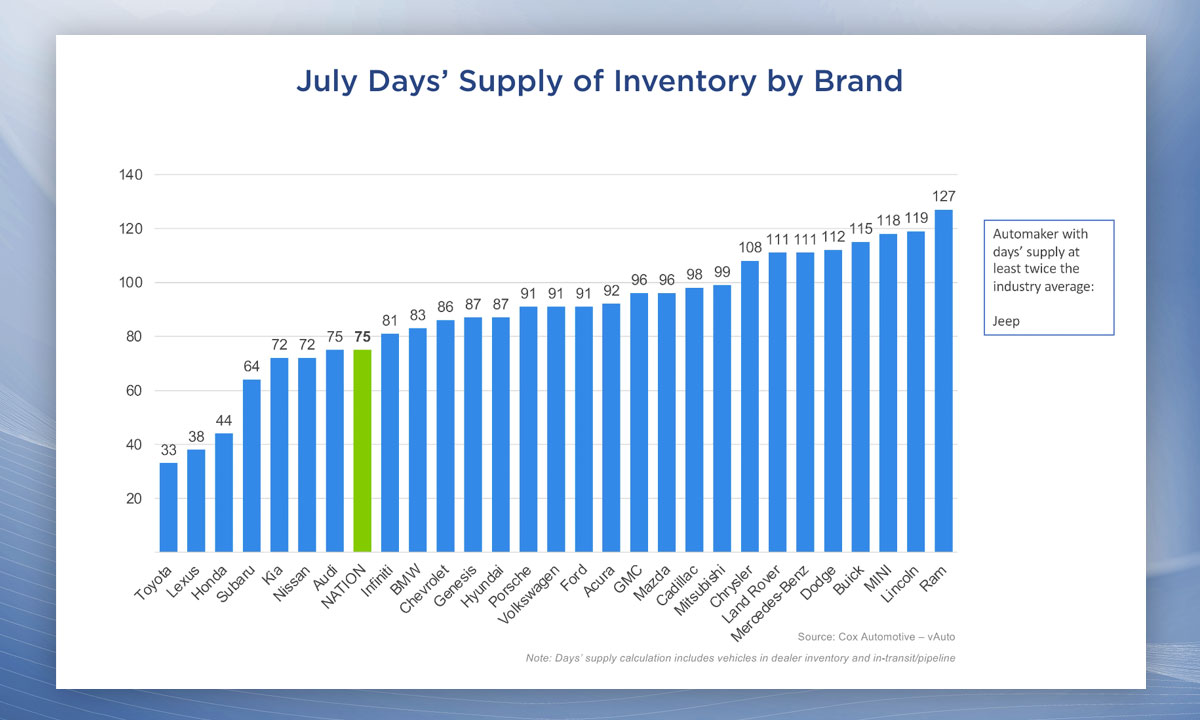
Available inventory stood at 2.73 million units at the beginning of August, down 3.5 per cent from a month earlier and roughly unchanged from a year ago. July sales rose 8.5 per cent from June and 2.9 per cent year over year, reducing national days’ supply to 75 from a revised 82 days.
Several high-volume segments tightened sharply. Midsize SUV days’ supply fell by nearly 14 days, while full-size truck supply dropped 10 days as sales increased nearly 16 per cent.
Pricing, meanwhile, remained relatively steady. The average new-vehicle listing price finished July at $49,249, unchanged from June and 1.6 per cent higher year over year. Kelley Blue Book reported an average transaction price of $49,855, up 1.9 per cent.
Incentive spending fell for a second consecutive month to $3,192 per vehicle, representing 6.4 per cent of the average transaction price. That was down from seven per cent in June and 7.3 per cent a year earlier.
Electric vehicle sales increased just 2.7 per cent month over month, compared with the overall market’s 8.5 per cent gain. EV days’ supply declined by only 2.1 days, while internal combustion engine and hybrid vehicle supply tightened by 6.5 days.
Automakers also appear cautious about model-year 2027 inventory. Those vehicles accounted for 5.6 per cent of available inventory, up from 3.3 per cent a month earlier, but dealers held roughly half as many MY2027 vehicles as MY2026 models at the same point last year.
The figures suggest stronger demand is tightening supply without yet producing significant upward pressure on vehicle prices.