Canada’s public EV fast-charging network is seeing more activity, but the pace of expansion is slowing.
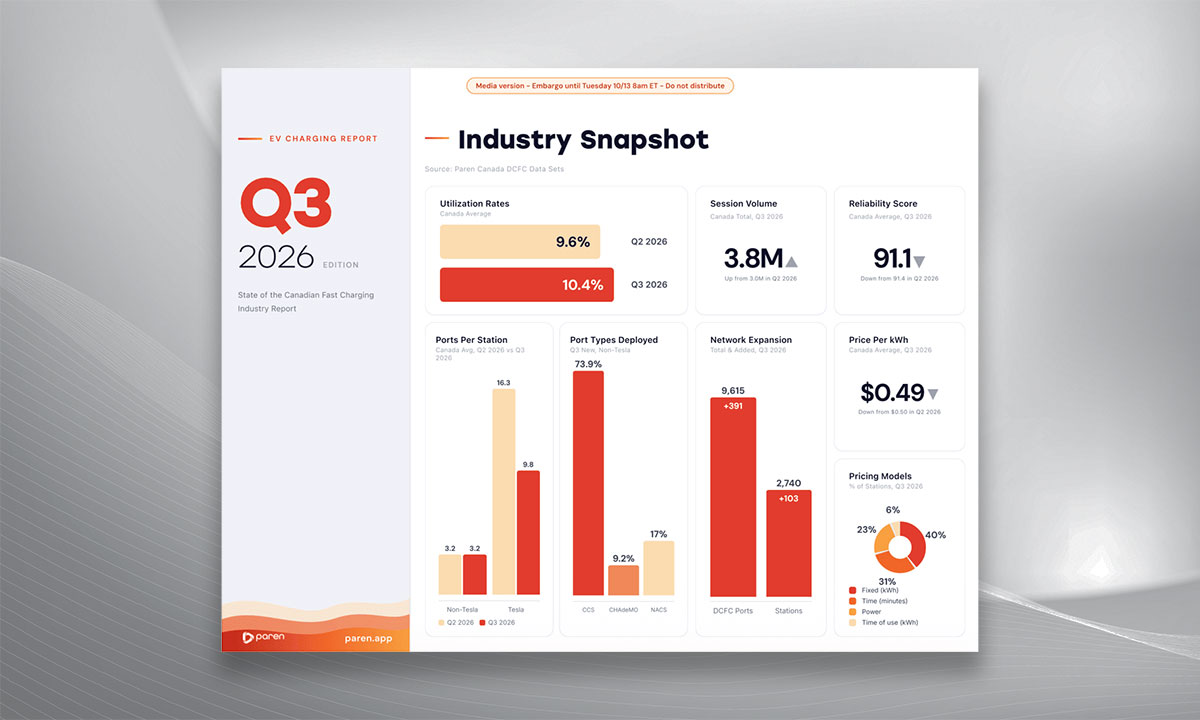
According to Paren’s third-quarter 2026 State of the EV Charging Industry report, the country recorded 3.84 million public fast-charging sessions, up 37 per cent from 2.8 million a year earlier.
However, the number of ports tracked during the quarter grew 51 per cent, outpacing charging activity. Average sessions per port consequently declined to 436 from 481, suggesting infrastructure is expanding faster than demand.
Canada added 103 fast-charging stations and 391 ports during the quarter, bringing the national network to 2,740 stations and 9,615 ports. New station openings were roughly unchanged from the second quarter but approximately one-third below the third quarter of 2025.
Quebec led provincial expansion with 49 new stations, followed by Ontario with 22 and British Columbia with 18.
Despite slower expansion, national charger utilization increased to 10.4 per cent from 9.6 per cent in the previous quarter. British Columbia recorded the highest provincial utilization at 13.1 per cent, followed by Ontario at 11.5 per cent.
Reliability remained a concern in some markets. Canada’s average reliability score slipped to 91.1 from 91.4 in the second quarter, with Nova Scotia, Yukon and the Northwest Territories recording scores below 90.
Meanwhile, public fast-charging prices eased slightly. The national average declined to approximately 49 cents per kilowatt-hour from 50 cents in the previous quarter. Prices ranged from 41 cents in British Columbia to 67 cents in Alberta.
The findings suggest Canada’s charging network continues to expand, although regional differences in availability, performance and cost remain significant.