Dealers preparing for change in Canada’s automotive industry will need to rethink how they serve customers, respond to artificial intelligence and navigate a shifting manufacturing landscape, speakers told attendees at TalkAuto 2026.
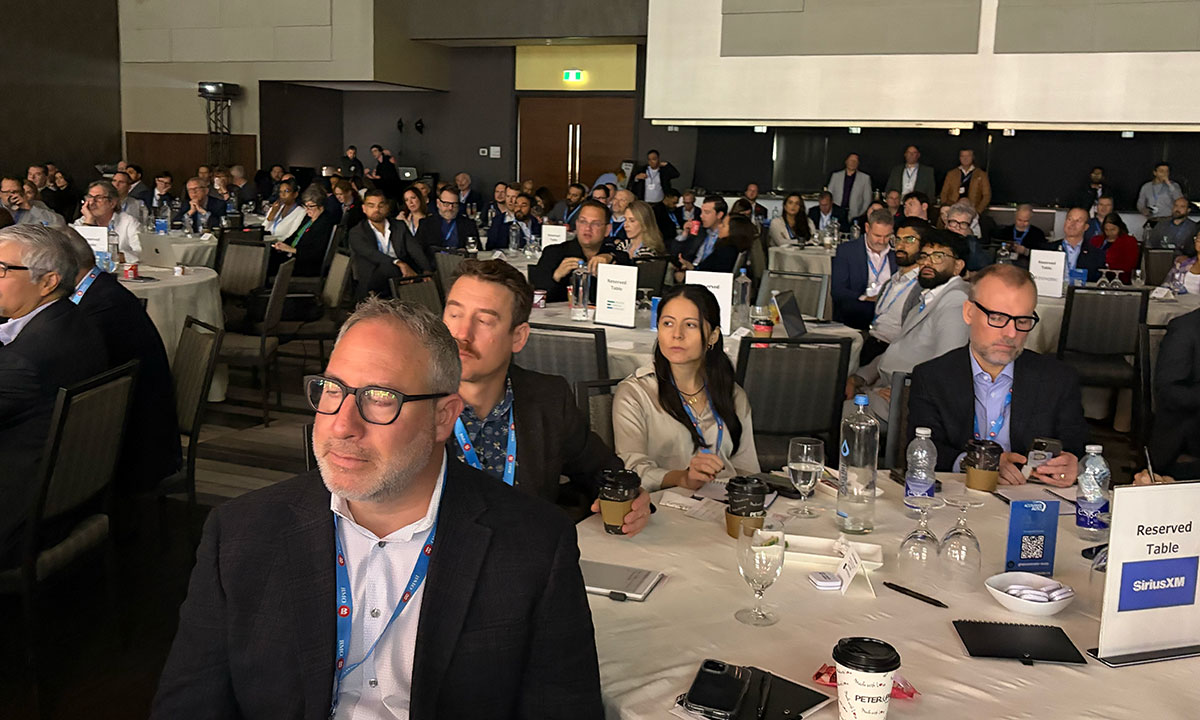
The sold-out conference, presented by Canadian Black Book on Nov. 5 at Universal Event Space in Vaughan, Ont., brought together industry leaders to examine the forces reshaping automotive retail, vehicle demand and the North American supply chain under the theme “The Next Five Years Will Define the Next Fifty.”
One of the morning discussions focused on how dealerships will need to adapt to changing customer expectations and new technologies.
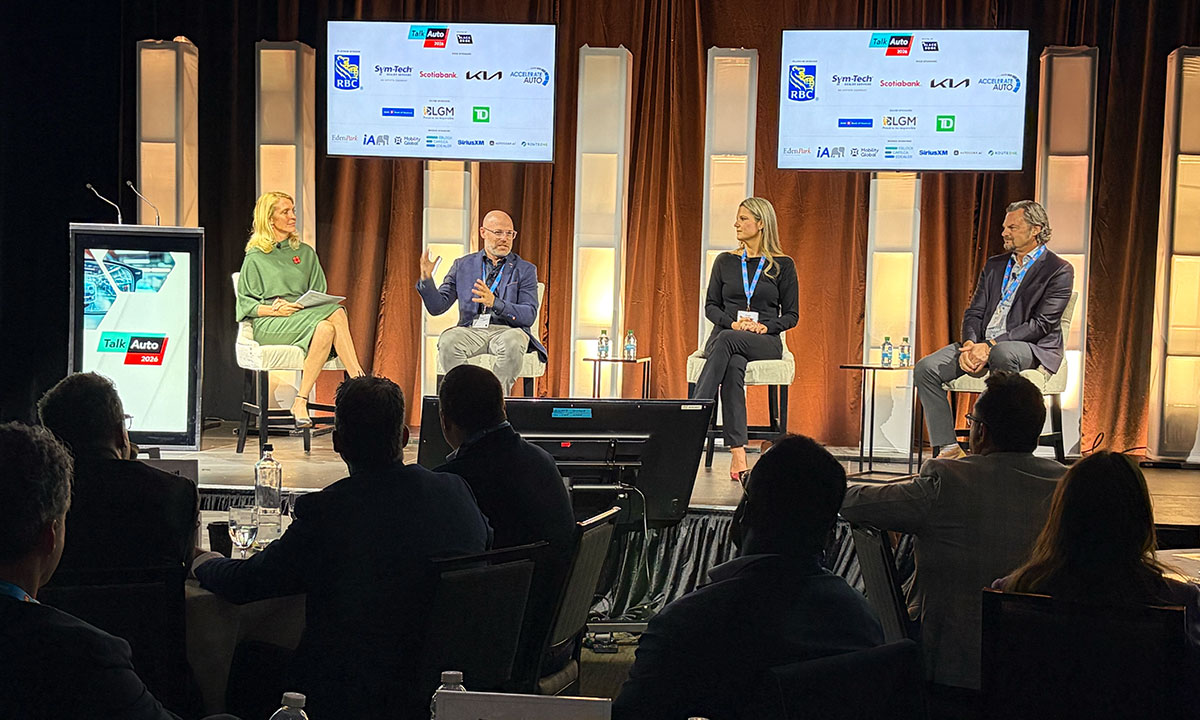
The panel, The Dealer of 2030: How Retail Is Being Reinvented, was moderated by Miranda Pyette, Founder and CEO of Purpose Automotive. Panellists included Ryan Thompson of Ernie Dean Chevrolet Buick GMC; Haley Langford, General Sales Manager at Orangeville Honda; and Kevin Andrews, CEO of AUTO ONE Group and Corpfinance International Limited (CFI).
Asked whether dealership facilities would look dramatically different in 2030, the panellists suggested that changes to the customer experience and internal processes may prove more significant than the physical buildings.
“Spending hours there is a thing of the past,” said Thompson, noting that customers increasingly expect convenience, whether that means transportation home during a service appointment or a more efficient vehicle purchase.
“I still think you’re going to see dealers with massive lots, massive inventory,” he said. “I don’t know what the building transforms into, but we’re definitely not going back, we’re going forward with the customer.”
Langford said dealerships are already examining how AI can improve their operations and allow employees to concentrate on higher-value activities.
“I think it’s actually for the better. It’s an exciting change that’s coming,” said Langford.
She emphasized that customer expectations are also increasing. “They value their time, so when they come in they need to have an experience that is outstanding,” she said.
Andrews said AUTO ONE Group began reviewing and transforming its internal processes several years ago, with an emphasis on simplifying transactions and reducing customer frustration. Thompson also described a noticeable increase in customers arriving at dealerships armed with information and questions generated by AI tools.
“It is growing insanely fast,” he said, adding that dealerships are also seeing more AI-generated internet inquiries.
While customers may arrive better prepared, Thompson said the information they receive is not always accurate or supported by reliable sources. That creates another challenge for sales teams, which need to address misinformation without alienating customers.
He said dealers need to engage customers, ask questions and work through the information together. One of his salespeople has even begun using AI to respond to AI-generated customer inquiries.
Beyond the dealership, other speakers examined the broader economic and manufacturing changes facing Canada’s automotive sector.
Daniel Ross, Director of Strategic Market Insights at Canadian Black Book, examined the outlook for the Canadian vehicle market, including used-vehicle valuations, future vehicle introductions, electrification and changing competitive pressures. Ross discussed the continued strength of hybrids and the anticipated growth of electric vehicles as additional models enter the market. He also highlighted the potential challenges facing established manufacturers as the competitive landscape evolves.
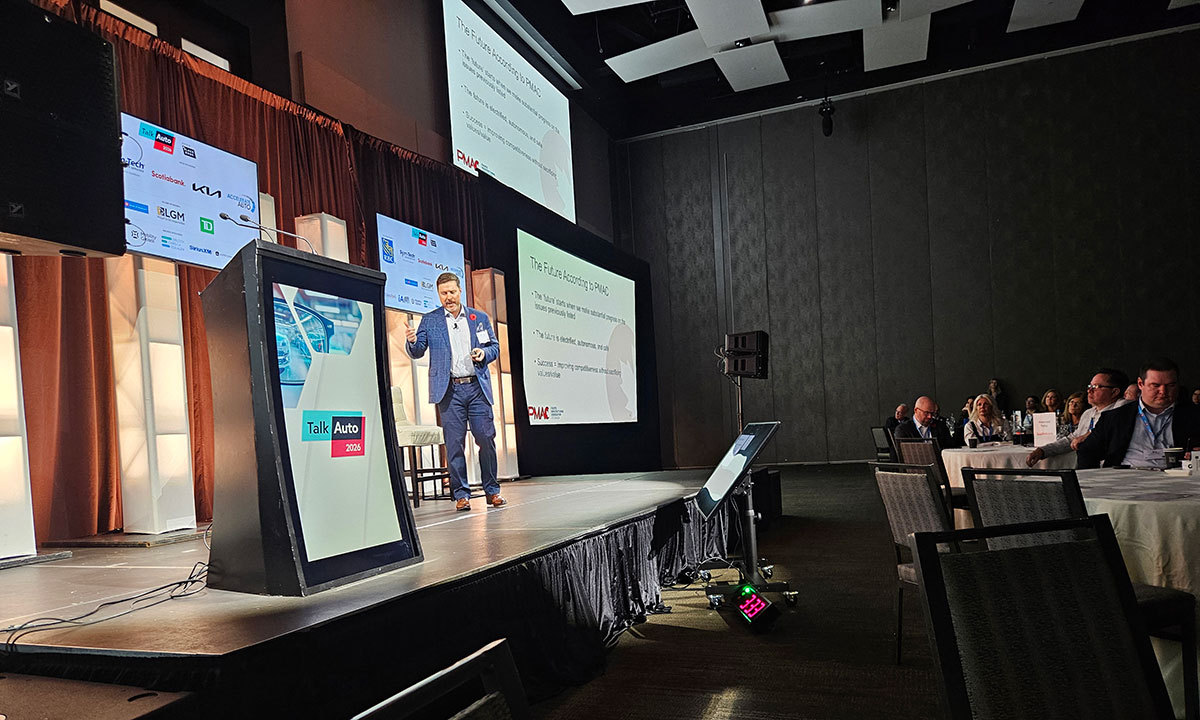
The changing manufacturing landscape was a central theme of the morning keynote by Brendan Sweeney, President and CEO of the newly formed Pacific Manufacturing Association of Canada (PMAC), which represents Japan-based automakers with manufacturing operations in Canada, including Honda and Toyota. Sweeney outlined the significant transformation of Canada’s automotive manufacturing sector over the past 25 years.
A quarter-century ago, General Motors, Ford and Chrysler accounted for approximately 79 per cent of Canadian vehicle production. Today, Honda and Toyota have become the dominant manufacturers, producing approximately 77 per cent of vehicles assembled in Canada.
Sweeney also highlighted the importance of Honda and Toyota to Canada’s manufacturing employment and supply chain, noting that the two companies account for more than 60 per cent of active vehicle assembly plant employment and are major consumers of Canadian-made steel and automotive parts.
He emphasized how closely automotive manufacturing remains integrated across the Canada-U.S. border, making the industry particularly vulnerable to changes in trade policy and tariffs.
“It’s changing rapidly, it’s always changing,” said Sweeney. “It has been changing, it is changing and it will change.”
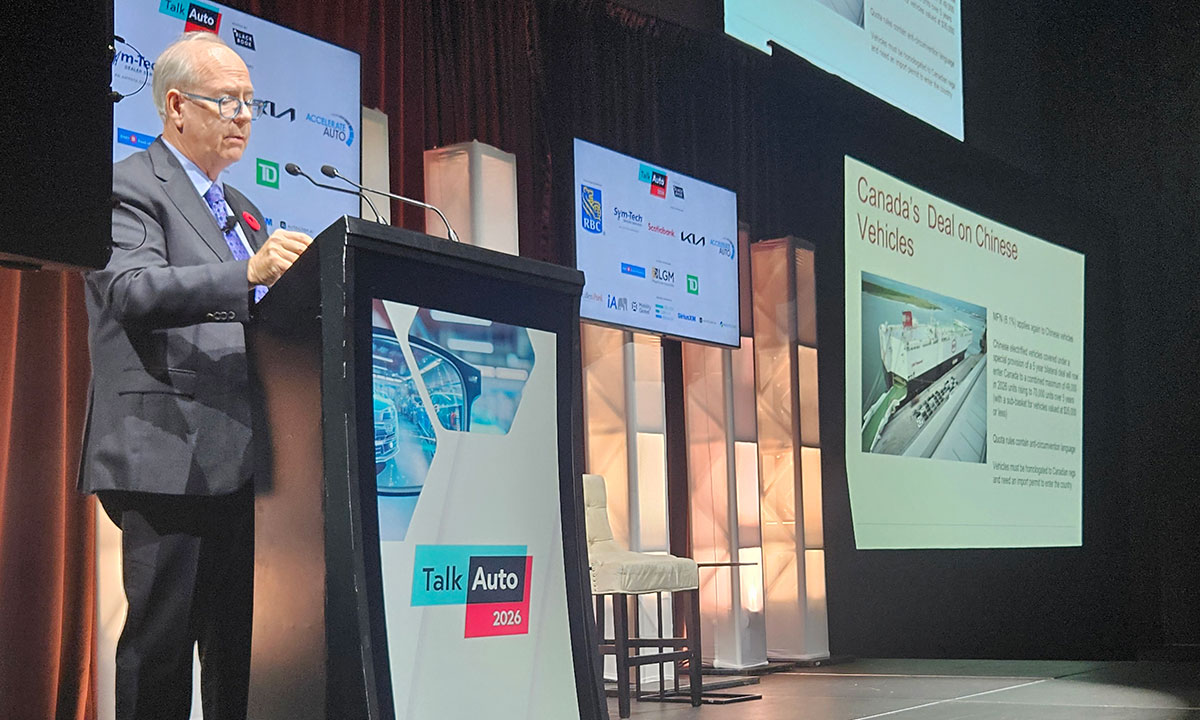
Stephen Beatty, a writer, industry consultant and former senior executive with Toyota Canada, delivered an equally pointed warning about the decisions facing Canada’s automotive sector. His presentation, It’s the End of the World as We Know It, challenged the industry and government to confront the consequences of changing trade relationships and economic policies.
Pointing to next year, he said “2027 is likely to be our Thelma and Louise moment. Do we grab the wheels and steer or do we continue over the cliff?”
He urged the automotive industry to demand greater transparency from government and make its concerns heard as important policy decisions are made. But he also reminded dealers and other industry participants not to lose sight of the customer amid the uncertainty.
“You need to make your voices heard, and most of all you need to stay close to consumer needs because at the end of the day everything in the auto industry begins with a sale,” said Beatty.
For dealers, that message reinforced a recurring theme of the morning discussions: regardless of how technology, manufacturing and trade policies evolve, understanding and responding to customers will remain central to the business.