U.S. consumers may have more financial staying power than income and savings figures alone suggest, with Cox Automotive pointing to rapidly growing financial assets as one reason vehicle demand continues to hold up.
In its latest Auto Market Weekly Summary, Cox Automotive Chief Economist Jeremy Robb examined Federal Reserve Distributional Financial Accounts data to assess how financial wealth may be supporting consumer spending.
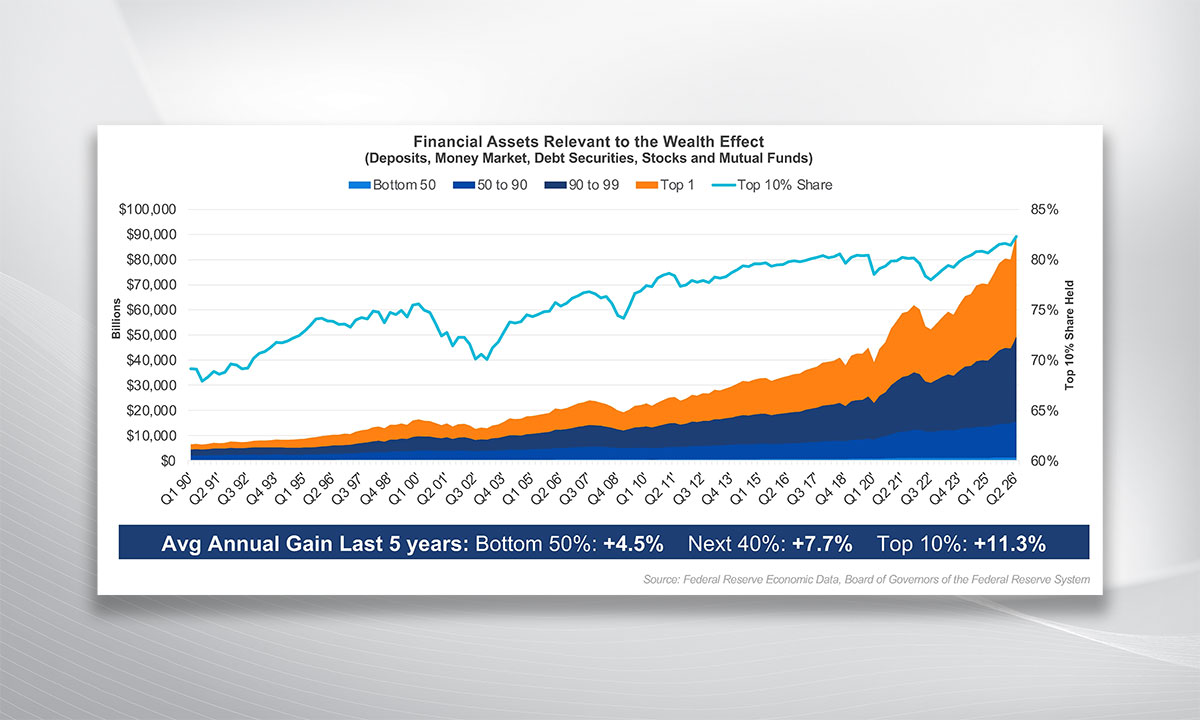
Cox focused on deposits, money market funds, debt securities, corporate equities and mutual fund shares held outside retirement accounts. Collectively, those assets have grown at a compound annual rate of 11.3 per cent over the past seven years.
By comparison, the Consumer Price Index compounded at 3.9 per cent, while personal income grew 5.7 per cent annually and personal expenses increased 6.3 per cent.
The gap between income and expense growth comes as the personal savings rate has fallen from 6.8 per cent to three per cent over the same period. Robb argues growth in financial assets is increasingly helping support spending.
The benefits, however, are unevenly distributed. Cox said the top 10 per cent of U.S. households now hold 82 per cent of the financial assets examined, up from roughly 75 per cent before the pandemic.
Money market holdings have also risen sharply across wealth groups. Cox said they have increased 197 per cent overall since the pandemic, while holdings among the bottom half of households have compounded at 24.9 per cent.
Financial markets therefore remain an important risk. Corporate equities and mutual funds account for 72 per cent of the assets Cox examined, meaning a significant stock market correction could affect household wealth and spending.
For the auto industry, Cox believes the financial buffer helps explain why U.S. vehicle demand has remained steady despite persistent affordability pressures.
The analysis, although U.S.-specific, highlights why traditional measures such as income, inflation and savings may not fully explain vehicle demand. For Canadian auto retailers, the broader takeaway may be that household wealth and access to liquid assets can also influence consumers’ ability and willingness to make major purchases.