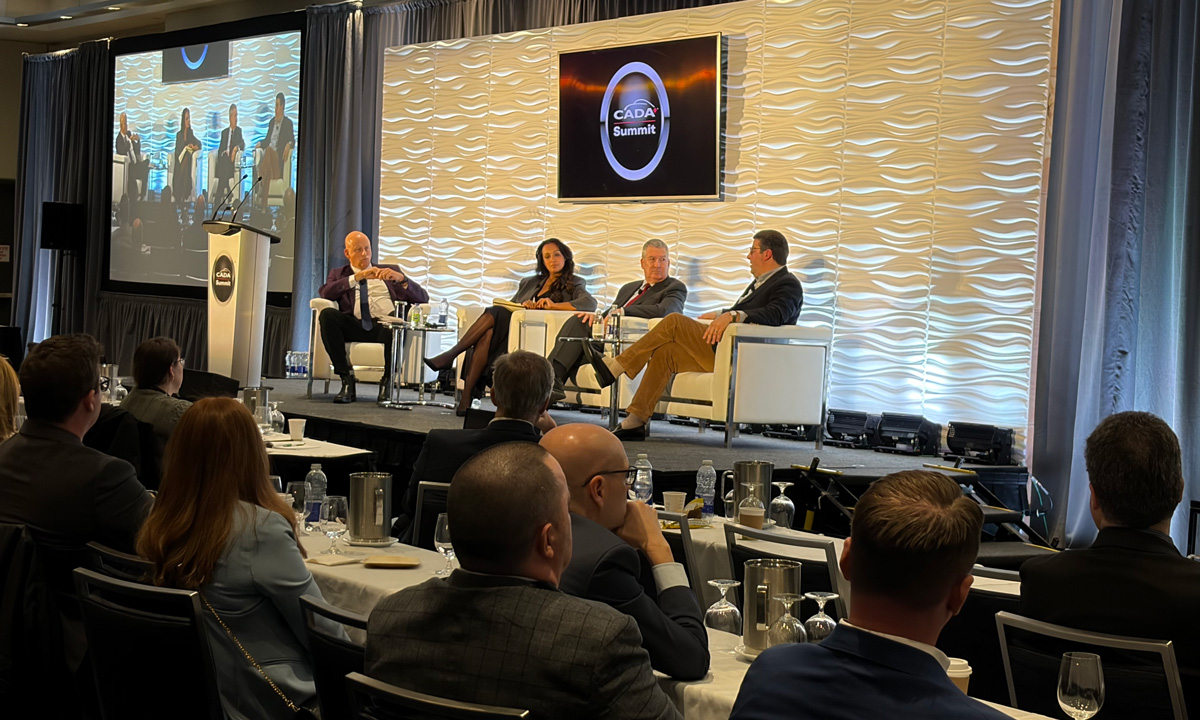
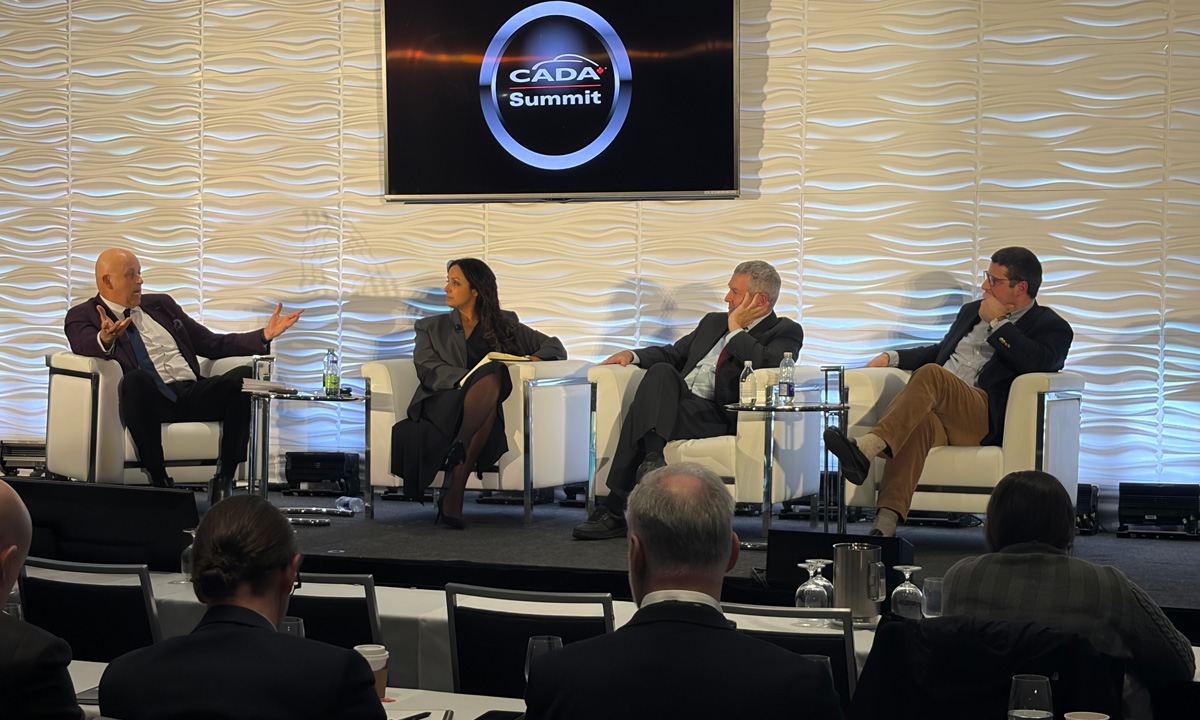
The 2026 CADA Summit closed with a candid assessment of Ottawa’s political climate, as three veteran observers unpacked how shifting federal dynamics and renewed instability in the United States could shape the business environment facing Canadian auto dealers.
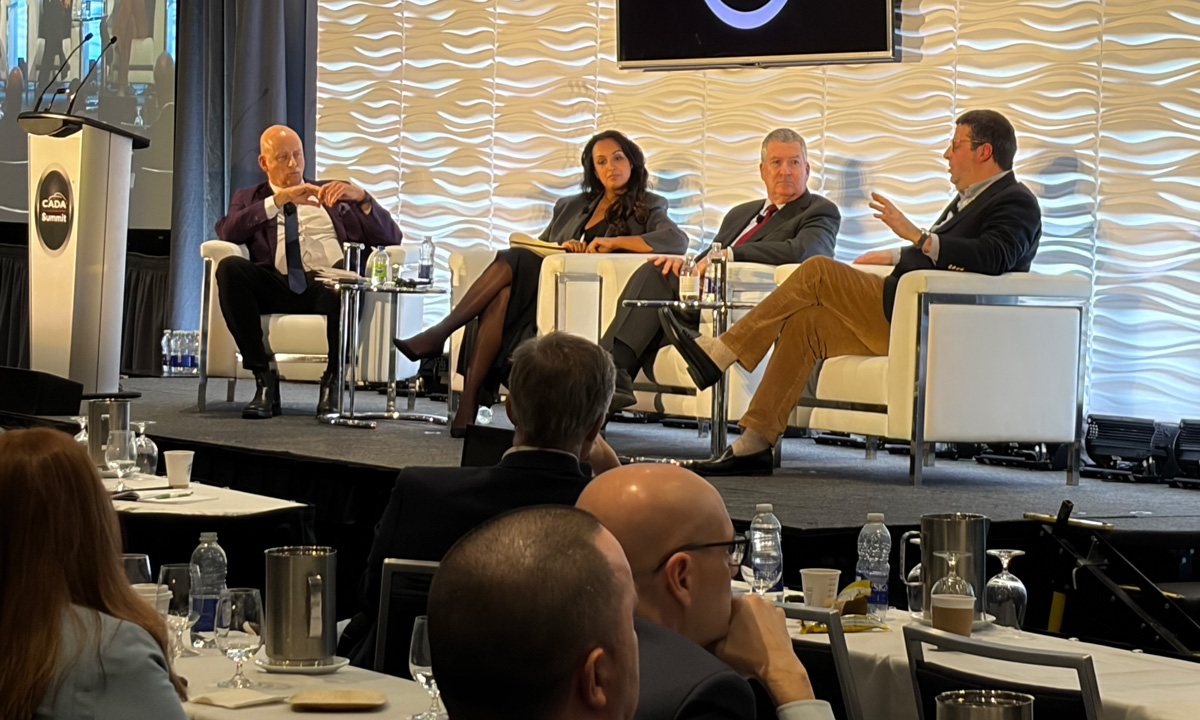
Moderated by Huw Williams, public affairs for CADA, the panel brought together Althia Raj of CBC, David Akin of Global News and Sean Speer of The Hub. The goal, Williams told the audience, was to provide practical insight into political and geopolitical trends that could directly affect dealers’ operating conditions.
A central theme was the return of U.S. President Donald Trump as a dominant issue in Canadian politics.
Speer argued that the relevance of Trump has once again altered the domestic electoral calculus. When Trump recedes from the headlines, he suggested, Canadian politics tends to refocus on affordability and household economic concerns. But when Trump’s actions or rhetoric intensify — including trade threats or broader geopolitical disruption — Canadian voters respond differently, often consolidating around stability.
That dynamic, Speer said, played a significant role in the last election cycle and could again shape whether the Liberals or Conservatives have the advantage should Canadians return to the polls.
Raj agreed that Trump has been a ballot-driving issue, noting that recent federal campaigns have effectively been framed around U.S. volatility as much as domestic policy. The degree to which that remains true in 2026, she suggested, may determine whether another election is attractive to the governing Liberals.

Will there be another election?
Speculation about election timing was a recurring thread. None of the panelists treated an early election as inevitable, but all agreed the parliamentary math remains fluid.
Akin said Prime Minister Mark Carney appears cautious about rushing back to voters, particularly given how close the Liberals came to but did not secure a majority previously. Internal polling may be encouraging, he suggested, but Carney has reason to be skeptical of overconfidence.
Raj emphasized that opposition-party strategy will matter as much as Liberal ambition. The New Democrats are in a leadership transition, and the Conservatives continue to assess how best to position themselves after a surprising electoral outcome. In that environment, she said, opposition parties may not be eager to trigger an election they are not certain they can win.
Speer added that the government’s short runway between Carney’s leadership transition and the last campaign left it with a relatively narrow policy platform. As a result, the Liberals have moved quickly on several signature commitments. Before long, however, he argued, the government will need to articulate a broader, more coherent agenda if it wants to justify a renewed mandate.
All three panelists agreed that Carney’s governing style differs markedly from that of former prime minister Justin Trudeau. Raj described Carney as punctual, decision-oriented and demanding of both ministers and senior public servants. She said the cabinet under Carney appears less deliberative and more structured around presenting options for resolution rather than extended debate.
Akin drew comparisons to a more disciplined, numbers-focused approach reminiscent of past Conservative governments. He said Carney appears comfortable acting quickly and using political theatre strategically, citing the highly visible signing ceremony that accompanied the effective elimination of the consumer carbon price.
Speer rejected the notion that Carney is merely a technocrat. He argued that the decision to scrap the carbon tax — an issue closely associated with Liberal identity — demonstrated political shrewdness and a willingness to recalibrate when necessary. In his view, the federal Liberal party has once again shown its capacity to pivot toward the centre when it sees electoral advantage in doing so.
Auto policy, EV mandates and competitiveness
Moderator Williams directed the conversation toward automotive policy, highlighting CADA’s long-standing concerns about the federal EV mandate and broader competitiveness pressures.
Akin told the room that, based on his conversations with individuals close to the Prime Minister, Carney’s team is reassessing elements of Canada’s traditional auto alignment. He suggested there is skepticism within the PMO about the long-term commitment of the Detroit Three to Canadian production, particularly given past bailouts and plant closures.
That does not mean Ottawa is abandoning North American manufacturers, Akin stressed. But he indicated that the government may be more open than in the past to strengthening ties with European and Asian automakers — and potentially to exploring new market entrants if affordability and trade pressures intensify.
Raj said she is hearing similar signals, describing the EV policy adjustments as part of a broader repositioning. She noted that Carney’s environmental credentials had once been seen as central to his political identity, yet his early moves suggest a more pragmatic balancing of climate goals and economic realities.
Affordability emerged as a key sub-theme. Akin said Carney appears concerned about the high entry price of new vehicles and believes there may be unmet demand at lower price points. In a market facing tariff threats and supply-chain fragility, that affordability lens could influence how Ottawa evaluates future policy decisions.
The panel closed on the possibility of renewed trade conflict with the United States. All three journalists treated the prospect of escalating tariffs or a broader political rupture as a serious risk.
Speer said that if relations deteriorate further, the political environment could shift rapidly again, possibly overriding partisan incentives. Raj suggested that, in such a scenario, even sharp political rivals might feel pressure to coalesce around national economic interests.
Williams framed that as a “Team Canada” test. For the automotive sector in particular, he argued, a deeper trade crisis would require alignment between government and industry to maintain competitiveness and protect jobs.
TD Auto Finance is the event’s exclusive sponsor.