
DesRosiers Automotive Consultants (DAC) often covers the impact of COVID-19 on new vehicle sales in Canada. But in considering the impact on the automotive aftermarket, the company found the “sudden and unprecedented” decline in kilometres driven to be one of the most striking aspects of this downturn.
“Kilometres driven is one of the key drivers of market demand in the aftermarket along with the age structure of the vehicle parc,” said DAC in its aftermarket outlook report. “In examining dynamics in regards to kilometres driven data is sparse and imperfect at this point. We have examined a number of different data sources.”
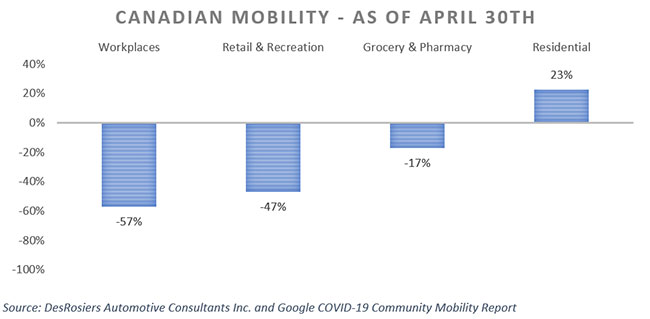
For example, as of April 30 mobility to workplaces was down 57% in Canada — according to Google mobility data. Workplace data is important because of the significant role vehicles play as the preferred method of commuting in Canada. More than 78% of working Canadians use this form of transportation.
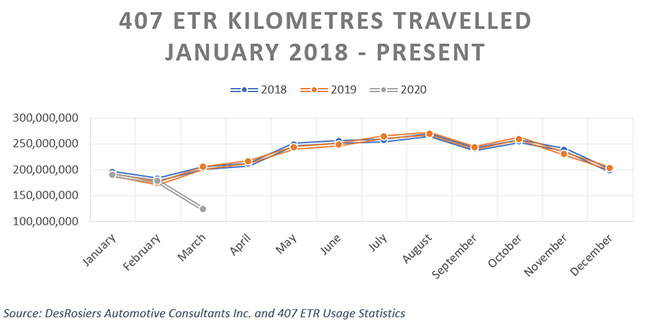
DAC also reviewed data from the 407 ETR highway in Ontario, which revealed a decline of 39.4% in March.
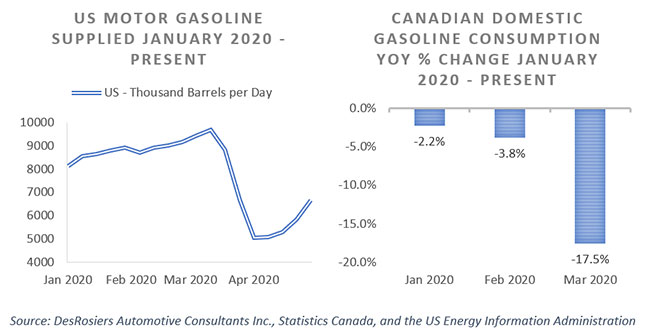
“Data on Canadian gas consumption is still lagging but preliminary data for March shows a 17% decline for the month — a figure that will undoubtedly deteriorate in April as the full implications of the various provincial states of emergencies were felt,” said DAC. “Overall DAC is forecasting a 46-52% decline in kilometres driven in Canada in April — with a slow recovery in the subsequent months.”
DAC said it is still early days for analyzing the novel coronavirus and its impact on the Canadian aftermarket, and that we will have to keep an eye on how quickly and successfully provinces reopen their economies. But if there is one positive thing to point out, it’s that privately owned vehicles appear to be the preferred method of transportation in countries that have relaxed restrictions.
But these are all short-term considerations and we have yet to see the longer-term structural changes that will take place. For example, COVID-19 could lead to a broader shift toward working from home and re-balancing the transportation needs of our society, said DAC. And the impact on the future of public transport systems in Canada, even though it plays a relatively small role, will need to be considered.
“Within the aftermarket itself, the past month has seen unprecedented levels of activity for online retailing that may serve to reshape distribution channels in the years ahead,” said DAC.
They plan to publish a more detailed report in the summer, but until then DAC said its data indicates that aftermarket demand will deline 11-13% this year.
“The statistical scenarios in the model vary greatly, however, from a decline of 6-9% in the optimistic scenario, to a precipitous decline of 20-25% in a negative scenario under which a severe second wave of the virus stalls provincial economic re-openings,” said DAC.