
 Consumers that originally intended on buying a vehicle before the COVID-19 pandemic are more likely to purchase one after the crisis has been resolved, according to an Ipsos Auto Global Study.
The study includes consumers polled in 11 countries: the U.S., China, Japan, Brail, Russia, India and the Euro5 (Germany, France, U.K., Italy and Spain.)
“Despite forecasts predicting a decline in light passenger vehicle sales for the year (25-30% in the U.S. and 20-25% globally), there is some potential good news on the horizon for the auto industry,” said Ipsos in a news release.
The decline, they say, may not be as significant since consumers that intended to purchase a vehicle pre-crisis expressed more interest in doing so post-crisis.
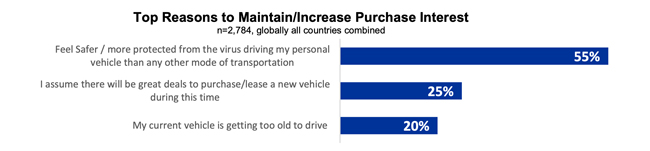
The elements driving their interest in buying a car post-pandemic (55%) are personal safety and protection. Another 25% want to purchase or lease a vehicle due to the deals they assume will be offered during this time, and 20% of respondents said their vehicle is too old to drive.
“Safety in automotive decision-making has always been an important factor, but clearly this is a shift towards safety by social distancing instead of sharing crowded public transportation,” said Ipsos. “This key insight into the consumer mind should play heavily in upcoming and future automotive marketing messages.”
The study also revealed that Americans remain optimistic despite the current economic situation, with nearly a third of consumers that planned to purchase pre-COVID now planning to do so after the crisis. Less than 20% revealed a lower interest in purchasing a car after the issue has been resolved.
In China, consumers are optimistic as more than 50% have stated they are likely to purchase a vehicle post-crisis.
Consumers in Brazil, the U.K., France, Germany, Italy and Spain do not share that optimism and appear more reserved about the idea of purchasing a vehicle, and are less likely to do so.
Financial concern is the main reason consumers in the U.S., China, Brazil and EURO5 would decrease their purchase interest globally, according to Ipsos. However, the company also said incentives provided by automakers (such as 0% financing, deferred payments, and protection against job loss) could improve this issue.
As for how consumers prefer to manage their vehicle purchases and payments, John Kiser, SVP of Automotive & Mobility at Ipsos, predicts a shift to the online sphere.
“The COVID-19 pandemic will likely shift the status quo on how vehicles will be purchased, I think we will see more digital purchases, much more online/virtual shopping and less dealership visits for test drives,” said Kiser. “Auto manufactures that can quickly add a full virtual shopping process will create an advantage to capture more buyers.”

Ipsos surveyed a total of 11,000 consumers aged 18-74 for the study.