Changing consumer demands and new technology are impacting the F&I office experience. Dealers are starting to adapt.

An increasing number of car dealers are feeling the pressure: consumers want transparency when it comes to the full cost of vehicle ownership, and they want that information to be readily available online, according to Jeff Schulz, Executive Vice President of Marketing, LGM Financial Services.
In an interview with Canadian auto dealer, Schulz said there is a lot of pressure on the industry to create an environment and an online experience for the consumer that will allow them to access the information they are looking for — including detailed pricing for things like finance and insurance products.
“There are some (dealer groups) in the United States that are quite far ahead of the curve, and are really trying to get to the point where the consumer can go online and choose the vehicle they want and add in all the features, including F&I products,” said Schulz. “Genesis is doing that now. It’s not quite at the point where everything is done digitally — you still have to sign the final paperwork — but all of the buying-decision part of the process is done online.”
And Schulz would know, seeing as LGM and Genesis Motors Canada teamed up to launch a new suite of F&I protection products in February 2018. Product descriptions and pricing can be found on the Genesis website when you select “Build and Purchase.”
Some customers will never opt for the online process, but many consumers will. The younger the consumer, the more experienced they are with buying products online, and the more they are going to want the automotive experience to be an online experience as well.
Schulz said he doesn’t think the role of the dealership is going to go away, but that the dealers and OEMs that choose to integrate into multiple channels, and are able to do this seamlessly, will gain more market share. These same businesses will also ensure consumers feel good about their purchase and ownership experience, which is a key factor in the survival of retail businesses catering to millennials and future Generation Z car buyers.
It’s a sentiment echoed by Derek Sloan, Executive Vice President, Sym-Tech Dealer Services. He believes consumers would be more open to purchasing F&I products if they could research it ahead of time, to educate themselves, and to have a better understanding of what the products are in the first place. “We live in a research society, where 70 per cent (of consumers) want to start the F&I process online.”
An Autotrader Car Buying of the Future Study reveals that consumers would indeed be open to purchasing more F&I products if they learned about them earlier in the car buying process. And in fact the report states that, specific to F&I, a majority of consumers (70 per cent, as stated by Sloan) want to start the process online. Furthermore, the study notes that starting the process earlier on will not only reduce the time consumers spend in the dealership to complete their purchase (and thus reduce their number one frustration) — it will also boost customer satisfaction.
“This is something that again, is a little scary for dealers. They don’t want to put these products online necessarily, but the OEM definitely wants to and they’re going to,” said Sloan. “This whole adoption of F&I is a bigger part than just the person in an office. It has to be there. At some point in time it’s going to happen anyway, and you might as well be part of that disruption rather than get disrupted by not doing anything.”
Subscription and leasing
The movement to online sales is not the only thing impacting the automotive and F&I sphere: the slowdown in new vehicle sales, the rise of leases, of different types of vehicle ownership, and a potential swing towards the used vehicle segment is also putting pressure on the industry and the F&I side of the business. It’s shifting the balance where the volume is coming from, said LGM’s Jeff Schulz.
This is because consumers will be less concerned about mechanical breakdowns and extended warranty products when it comes to subscription services. They may still need some products, such as appearance protection and other forms of protection for the vehicle, but there will be less opportunity for dealers to sell F&I products for a subscription-type of ownership model.
“The consumer doesn’t actually own the vehicle, they are just using it for a period of time. They don’t have as much concern over the long-term viability of the vehicle,” said Schulz. “I think having unique products for those kinds of ‘ownership’ models is going to require us to be very creative.”
As for the increasing number of lessees, this situation does two things: one, since the consumer will return the vehicle at the end of their lease, an extended warranty product is unlikely to interest to them. But there are other products that will be of value to them, which means dealers and insurance companies will need to change the type of products that they would typically recommend or develop.
Second, the used vehicle fleet sector will create opportunities for F&I offerings, because dealerships selling used cars will also sell products that work well with these vehicles.
Electric vehicles
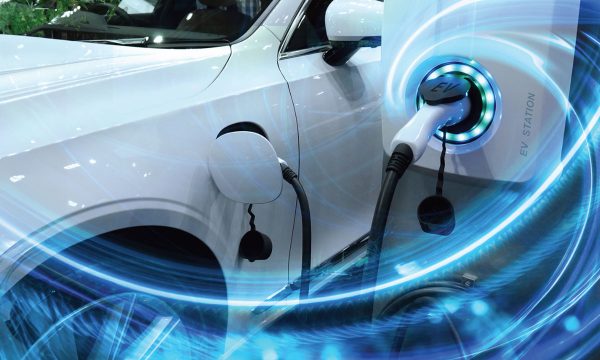
Electric vehicles, EV-related technology, and the increase in consumer purchases of EVs or alternative fuel vehicles is rising and is playing havoc on F&I by changing the dynamics of the product mix and what people are looking for, and also how the market is moving.
According to a February 2019 CBC article, one in 11 new cars sold in Canada falls under the “EV” category, with sales near doubling in 2018 compared to the previous year. And since the national Incentives for the Zero-Emission Vehicles (iZEV) Program was released by the federal government in May, uptake in the program has been “quite strong,” based on a July 2019 CADA Newsline article, which reveals that, as of June 21, 8,800 claims for reimbursement have been submitted by dealers, with the majority coming from Quebec, British Columbia and Ontario.
“In terms of F&I, if there is an increase in percentage of people that are buying EV vehicles, then providers like ourselves, of extended warranty products, need to make sure that our products provide really good coverage,” said Schulz. “The requirements are different from an internal combustion engine, so we need to make sure we have the right product for the consumer — that it’s a good value proposition for them.”
He adds that part of the challenge is to ensure they are not only providing good coverage, but also at a reasonable price so the consumer is well protected.
F&I Trends
As for what’s trending in the automotive F&I arena, Sym-Tech’s Derek Sloan said there are three categories for dealers to keep an eye on:
- Non-prime market: This year the non-prime market has ramped up even more. Dealer groups and new car franchises are tapping into this because the market is growing. “(It’s) a priority profit centre, a priority element in the growing of their business.”
- Hybrid F&I model: In terms of the in-dealership customer-buying process, hybrid F&I remains an important trend where dealers are more and more interested in having one representative handle the whole transaction from beginning to end. This can be merged with the use of technology so that consumers can select options online or on their phone.
- Menu technology: “Menu technology, or more so, presentation technology, has increased and this thing is not going to stop,” said Sloan. “It will continue, and we are going to have more and more providers, F&I managers, dealerships, dealer groups, and even OEMs — very much so — promoting a technology experience for the customer as far as the buying experience goes, including the F&I piece, in a big way.”
If you had to encapsulate all of this under one umbrella, Sloan said dealers should ask themselves: how do I maximize and give my customers a better experience than what I’m offering today, but without compromising profitability?
Overall, dealers can expect to see these trends being increasingly executed over the coming years.
“I think in general it’s getting to a point where dealers are going to have to make these changes, and they are starting to feel a little bit more pressure, and the adoption of this is taking longer than what some people would have thought,” said Sloan. “But I think we are going to see more of the same, in terms of focusing on the customer and on technology, all of this type of stuff. They are just going to have to figure out how to execute it. That’s the key part, and that’s why I’m busy.”