Future of cars and ownership tackled at LA Auto Show conference

Will we own cars in the future? Will the rise of ride-sharing and autonomous vehicles reduce car ownership? Those were a few tough topics tackled by academics and automotive experts at the Nissan Futures conference, ahead of the LA Auto Show in Los Angeles, Calif. in November.
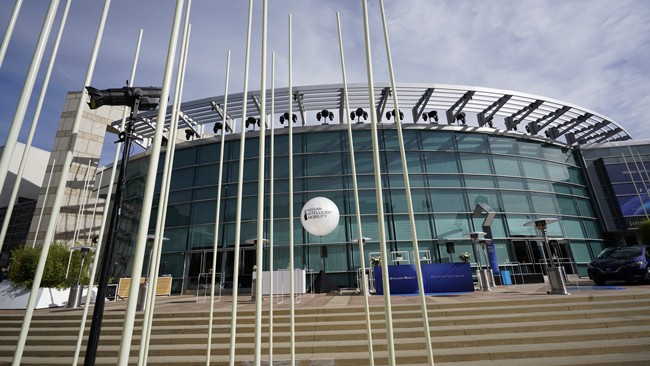
The future isn’t all gloom and doom for dealers. Experts agree we will own vehicles in the future, but we may not have multiple cars parked in the driveway. And the role of the vehicle will likely change, too. “A vehicle will serve different purposes than it does today, which is mainly developed for the individual. Now, it’s got to work to meet the needs of a city and a number of people riding in it at the same time,” says Rachel Nguyen, Executive Director, Nissan Future Lab.
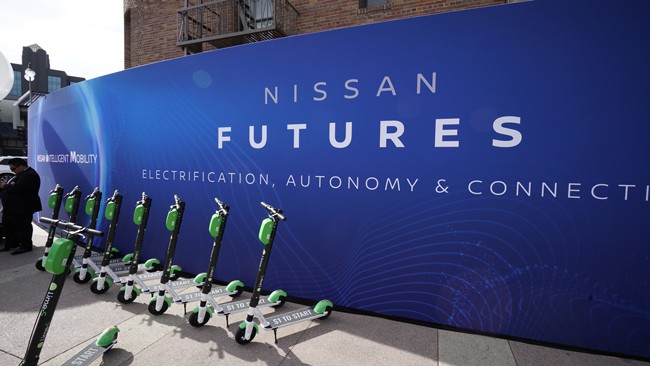
Ride-sharing won’t take the place of car ownership because it doesn’t work in many places. “In places where you don’t have any other option, the vehicle is still the only option for some people. Maybe we won’t have multiple cars in your household and there will be other ways to own a vehicle. There is still a lot to be said about the convenience and the cost right now, which is still to some extent more affordable than ride-hailing all of the time,” says Nguyen.
In fact, there are some advantages to ride-sharing. “What we start to see is better utilization of cars because of ride-sharing. That’s going to allow us to build the cities and roadways differently,” says Rob Jernigan, Regional Managing Principal, Gensler. “The roadways really are an open space for cities so as a planner and architect how do you reclaim a lot of these roadways, how do we reclaim parking? How do we reclaim gas stations? How do we take all of this valuable landscape and put it back to work for us for other things besides parking cars?”
While car ownership is about mobility, it’s also an emotional purchase for many. “There’s a number of emerging markets where it’s an important statement and an important means to get around,” says Nguyen. “When you think about ride hailing and ride sharing in the future, how does that emotional element come into it? It isn’t just about efficiency for consumers. There’s a lot of opportunities to be creative around moving people together and establishing deeper threads into a community through mobility. There’s a lot of things about car ownership, like the emotional elements that will move into the shared world and the single vehicle ownership will remain. But the point is not to promote a single-occupant vehicle as much,” says Nguyen.
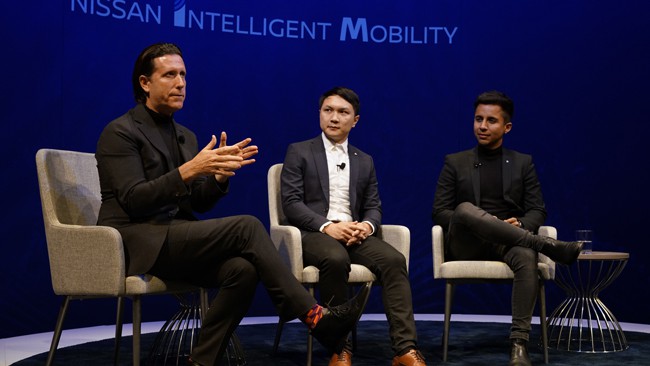
And for designers it’s a challenge. “I hope to see that people are still passionate about vehicles,” says Daniel Jimenez, Sr. Designer at Nissan. “Maybe the automobile is no longer an automobile. It’s some sort of new vehicle. I think there’s always going to be a want to customize, a want of ownership, a want to show off your car. It’s an avatar. I think in the future it will be much more of a stronger cousin to an avatar because we’re going to be spending a lot of time in these vehicles and it’s basically an exoskeleton of what we are. We have to catch up to the technology creatively and use it to its full potential,” says Jimenez.
Jernigan says people want options and the automotive industry doesn’t give them enough. “What we’re really doing is we’re buying a Swiss Army knife. The reason we’re buying a Swiss Army knife is because 90 per cent of the time I’m in my car by myself. The automobile industry needs to figure a way to deliver more options to people. I have this notion that I have to buy and I have to own, which means I have to make a real commitment. And when you look at the world right now where flexibility and optionality is so important to walk up to somebody and say the only way to really deal with this is this huge commitment. That’s what we really got to change.”
There’s a lot of things about car ownership, like the emotional elements that will move into the shared world and the single vehicle ownership will remain.
“Go back to 2007 when the iPhone was created. Who here doesn’t have an iPhone? If anyone said in 10 years we’d adapt to this extent and not only adapt, but the level of dependency that we’ve got and the way it has changed not just one piece of our lives but all of it. We actually change pretty quickly. We’ve all learned the only constant in the world is change. I think you’ll see change is going to happen rapidly. And the only resistance to this change is just going to be people.”
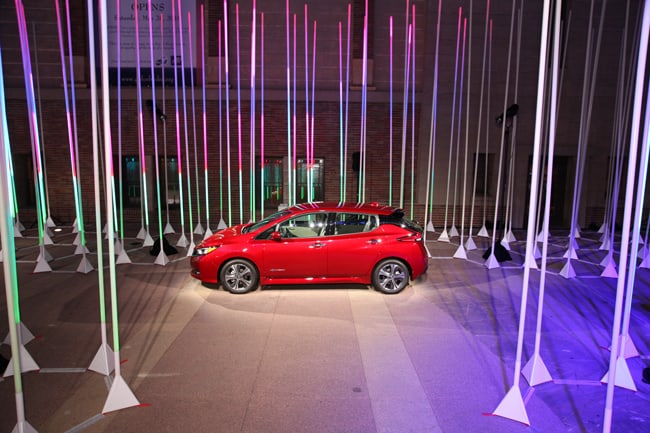
He says in the short run it will be a disruptive, wild ride, but there will be bright spots. “The technologies that are coming do have the power to create new opportunity. It has to be cleaner, electric, shared and the innovative people who will win, will do it in a way that adapts to what people are looking for. The consumer will rule,” says Jernigan.
Dealers just have to hope that all those consumer choices still get routed through their facilities in the future, as they too evolve to meet this shifting demand.