Although few in number, high profile women in the automotive industry are making a big impact
Women are shattering the glass ceiling in the automotive industry. Here are a few pioneers breaking barriers in the car business and encouraging other women to do the same.
 Susan Gubasta, President and CEO, Mississauga Toyota
Susan Gubasta will make history next year when she takes the helm as the first female president of the TADA, in April 2018.
Gubasta followed in her dad’s footsteps. He owned several dealerships in Canada. “I had no sights set on being in the automotive industry. My father is such a great salesman. He came from nothing and built this business and then just convinced me — that’s how good he is,” she laughs.
“I said to my Dad I was slave labour for the first twelve years of my career! He literally only paid me probably 50 cents on the dollar. He laughs and says, ‘I needed to make you tough.’ He did. I was a lot softer back then. I had to grow a thick skin,” she recalls.
I’ve learned how to delegate — that was key for me. I always wanted to hold on and be a part of everything that everybody was doing.
Out of 82 Toyota dealerships in Ontario, Gubasta is one of only four females at the helm. At her store, 18 out of 67 employees are women — a smart move to appeal to female customers. “In terms of influence, 80 per cent of all purchases are still influenced by females; but now, over 50 percent are females purchasing a vehicle on her own.”
What’s the key to Gubasta’s thriving success? “I’ve surrounded myself with really great people and finally allowed them to shine. I’ve learned how to delegate — that was key for me. I always wanted to hold on and be a part of everything that everybody was doing. I can’t do that anymore. I was 50 percent of the problem.”
“I’ve been in automotive 24 years and it has taken me 23 years to finally find work-life balance. It’s been up and down and sideways. But I think I finally have it. I have a very supportive husband and my son is at an age now where he gets it if mummy has to work.”
 Maria Soklis, President, Cox Automotive Canada
“The automotive industry and I found each other accidentally,” says Maria Soklis, who took the helm at Cox Automotive Canada on June 8, 2015.
Before that, she was the VP and COO of Kia Canada Inc. and the highest-ranking female executive at Kia Motors globally.
From 2009-2015, Soklis led a team of 169 corporate staff, a parts warehouse, and overlooked 184
Kia dealerships across Canada.
“I remember the Canadian automotive business as being much more traditional and conservative than it is today. I have noticed some changes over the last few years including more diversity in various areas of the business.”
That diversity includes more women.
There will always have to be discussions around equity because women quite often have dual functions — their career and their family.
“There are more women in the automotive industry than years ago. I think some companies take it more seriously than others. There will always have to be discussions around equity because women quite often have dual functions — their career and their family. If they have a family they have heavy responsibilities so they need more balance. If a company learns to manage that well and provides equitable solutions and opportunities, women strive and thrive in their company. There’s loyalty. Because they’re happy, they perform better,” says Soklis who received the Queen Elizabeth II Diamond Jubilee Medal in 2012.
What’s the key for women to succeed in this business?
“Good communication. Be very well organized because it doesn’t mean you can work less. It means you have less time to do more. Make sure you keep your work ethic. If you do those three things it’s very easy to move along in the industry or easier than it was years ago… I also have a very, very supportive spouse at home who is very understanding and willing to help. He frees me up to do whatever I need to do professionally and yet still take an active role in our household.”
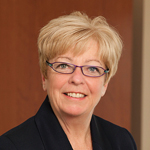 Mary Nurse, Dealer Principal, Nurse Chevrolet Cadillac
Mary Nurse has deep roots in the car business. Her father sold cars since 1966 and she started working alongside him in high school. After graduating, she pursued a different career, but after a 20-year hiatus, she returned to the auto industry in 1997.
“The culture has changed within the automobile industry. It doesn’t matter if it’s female led or male led. It’s about building relationships first and that kind of culture appeals to women and to a lot of the customers,” she says.
At her store, 5 out of 18 salespeople are women. On the service side, 3 out of 7 are female consultants. “You try to get a blend to meet the needs of the customers and what they are most comfortable dealing with. 80 per cent of women are involved in the decision-making process when it comes to buying a car. When I look at our service reception, a wild guess is about 70 per cent of people that come into our service lane are women…We have women as body shop consultants. It’s important to have a mix because customers coming in want to be able to communicate and relate to the individual they’re talking to,” says Nurse, who was a 2011 CADA Retailer Laureate.
It’s important to have a mix because customers coming in want to be able to communicate and relate to the individual they’re talking to.
Nurse’s daughter recently followed in her footsteps, returning to the car business two years ago after a 10-year corporate career. “I was surprised, but pleased when she decided to join the organization — maybe even take it to the next generation.”
 Katie Naughton, President, 401 Dixie Kia
Katie Naughton is a dealer kid from the U.S. who now calls Canada home. “I grew up in the auto industry. My father has been in it for the last 45 years; he owns a Ford dealership in Denver, Colo. My grandfather was vice president at Ford and Chrysler and worked very closely with Lee Iacocca back in the day.”
People are seeing the value of women. We just need to have more interest in trying to recruit them.
At 16, Naughton started working at her dad’s dealership, doing odd jobs from mowing the lawn to washing cars. At 18, she started selling vehicles before going to Kansas State University.
“I was female and I was the dealer kid so I had a double-edged sword going against me. They certainly look down at you, especially when you’re selling trucks. The truck buyers don’t want to listen to an 18-year-old girl talk about a super duty,” she laughs.
In 2007, she headed to the NADA dealer academy in Washington, DC. That’s where she met her husband and business partner, Eric Levitt. After moving to Canada in 2010, they purchased Dixie Kia in Mississauga, Ont. in 2013. “I’m female. I’m younger. I have a high role that most females don’t hold at all. People tend to underestimate what I can bring to the table or they don’t really fully understand the knowledge that I have in the business. Eric is an outspoken, loud, extroverted type of personality and I’m not as much and sometimes that can get mistaken as I don’t know what’s going on. I think that’s a big misconception,” says the 36-year-old.
“I’d love to see more women enter in the industry. This is a great industry. Females shouldn’t shy away from it. They can be very successful. It’s becoming more accommodating to schedules and lifestyles. People are seeing the value of women. We just need to have more interest in trying to recruit them.”
 Helen Ching-Kircher, Dealer Principal, President & CEO, DFC Auto Group Inc.
Originally from Hong Kong, Ching-Kircher was an entrepreneur from the get-go. She moved to Canada with her children in 1989 and then met her husband who passed his passion for luxury cars on to her. “Since our first meeting three decades ago, we have grown Downtown Fine Cars Group Inc. into a multi-million dollar luxury car business.” But it wasn’t always smooth sailing. “In the early days, one of the biggest challenges I faced was being taken seriously by my male counterparts. I’m happy to say, however, the path to success as a woman, though a difficult one, was one I would not have missed.”
“In 2017, the barriers to women being considered as equals are crumbling away in the automotive field. We have women running entire manufacturers, owning dealerships, and bringing new ideas and approaches that are shaping the automotive industry. I have also ensured that women in my organization have opportunities to succeed; a number of them occupy positions of management and are every bit as qualified as their male counterparts,” says Ching-Kircher who is also a Queen Elizabeth II Diamond Jubilee Medal recipient.
Attitude, passion, courage, and thick skin is all you need. If you have a passion for an industry, enter it! Don’t be afraid. Dream big.
“Attitude, passion, courage, and thick skin is all you need. If you have a passion for an industry, enter it! Don’t be afraid. Dream big. Do the impossible first, after that the hard things will be easy. I personally wish there were more women that would consider entering our industry. It is truly rewarding.”