Dealers waiting for their manufacturers to tell them how to use artificial intelligence may be making a mistake, according to automotive digital strategist Mathew “Growdy” Growden.
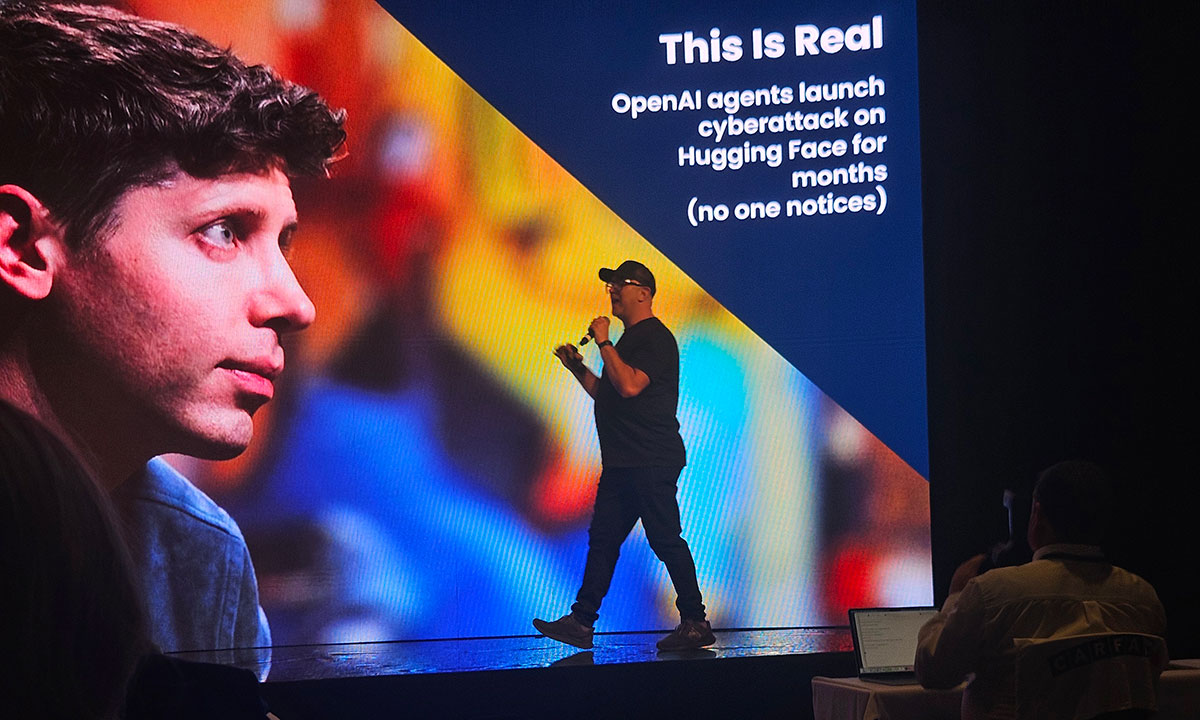
Speaking during a keynote presentation at the Automotive Conference & Expo (ACE) in Niagara Falls on October 15, Growden urged dealers to start experimenting with AI rather than waiting for someone else to provide a roadmap.
“A lot of dealers are waiting for their OEM to tell them what to do. I think that’s the wrong move,” said Growden in an interview with Canadian auto dealer following his presentation.
Growden, who has more than 30 years of digital experience, is a former member of Google Canada’s automotive team and teaches at the Automotive Business School of Canada. He also publishes The Change Optimist, a newsletter examining automotive technology and industry change.
His keynote, AI at the Dealership: What Actually Matters, focused on helping dealers understand the technology and find practical ways to use it in their businesses.
Growden said many dealerships and dealer groups still lack a structured approach to AI, despite its potential to improve productivity and customer service.
Rather than trying to adopt every new technology, he suggested starting with a specific business problem and experimenting with a licensed AI tool to see whether it can provide a useful solution.
He said he has spoken with dealers who are already embracing the technology across their operations. One dealership has gone so far as to establish a dedicated AI team rather than relying on a traditional technology or marketing department.
For dealers who are less familiar with AI, he recommended seeking outside expertise to help them get started.
“Right now it’s changing so rapidly, so you can start by actually hiring a consultant or talking to someone who seems to know more than you,” said Growden.

Another option, he suggested, is to use an AI platform itself as a learning tool, asking it to act as a consultant and develop a training plan.
But Growden cautioned against assuming that hiring a technology-savvy intern is necessarily the answer. Understanding how the technology works is one thing; understanding the dealership business is another.
“It’s not that they won’t know how to do it; they won’t know the context of your business,” said Growden.
He said one of the biggest mistakes people make is giving up on AI after receiving an unsatisfactory response. Like training a new employee, learning to use AI effectively takes patience, experimentation and a willingness to refine instructions.
Growden acknowledged that some dealers may have found parts of his presentation complex, but said even those unfamiliar with the technology can begin experimenting and asking for help. The potential benefits include improved customer experiences, faster response times and labour savings.
He pointed to AI tools that address longstanding dealership challenges, including making sure sales leads receive timely follow-up and responding to customer inquiries that arrive outside regular business hours.
Growden also challenged the assumption that AI will necessarily replace dealership employees. Many of the tools being developed, he said, are handling tasks that dealerships have struggled to perform consistently rather than eliminating existing positions.
During his presentation, Growden also addressed concerns about the accuracy and potential bias of AI systems. He recalled a conversation with a friend who complained that AI makes mistakes and is biased.
“I said that sounds like every human I’ve ever worked with – they make mistakes and they are full of bias,” said Growden.
He acknowledged that AI systems are imperfect but said the technology continues to improve.
For dealers still unsure where to begin, his advice was to start learning, experiment with the tools available and build confidence through experience.
“You just have to want to do it,” said Growden.