Data shows auto shows drive real purchases, not just awareness or browsing
A persistent myth still circulates that auto shows are primarily a brand awareness exercise—a place for families to collect brochures and sit in cars they have no immediate intention of buying.
For some automotive executives, exhibiting at the Metro Toronto Convention Centre is viewed as elective rather than essential in a digital-first world.
In Clarify’s work with six of North America’s largest auto shows, we’ve quantified how many visitors are “in the market” for a new vehicle within the next 24 months. We pay particular attention to those further down the purchase funnel: visitors intending to take delivery within the next 12 months.
The results are remarkably consistent across all six shows (Toronto, New York, Los Angeles, Montréal, Vancouver and Québec). More than 1 in 3 visitors intend to purchase or lease their next vehicle within 12 months of attending (ranging from 33 per cent to 41 per cent). Extend the window to 24 months, and 3 in 5 visitors are somewhere in the purchase funnel.
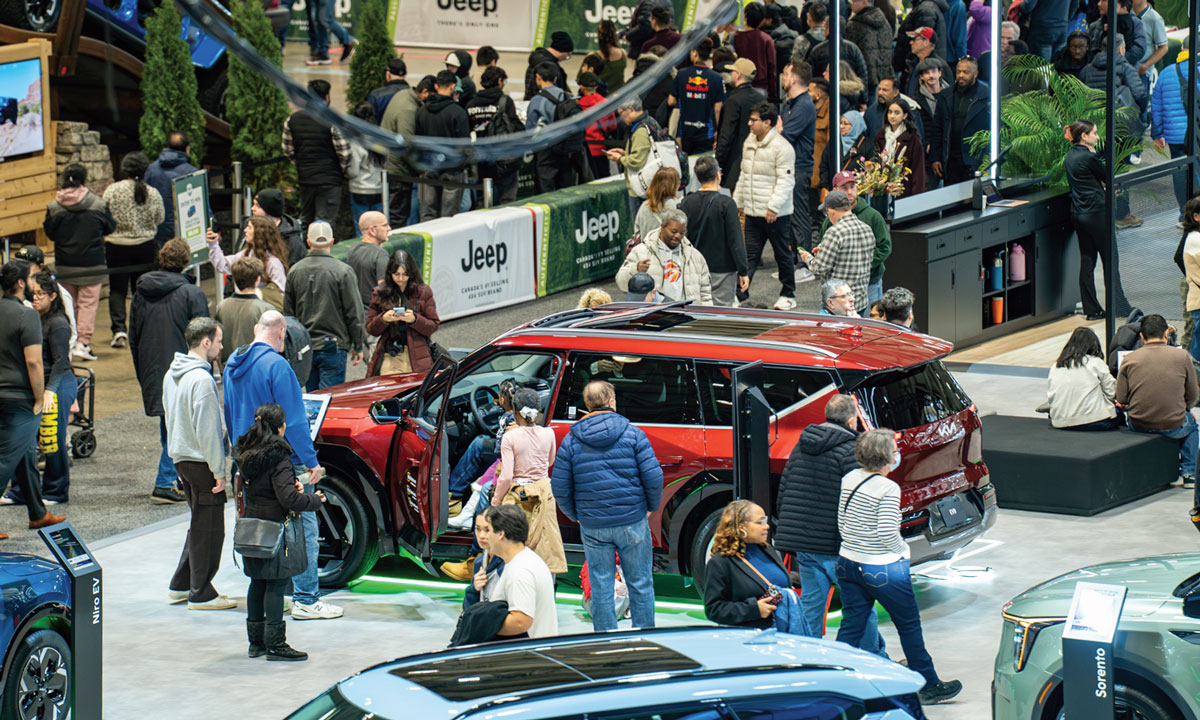
Put another way, while some of the nearly 375,000 record-breaking visitors to the 2026 Canadian International AutoShow (CIAS) attend for entertainment (including exhibits like Hot Wheels, the Lego 1950s Cadillac and the Canadian Armed Forces), most are there on a mission. They come to see new brands and models (81 per cent) and help decide their next vehicle (41 per cent). The show’s ability to attract active shoppers is not in question.
But here’s the bigger question: do these intentions translate into real retail demand for dealers? Does behaviour match intent?
Initial expectations were that perhaps two-thirds of stated intent would convert to “cars over the curb.” The reality is significantly stronger. Auto show attendees are not casual browsers — they are active buyers moving through the final stages of their purchase journey.
The proof is in the purchase
To answer that, the Canadian International AutoShow partnered with Clarify to survey nearly 4,800 visitors in February 2025. Those visitors indicated plans to purchase or lease 37 vehicles per 100 attendees within 12 months.
The same group was re-contacted 11 months later (January 2026) to measure actual outcomes.
The results:
- 27 vehicles per 100 visitors had already been purchased within 11 months
- Including those still in-market and about to purchase, that rises to nearly 30 per 100 visitors
- More than 80 per cent of stated purchase intent converted into actual or imminent purchases.
- Among buyers, 13 per cent purchased two or more vehicles—highlighting high-value, multi-vehicle households
Results from the New York International Auto Show tell a similar story, with 92 per cent of 12-month intenders having taken delivery (or about to) following their April 2025 visit.
Initial expectations were that perhaps two-thirds of stated intent would convert to “cars over the curb.” The reality is significantly stronger. Auto show attendees are not casual browsers — they are active buyers moving through the final stages of their purchase journey. CIAS is one of several influences, but it consistently engages consumers at the moment decisions are being made and acted upon.
Auto shows are not just awareness platforms, they operate as lower-funnel conversion environments.
Where digital and physical meet
OEM digital marketing is not a substitute for the auto show. It is a driver of it. On average, visitors arrive wanting to see nearly seven specific brands. Digital marketing largely determines whether a brand makes that “must-see” list.
Once at the show, engagement is deep. CIAS visitors spent nearly 4.5 hours onsite, sat in more than eight vehicles, and 85 per cent said the show helped their vehicle decision. This is where consumers narrow their shortlist, and often make a final call.
Half of 12-month intenders add at least one new brand or model to their consideration set after attending. For brands that choose not to exhibit, the risk is clear: existing owners are exposed to competitors, while absent brands lose the opportunity to attract new ones. Out of sight quickly becomes out of consideration.
The bottom line
Auto shows like CIAS attract in-market consumers, and the vast majority follow through on their purchase intentions within a year. They are not just awareness plays; they are conversion environments.
In a tightening market where every lead matters, can you afford to be absent from the place where the most active buyers are making final decisions?
With the 2026 show circuit behind us, planning for 2027 is already underway. Is your sales conversion engine turned on?