If you plan to stay in the auto retail game, or exit profitably, you will need to get expert advice on many fronts
An aging dealer population, combined with the uncertainty of the future, may be pushing small, independent automotive retailers to consider selling their stores while larger groups seek to expand, according to Brett Franklin, President of MNP Corporate Finance.
He has been observing these trends for some time and believes 2019 leans more towards a seller’s market. “If you look at the depth of the market as we see it now, we see a lot of consolidation — we see a lot of sales, and have for a while,” said Franklin, in an interview with Canadian auto dealer.
Dealers are having a harder time generating returns, and they are seeing smaller margins in their stores. And the single-store model? It’s becoming increasingly difficult to be profitable, said Franklin.
“The groups have to own multiple stores to get the efficiency they need to be profitable — everything from centralized administrative services and head office functions, to more purchasing power and leverage with the OEMs, right to better access to capital for growth and re-imaging.”
Larger groups will have an easier time accessing those efficiencies. But smaller groups, the independent ones with two or more stores including mom and pop dealerships, may need to consider expanding (if not selling) if they are to survive and compete in the new auto retail world. If they choose to expand, they will need to focus on three key areas: brand, location and management.
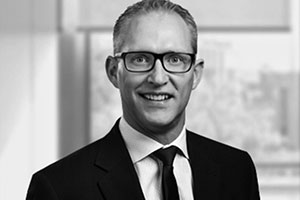
Shane Weimer, Partner and National Automotive Retail Leader, BDO Canada
Choosing the right brand
Most OEMs are researching and developing products, services and solutions connected to electric vehicles, autonomous driving, and ride-sharing. They are looking to the future and evolving with the industry and with consumer needs, according to Shane Weimer, Partner and National Automotive Retail Leader, BDO Canada.
“Dealers need to consider whether the brands are going to be around in the long run,” said Weimer. “Having a great OEM behind you is very important when you’re looking to buy a dealership. You’ll spend a little bit more money, but I think it’s worth every penny to get a great dealership.”
It also looks good on your statement. But having a great OEM behind you is not enough: Weimer also advises to diversify OEMs and locations. At any point in time, certain stores and brands could take a dive, depending on your location. Your store could be struggling in the Prairies, but dealerships in Ontario’s GTA are experiencing no such struggles. Or one automaker may be doing well, but another is declining.
Take Fiat Chrysler Automobiles versus Toyota: In February, FCA pulled in 32,652 sales — down 10.8 per cent year-over-year, resulting in a 0.9 per cent loss in market share to end with 14.2 per cent. During that same period, Toyota pulled in 11,971 sales, which is down only 1.0 per cent from the same period in 2018. But its sales units rose 6.4 per cent from a year ago. This helped boost its market share by 1.2 per cent to 10.8 per cent, which is significant.
The economy is shifting, and each brand is being impacted differently.
“You really want to diversify. The big boys that have diversified are doing very well in some areas, and not so well in other areas — but they can withstand that,” said Weimer. “But if you own dealerships under OEMs that are not doing so well right now, it’s not looking so good. Especially if you’re not selling trucks.”
Location and management
Diversifying locations can be tricky, and for several reasons, one of which is directly linked to the actual location of the store, and another is connected to the management team that will inevitably need to be part of that store.
Small rural-based dealerships, for example, will find it more difficult to be competitive in the future, according to MNP’s President.
“What we found is that, the ability for the ownership group to transition the business on a sale becomes a big factor (when we consider location),” said Franklin. “When you’re in an urban centre, it might be easier for the buyer to either parachute in a general manager, or if they have multiple dealerships in an urban centre, to share resources and be able to absorb some of that management responsibility.”
Based on the deals that MNP has done, Franklin said it is becoming increasingly difficult to find people willing to making the move from a larger centre to a smaller one. In some cases, they are not able to find a GM that will move, no matter how good the deal is. This is why dealers need to ensure they have the right people in place to run the dealership. The quality of the management is key.
Advice to buyers, sellers
Choosing the brand, location, and management team is just one aspect of buying. You will also need to consider the quality of the real-estate, such as the most recent re-imaging and the state of the building. And you will need to think about how you will exit the industry when you purchase your new store.
More importantly, dealers should speak with a professional to plan a strategy for growth, and to maximize their portfolio, according to Dave Cantin, CEO of the Dave Cantin Group.
For sellers, it’s a matter of keeping quiet about the desire to sell your dealership, among other things. So, mum’s the word.
“Dealing with an acquisition, a family-owned or corporate-owned auto dealership, usually includes between 40-200 employees working at one store,” said Cantin. “When a rumour gets out about the sale, the level of uncertainty in the business, or the amount of turmoil the rumour can create, can result in a negative atmosphere.”
Cantin said following a process that has been done many times is also important, because it can bring the most qualified buyer to the table to minimize scrutiny and maximize profitability. To do this, dealers should connect with someone that knows what they are doing, how to get it done, and how to make the process as seamless and painless as possible.
The ability to “maintain a process will ultimately equate to bringing a higher value dollar price of the acquisition, a smoother transaction, and a faster timeline to the closing table,” said Cantin.
But that’s not all. Sellers will also need to clean up their books, speak with tax specialists (should you sell your shares or your assets?), and go deeper into your review of the real-estate, according to Maxime Theoret, Chief Financial Officer, Dealer Solutions Mergers And Acquisitions.
“More than 60 per cent of the dealership’s value (that have been transacted right now) represents real estate value,” said Theoret. “You should get a real-estate appraisal done early in the process, and look at the environmental state of your land.”
Dealers, he said, should also consider whether they wish to purchase the facility or the operation. They will also need to speak with accountants and legal, not just merger and acquisition professionals. And he advises dealers to surround themselves with lawyers, ones experienced in mergers and acquisitions and the auto industry.
Lastly, he advises becoming familiar with the normalization of earnings before selling.
“It’s a bit technical, but it’s also key in the process. An exercise you have to do as the seller, with the help of a professional, is to look at the earnings — at the profits from the last couple of years — and identify your normalized profit,” said Theoret.
What are your baseline earnings that are going to be looked at by the buyer, which will help decide how much your business is worth? Doing this involves a lot of work based on many industry guidelines. “The normalization of earnings is one of the financial aspects that you absolutely must review if you’re considering selling — and you have to be really familiar with it.”
Overall, Theoret said the industry is trending down and dealers looking to sell in the short- to mid-term should make a decision quickly. We are approaching the beginning of that downward trend in the economy. It’s still a sellers market, but less so now than it was a few years ago. And we are moving towards a buyers market.