From new vehicle sales to consumer buying habits, government initiatives, and innovation and technology adoption, 2019 looks to be a promising year for the auto retail sector
Economists are notorious for coming out of the woodwork at the start of every year, to reminisce and dust off their crystal ball to predict the future.
In the same vein, I’d like to reflect on the past year and offer my prognosis for 2019, remembering all the while a famous joke, that astrology was invented so that economics seems like an accurate science. On that note: the year before us will be another year of strong car sales in Canada.
From environmental and transportation policies to the nail-biting NAFTA renegotiations, 2018 was a turbulent year for the auto industry.
Despite the challenges and the uncertainty surrounding the auto tariffs for much of the year, however, nearly 2 million new cars were sold across the country. Indeed, 2018 is the second-best year on record. The market has shown resilience, Canadians continue to purchase new sophisticated, fuel efficient and safer vehicles at a record rate.
There has never been a better time to purchase a new vehicle: interest rates remain relatively low, and competition between manufacturers coupled with innovation and fuel efficiency provides consumers with a vast array of choices.
Moreover, the segment shift from cars to trucks continued strong in 2018, with the gap in market share widening to seven out of ten new vehicles purchased being trucks. This is mainly due to consumer preferences for practicability, higher ground clearance, cargo space — and most importantly, trucks are now almost as fuel efficient as cars. This segment shift will continue in 2019.
The combination of a strong economy with robust job growth, affordable financing and increasing demand in the market has led the luxury segment to outpace sales growth in the overall auto sector in recent years.
Luxury vehicles represented close to 13 per cent of the overall market in 2018. However, recent interest rate hikes have hindered the luxury segment market. Luxury sales decreased by 10 per cent and the downward trend is likely to persist as the Bank of Canada is expected to raise its policy rate moderately this year.
Recent data shows that electric vehicle (EV) sales have increased by close to 152 per cent on average in the first three quarters of 2018.
Consumer demand for Zero Emission Vehicles (ZEVs) has increased exponentially over the past few years. Recent data shows that electric vehicle (EV) sales have increased by close to 152 per cent on average in the first three quarters of 2018.
At this pace, year-end sales will reach historic levels. Auto makers are adjusting and restructuring their production to meet the ever increasing consumers’ demand for fuel efficient vehicles. Nissan and Renault for example have made a deal with the world’s largest battery producer to supply Li-ion batteries for their electric cars, others are making similar partnerships in the industry.
What should dealers expect for 2019? This year is poised to be another strong year for new vehicle sales in Canada. The economy is forecasted to grow a healthy rate albeit slower than last year.
The new NAFTA (or CUSMA) agreement will bring back cross-border confidence and stability. Steel and aluminum tariffs, however, if not promptly resolved, will negatively impact the auto sector. The upside trend towards zero emission and technologically advanced vehicles will likely continue as well as consumers’ preference for trucks over cars.
The federal government initiated several consultations in the environmental and transportation sector throughout 2018, in which CADA actively participated and will continue to monitor for next steps throughout 2019.
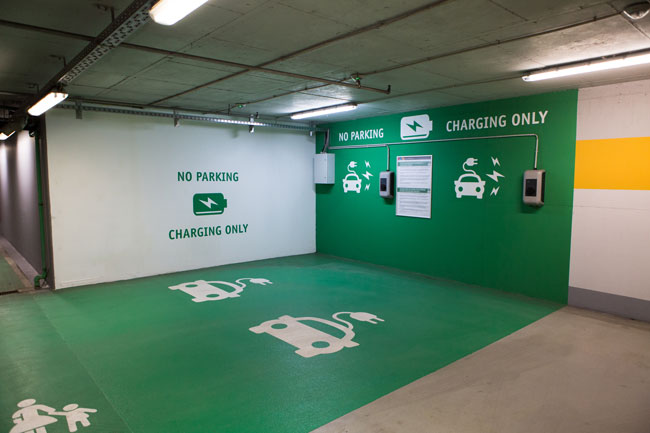
In particular, Canada’s national ZEVs strategy consultations came in the midst of a record year of ZEV sales in Canada. Kudos to B.C. and Quebec for leading the pack on that front but more is to be done including a national ZEV rebate program, investing in charging stations across the land and raising awareness. Perhaps, part of the revenues collected from the carbon tax can help support these initiatives.
Furthermore, Transport Canada released their Transportation 2030 strategy which included funding for the creation of regulations, certification, standards and testing of automated vehicles.
Automated and connected vehicles are no longer cool inventions from the science fiction movies. Driverless vehicles are today’s reality. Could driverless cars solve the vexing and deteriorating problem of urban congestion?
No one is certain of what the future will bring, but we do know that governments will have to walk a fine line between spurring innovation in the autonomous vehicle sector and ensuring safety on our roads. Dealers will need to adapt to the rising technology of automated vehicles.
Overall, 2019 looks to be another promising year for Canada’s auto retail market — particularly in regards to innovation and technology adoption. Canadian consumers are continuing to purchase newer, greener, and more technologically advanced vehicles at record rates and I fully expect this trend to continue.