 Wheels Automotive Dealer Supplies gathered dealers and OEMs together for luncheons and presentations about new software offerings the company is now offering its customers via partnerships with third parties.
Canadian auto dealer attended one such event at the Trump Hotel in Toronto to learn more about these companies and what they were offering.
In an interview, Rick Ashworth, President of Wheels Automotive said introducing the software providers to their dealer clients at various events was in keeping with the company’s track record of helping dealers find valuable services.
“Wheels has always been a leader in helping car dealers sell cars through innovative point of sales materials, to flags, right down to the the giant gorilla guy,” says Ashworth. “The question came down to how do we help car dealers sell more cars?”
As it turns out, it came down to software.
“We went out and found what we thought were the best of their best in their fields, with new ideas, and some start-ups to show car dealers some new things,” said Ashworth.
Wheels has been around almost 30 years, and have thousands of car dealership customers in Canada
and partnerships with 14 OEMs.
Reduce vendors with integrated approach
First up was a company called AutoLoop. John Bottone, National Vice President of Sales, took the dealers through the company’s approach to “retention through engagement,” offering tools for complete lifecyle marketing for customers.
Bottone says the company promotes a “vendor reduction” strategy so that dealerships can perform more key tasks with fewer providers.
The company’s approach is to provide a software tool that deals with every step in the customer journey from sales and prospecting, to service, retention and reprospecting — all on a single platform.
As it stands, dealers work with multiple software vendors whose products talk to customers, but not one another, resulting in inconsistent messaging, irrelevant coupons and offers and improperly timed communications, he says. This leads to confused and annoyed customers, and highly increased margin for errors. The vendor reduction leads to one integrated platform.
Credible digital marketing
Next up was Justin Cook, the Executive Vice President of C-4 Analytics, an award-winning digital marketing agency.
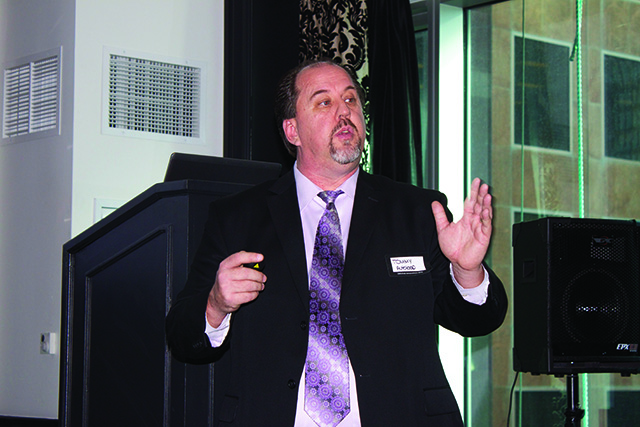
Cook delivered a provocative presentation that didn’t pull any punches in shredding what has often been passed off as digital marketing and online advertising best practices. Dealers and OEMs are being told a lot of “BS” by some less than ethical paid search companies, he says.“For years, the industry has been feeding us grass,” says Cook.
He said the digital marketing firms and paid search firms will provide their own customized traffic analysis reports to their clients that show an increase in traffic and performance, but in many cases these can’t be trusted he says. “Any website provider that gives you analytics is giving you analytics that make them look good,” says Cook.
Cook took the audience through a variety of examples of how dealers and OEMs are paying for digital performance and marketing that misrepresents the results. He says web companies, and others skew the results to deliver what appears to be superior performance, but play games in how they present the actual results.
He cited an example of how Mercedes was paying for Ford e350 vans in a paid search capaign instead of their E350 product. But they were paying for each click. “A lot of the digital expert gurus are pushing things that make the vendors money but not the clients. They have lots of golden rules they want the dealers and OEMs to focus on but they don’t help sell cars,” he says.
Cook said, his agency’s aim was to “stop the madness” and they don’t have any favourites they are beholden to. “We hate everyone equally,” joked Cook, reinforcing their neutrality in picking the best approach for their clients.
Dealers and OEMs are wasting so much money on their digital marketing campaigns chasing the latest trends. For Cook, it’s all about measurability and transparency. “We use the analytics to help the dealers and OEMs make better decisions about their marketing spend.”
One simple change, is that dealers should be relying on Google analytics to measure website performance. “Google analytics doesn’t help sell more Google,” says Cook.
Digital showrooms
Mark Baldwin, President and CEO of Tuku Tap This, presented on how his company’s technology can help turn showrooms into digital friendly environments that provide added value to shoppers, and provide leads to the dealerships.
They presented an example of how Tuku tags were affixed to vehicles in a Toyota dealership in London. Shoppers are invited to bring their mobile phones near the tags and the NFC technology triggers targetted web content on their phones. For non NFC enabled phones, they provide a short url or QR code.
During a TUKU Auto Tour, consumers are able to access all the information they need to make an informed purchase decision. “We are providing the ability to keep consumers in an environment where your message can be communicated, “ says Baldwin.
The program is not an app, it’s a browser-based platform that works with the shoppers mobile device, and all the user analytics are captured to help dealers better understand shopping behaviour in their showrooms.