In the third part of our special series, we look back at the Great Depression years and the impact they had on automakers and dealers
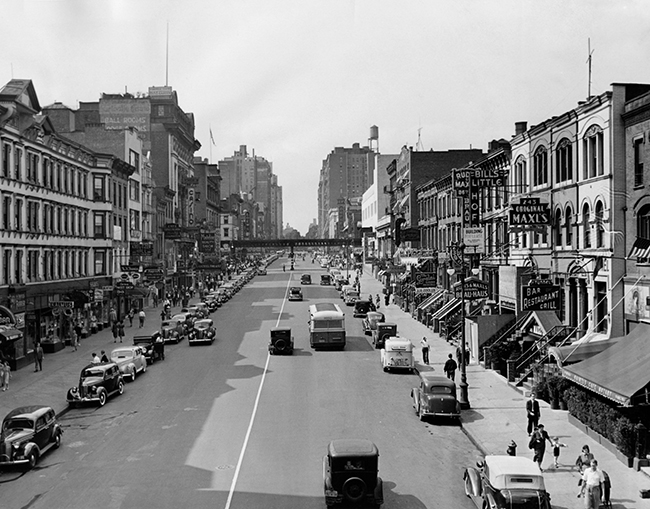
THE ROARING TWENTIES had been good to the auto industry. Post-WW1 prosperity and mass production was putting Canada on wheels, and many new automakers had opened their doors. But then, on October 29, 1929, it all came crashing down.
Canada was among those hit hardest by the Great Depression, which would last until 1939. Dependent on trade, Canadians watched helplessly as prices for its exports fell and the United States raised tariffs to protect its interests, along with massive droughts on the Prairies. In 1929, Canadian auto plants exported 102,000 units. In 1931, that number fell to just 13,000 vehicles, and in the auto city of Windsor, Ont., unemployment hit 50 per cent when the national average was 30 per cent.
Just like today, an automobile took a long time to develop in that time period, creating a real problem with models that had begun the process when times were good. Collectors often call the early 1930s the “Golden Age of the Automobile,” because it was when some of the most beautifully-styled and, for their day, the most technologically-advanced cars hit the showrooms. Cadillac and Marmon released models with V-16 engines; Duesenberg, already one of the most expensive brands on the market, put a supercharger on its eight-cylinder engine; and manufacturers like Chrysler, Stutz and Auburn released huge models that ultimately lingered on showroom floors.
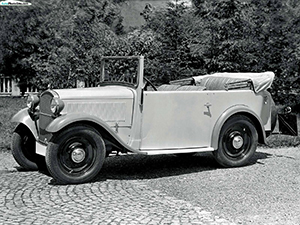
1932 BMW 320 PS Tourer
Already operating close to the bone, most of the smaller independent automakers closed their doors, while some luxury manufacturers such as Lincoln and Packard introduced smaller, mid-priced models to try to gain back some market share. In all, it’s estimated that new car sales fell by 75 per cent in the first three years of the Depression.
If the automakers were in bad shape, the dealers had it even worse. In 1932, the U.S. National Automobile Dealers Association almost went bankrupt. In the field, it was often “every man for himself.”
Some automakers ignored dealer territories and would sell cars through any outlets that were willing to accept stock, while some established dealers would sell rival brands if it looked like something could entice a buyer onto the lot. Used cars were cutting into new car sales, and some companies took steps to get them out of circulation. General Motors, for example, paid dealers for each used car they demolished, once the store proved it had followed the company’s disposal plan by smashing all of the vehicle’s primary components.
Part of U.S. president Franklin Roosevelt’s “New Deal” to overcome the Depression included the 1933 Code of Fair Competition for the Motor Vehicle Retailing Trade. The code set minimum pay and maximum hours for dealership employees (those in large cities were guaranteed at least $15 a week), set fair market values for used cars and trade-ins, and prohibited dealers from selling new cars below list. It also prevented dealers from selling a brand in a territory that already had a franchised dealer. But in 1935, the Supreme Court declared it unconstitutional and it was rescinded.
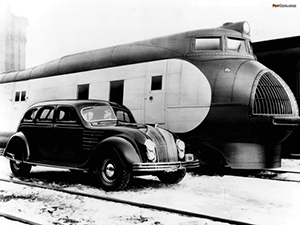
1934 Chrysler Airflow
Today, the code’s directives give insight into practices some dealers of the day used. It warned against false advertising, offering lower credit terms than finance companies, and disconnecting the speedometer on demonstrators so they could be sold as new. It also contained a clause we wouldn’t see today: an “open” car — one without a roof — could be offered below list if it had been in stock for at least 45 days and winter was coming.
Most new models came out in January, but in 1935, Roosevelt requested that automakers switch to the previous November to stabilize manufacturing employment. Dealers later lobbied against it so they wouldn’t have to carry new stock through the winter, but the new intro date stuck.
Cars were changing, too. Many or most now included safety glass, hydraulic brakes, and synchromesh transmissions. In 1935, Chevrolet introduced its “Turret Top,” an all-steel roof that replaced the wood and canvas roof that had been the industry norm. But not everything went well: in 1934, Chrysler debuted the Airflow, a radically aerodynamic model that was the first production car designed in a wind tunnel. Too far ahead of its time, it sold poorly and only lasted three years.
Another innovation arrived in 1938, when GM stylist Harley Earl created the Buick Y-Job. It was the first concept vehicle and would set the stage for these test-bed show cars.
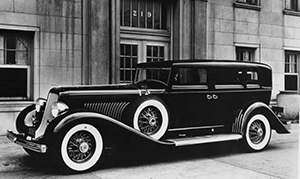
1934 Deusenberg
The 1930s saw the rise of organized labour, as workers who still had jobs in the auto factories struggled with pay cuts and shortened work weeks. The United Auto Workers first targeted GM with a series of strikes in December 1936, and that automaker became the first to sign a union contract. Chrysler also signed, but Ford refused, and on May 26, 1937, security forces brutally beat UAW organizers handing out flyers at the Ford Rouge plant. Oddly, when Ford signed a month later, its workers got the best contract in the industry.
The U.S. and Canada were still making the majority of the world’s cars, but new names were coming up overseas. In 1932, BMW made its first original model (its previous cars had been Austins built under license) and Audi became part of Auto Union. In 1933, Yoshisuke Aikawa took over the Datsun auto subsidiary that he would rename Nissan, while Toyota was founded that year as an extension of a fabric loom factory and built its first car three years later. And in 1934, Ferdinand Porsche was commissioned to design a “people’s car,” which would become Volkswagen.
But, of course, that wasn’t all that was happening overseas. As the “Dirty Thirties” came to a close, Canadians watched anxiously as the war with Germany began.