Canada’s EV fast-charging network continued to expand in the first quarter of 2026, with growth increasingly focused on higher-capacity sites rather than broader geographic coverage, according to a report from Paren.
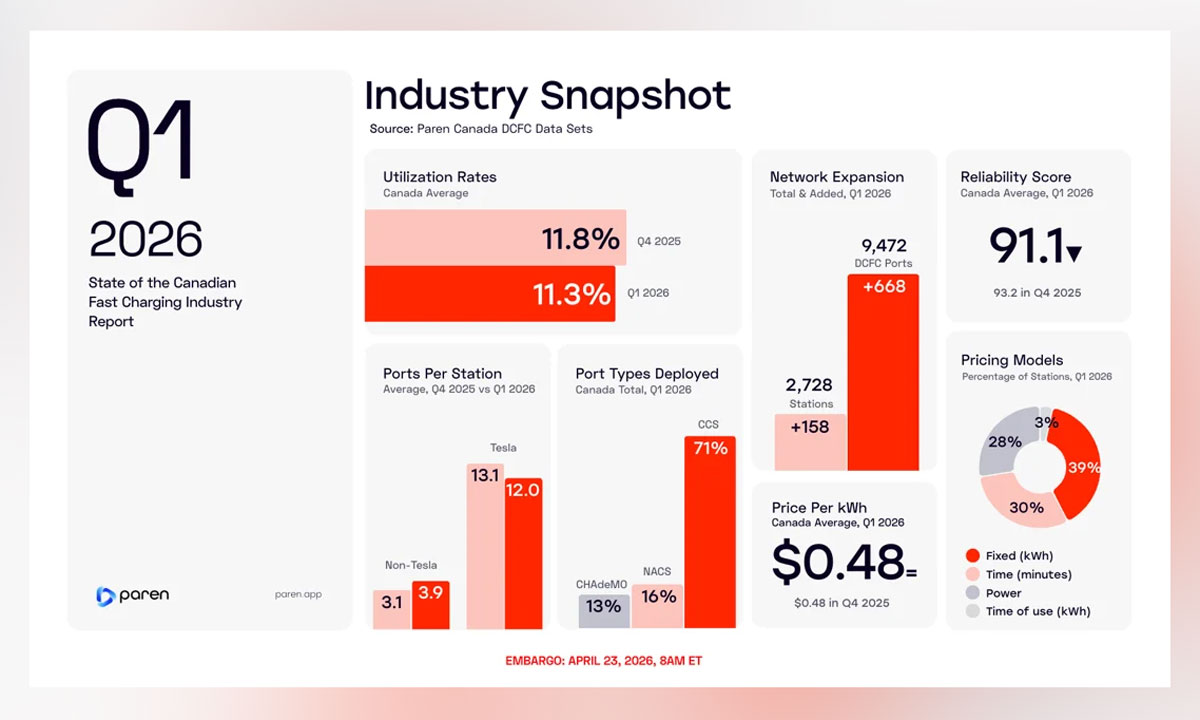
The report shows 668 new DC fast-charging ports were added during the quarter, bringing the national total to roughly 9,472. While fewer new stations were built compared with late 2025, operators are deploying larger sites with more charging ports, reflecting a shift toward improving throughput, efficiency and overall network performance.
“Canada’s fast-charging network continues to scale efficiently, with demand keeping pace and infrastructure becoming more optimized,” the report said.
Utilization remained stable at about 11.3 per cent, only slightly below the previous quarter, suggesting demand is keeping pace with infrastructure growth. Usage continues to be concentrated in larger markets, with Ontario and British Columbia leading, while smaller provinces show lower utilization as networks expand ahead of demand.
Reliability remained strong, with a national reliability score just above 91, although the report points to early signs of pressure in high-demand regions as networks become more heavily used and more complex to operate.
Pricing continues to vary significantly by province. Average costs held near $0.48 per kWh, but ranged from about $0.40 in British Columbia to roughly $0.70 in Alberta. These differences are largely driven by electricity costs, regulatory structures and pricing models, rather than short-term shifts in demand.
The report also notes a more competitive landscape among charging providers, with a broader mix of operators contributing to new deployments and market growth.
Overall, the findings point to a market moving beyond rapid expansion toward a more mature phase focused on capacity, utilization and operational performance.