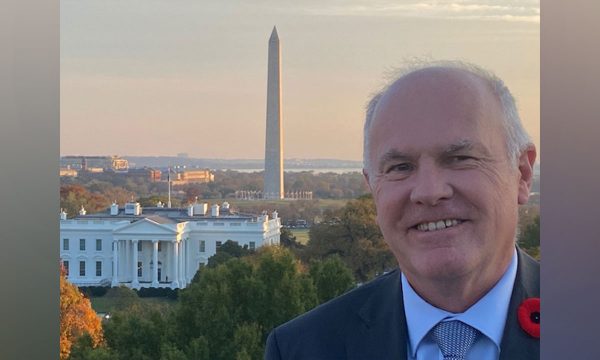
Eric Schmitz
In September, KPA, a business service provider for 5,100 car and truck dealerships across North America, announced that it had been acquired by Chicago-based private equity firm CIVIC Partners L.P.
As part of the move, an objective was to provide KPA with increased resources to expand its offerings in both the Environmental Health and Safety, and Human Resource Management services on the retail automotive, truck and equipment side. To find out a little more about what this means in relation to dealerships, Canadian auto dealer interviewed Eric Schmitz, Vice-President, Product and Business Development with KPA. Here’s what he had to say:
HE: When looked at from a dealer perspective, does the new ownership really mean business as usual at KPA?
ES: Yes it does. The focus will continue to be on providing Environmental, Health and Safety services as well as HR Management services for automotive, truck and equipment retailers.
HE: But it also means more investment and greater sources at your disposal. Can you explain a little about that?
ES: On my side, which is primarily the Environmental, Health and Safety aspect, the new investment will help us to work even more effectively with our clients to make sure they have a thorough understanding of and are able to navigate compliance as well as provide training that results in safe, and efficient working environments.
HE: From what we understand, there seems to be persistent challenges for dealerships in controlling insurance costs but at the same time ensuring they have adequate protection from liability. Is that really the case?
ES: There has been growing complacency in recent years and we’ve seen that via a decline in actual insurance rates, driven by a need to control costs. At the same time the level of risk is actually increasing, so ultimately by having lower rates you are in effect actually driving up the cost of that risk. In the dealership environment, the number one risk factor we see related to health and safety concerns the service department. Technicians who work on vehicles are at risk from either vehicles or components falling on them as they work underneath. In reality, the actual risk isn’t that high but the nature and visibility of dealerships means they tend to represent prime targets for litigation and often, aren’t adequately covered to protect themselves.
HE: On that note, what are some steps dealers can take to help mitigate these potential challenges?
ES: A big one is training. KPA provides a great deal of training courses, online, environmental specific and even general training. One thing we’ve done, specifically as it relates to Canada is partner with the Automotive Lift Institute to provide safety training for technicians using ALI approved lifts. We want to ensure that staff, are well-trained so they can work safely and efficiently, while at the same time, ensuring regulatory compliance for the business and limiting any liability.
HE: Can you tell us about some of the solutions KPA has developed to help dealerships find and recruit quality people?
ES: Finding good employees, especially technicians; is proving very difficult. One of the ways dealerships can do this is by finding ways to entice the right people to their business and keeping them. We can provide that by offering screening and background checks on potential employees as well as an online portal where they can fill out applications. Often, there’s very little structure in the recruitment process, and dealerships and service shops aren’t aware of the potential liability that can result from hiring the wrong person. By also being able to fill out forms online, you can have organized records and print them on the spot. It’s a lot more professional than presenting an oil-stained or crumpled form to fill out.
HE: On a final note, there’s been a push to take environmental and safety education to schools and technical colleges; can you tell us a little about that?
ES: Education is important and if we can provide it to the next generation of young people who are training to become technicians, it will help improve the working environment for the them as well as reduce risk and improve the productivity and efficiency of the businesses in which they will work. It can also bring a sense of trust and from that trust we are able to develop long-standing business relationships.
HE: Do you plan on expanding these education programs to Canada?
ES: At present, the program is in the U.S. but we are always looking for schools that we can reach out to and we welcome interest from schools in Canada. The end goal is to provide safety and environmental education for the good of the industry as a whole, so we are always looking for opportunities to do that.
For more topics related to KPA click here.