SOMETIMES, IT’S BENEFICIAL TO LOOK OUTSIDE OF THE AUTOMOTIVE INDUSTRY TO SEE HOW BUSINESSES INVEST IN THEIR FACILITIES TO GAIN A COMPETITIVE ADVANTAGE
 When office towers in downtown Toronto saw companies leave for the suburbs, both landlords and some innovative companies looked at ways to reduce operating costs so they could be more competitive against their suburban counterparts.
One of the key contributors to energy savings in this case was Enwave Energy Corporation, which pumped water from the bottom of Lake Ontario to office buildings in downtown Toronto. This method helped cool buildings in the summer and helped heat them during the winter.
This geothermal energy initiative is one of many factors, which led to lower operating costs, reduced load on the power grid, healthier work environments and arguably higher occupancy in the downtown core.
HOW DOES GEOTHERMAL WORK?
Nearly half of the solar energy that reaches the earth remains stored in the ground. When combined with the earth’s natural heat, the ground temperature ranges from 7° C to 23° C. At depths of approximately eight feet, the ground temperature stays about the same all year round.
Geothermal heating and cooling systems use this relatively constant temperature to heat buildings in the winter and cool them in the summer. Ten degrees Celsius may not seem very warm for heating, but even very cold air contains a lot of heat. The heat is extracted and compressed in the heat exchange process, which raises its temperature considerably.
A common type of geothermal system utilizes a heat pump and a closed loop. This closed loop system uses a piping loop that is installed underground, either horizontally (if you have a lot of space), or vertically (if you have little space).
Dealerships can be ideal for a geothermal system because in general, the parking areas are very large and can accommodate a horizontal system. Alternatively, circulation areas around the dealership can provide enough of a footprint for a vertical system in case a building expansion is planned at a later date.
During the winter, the geothermal system delivers heat from the earth to a furnace. The heat is compressed to a higher temperature and moved through the structure using either forced air or radiant floor heating. The systems’ compressor can raise the approximate 10° C heat to over 38° C.
In the summer, the process is reversed. The geothermal system removes the heat from the structure and deposits it into the cooler earth. The cooler air from the earth travels through an air handler and absorbs and removes unwanted heat from the interior air. The heated refrigerant travels back to the ground, where the heat is absorbed, and cool air is recirculated back to the system.
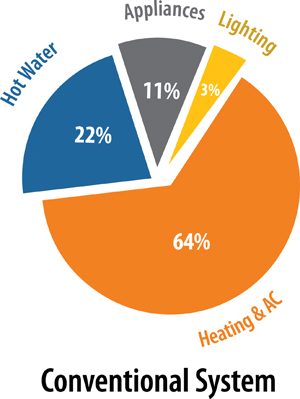
Now for the good news. The chart demonstrates that energy bills can be lowered by 30 to 50 per cent and also provide hot water at a fraction of the cost of natural gas or electricity. And because Geothermal systems are mechanically simple and outside parts are below ground and protected from the weather, maintenance costs are usually very low.
There are more than 80,000 geothermal systems operating in Canada. Approximately 3,000 to 4,000 new systems are installed each year. There are more than a million geothermal systems in the U.S.
However, the deployment of the technology has been limited, primarily due to the high upfront costs when compared to other heating systems.
WHERE THE CAPITAL COMES FROM
There are companies such as Solar Flow-Through Fund, who cover the majority, if not all of the cost for a Geothermal System. Customers pay a monthly fee to Solar Flow-Through Fund on a term basis, usually over 20 years. The monthly cost is set at a level where the customer achieves energy savings of 15 to 20 per cent. This is based on an assumption where the savings will equal approximately 50 per cent of energy savings. The rental cost is approximately 25-30 per cent and the energy savings to the customer are approximately 15-20 per cent.
There is relatively little risk for a dealer to explore geothermal technology further. Installation experts such as NextEnergy Geothermal, and investors who inject capital into these projects such as Solar Flow Through Fund are showing how innovation and third party funding can translate to lower operating costs with limited up front investment.
By looking to other industries and their innovations and best practices, it is indeed possible for a dealership to gain a competitive advantage. It also supports environmental and sustainability initiatives which can resonate both with your customers and staff.