Auto industry analyst Richard Cooper visited auto shows in Brazil, Canada and the United States and found some fascinating connections. In this article, he examines the differences and similarities between the North American and Brazilian markets.
I had the good fortune recently to visit three auto shows in three countries. The automotive industry and outlook differs greatly from São Paulo, Brazil, to Detroit, Mich. to Toronto, Ont. While most of us are familiar with the dynamics in North America, the state of the industry in Brazil is fascinating and offers a glimpse of what the new world of emerging markets will look like.
 First, some background. Brazil is a regional powerhouse of vehicle production, producing 3.6 million passenger cars, commercial vehicles and buses in 2010.
Sales of passenger cars and light commercial vehicles hit 3.3 million in 2010 – twice the sales we see in Canada and fourth in the world behind China, the U.S. and Japan. And there is upside potential. With the “density” of vehicle ownership (the number of cars on the road vs. the population) in Brazil being much lower than in Canada, the U.S. or Western Europe, the future for the industry looks bright. Some projections put retail sales at the five million mark by 2014.
It’s also something of a misnomer to call Brazil’s auto industry an “emerging” industry. While growth is significant and the percentage of Brazilians who own cars will increase, the industry has been a strong, if protected one, for many years. The emergence will have as much to do with a more open market and more choices, as it will with growth. The approximately five thousand dealers are sophisticated and are rapidly seizing the growing opportunities in fixed operations and used vehicles – aspects of the business that they have neglected thus far.
A pretty slow “rush hour”
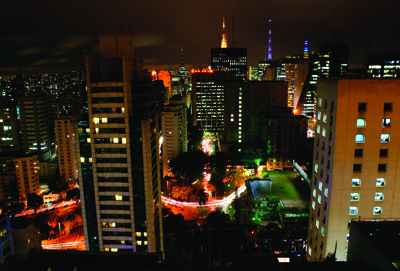
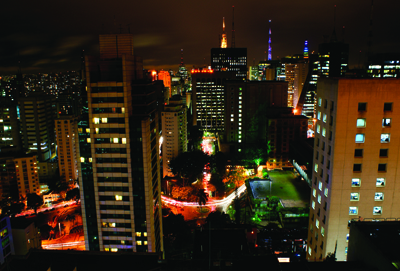
São Paulo is a city with a population of just under eighteen million people – more than half the total number of people in Canada. Driving to an appointment in São Paulo can be dicey. You never know if it’s going to be a quick trip or take hours. I remember being in a taxi and asking the driver how much longer the trip would take (we were probably within two kms of our destination). His answer was “five minutes to an hour,” seriously hedging his bets! It ended up taking close to 40 minutes.
On the day Brazil played their first game in the World Cup last year, a taxi ride from my hotel to the office, which should have taken 20 minutes, took more than 90 minutes, since everyone in São Paulo was on the streets or walking or driving to the nearest bar to watch the game at 2:00 p.m.
The city is home to almost 35 per cent of the nation’s vehicles, the average age of which is much higher than in Canada. Looking around, most vehicles are small – almost 70 per cent of sales in recent years are vehicles with engines around one litre in size. You see multitudes of Fiats (yes they’ve had the Fiat 500 for well over a year now), small Chevys, Ford Ka, Renault, Peugeot, Citroen and VW Gol. A Honda Civic or a Toyota Corolla looks big and is almost akin to a luxury car and will cost upwards of $40,000 Cdn largely because of the high taxes levied on imported vehicles in Brazil.
I saw very few traffic accidents in São Paulo during my travels there, making one think that, either the traffic moves too slowly most times, or that it’s no surprise that Brazil has produced so many successful F1 drivers. Motorcycles abound in São Paulo – stopping at a traffic light, you’re bound to have a swarm of motorcycles surround you within a few second. These riders are highly skilled, using their horns incessantly to warn motorists of their presence and their skills are matched by (most) drivers, who seem to have a sixth sense of where the motorcyclists are and are practised in not making sudden moves that could cause an accident.
Market share will shift
Together GM (virtually all Chevrolet), Volkswagen and Fiat sell three quarters of light vehicles sold in Brazil. But this is likely to change, as Japanese, Korean, Chinese and European brands aggressively push for more market share.
The 2010 São Paulo Auto Show was an eye-opener. Held in a location where the whole show is in one very large hall, it’s a microcosm of Brazilian life. It’s held in early summer (November) and can be very warm. It’s crowded with “Paulistas” of all ages and their enthusiasm for the automobile is palpable. You have to keep moving with the tide and people are friendly, energetic and talkative. The average age of Brazilians is almost ten years younger than that of Canadians and it shows in their energy and in the types of vehicles on display.
There were some strong plays on green technology at the show, but when most of the population drives vehicles with engines under 1.5 litres and over 90 per cent of these being flexfuel, the interest in technologies such as hybrid (and even diesel) is much less. All the major manufacturers that we see here were present in São Paulo. But that’s only 60 per cent of the show.
Chinese vehicles on display
There were no fewer than eight Chinese manufacturers present. Most showed very basic and low cost models and the build quality still leaves something to be desired. Perhaps the most stunning display was Citroen, with four live bands playing rock music in elevated display booths at the rear and above the vehicle display. It was pulsating with youthful energy, much like the rest of the show, except perhaps for somewhat conservative displays by Toyota, Honda, Subaru and Citroen’s French competitors, Peugeot and Renault.
In accordance with the market, most vehicles were small, fuel efficient and interesting, helped by Brazilians’ love of dressing their cars up with accessories such as mag wheels, body panels and other pieces that provide the ability to stand out and be a little more stylish than the next person. Overall, it gave the impression of a show that did not take itself too seriously and really catered to the consumer’s love of cars and enthusiasm for performance in an affordable package. The luxury brands were certainly there (most notably BMW, Mercedes-Benz, Audi and Land Rover), but these were the truly aspirational and inspirational products to most and there seemed to be as much enthusiasm for what was realistically attainable.
When Felipe Massa turned up at the Ferrari stand, near bedlam occurred (the show opened a week before the Brazilian Grand Prix). I doubt whether the appearance of Sidney Crosby would evoke the same reaction in Toronto or Detroit as Felipe’s appearance in São Paulo did. He was there for only a few minutes, but that was enough to make most visitors’ day.