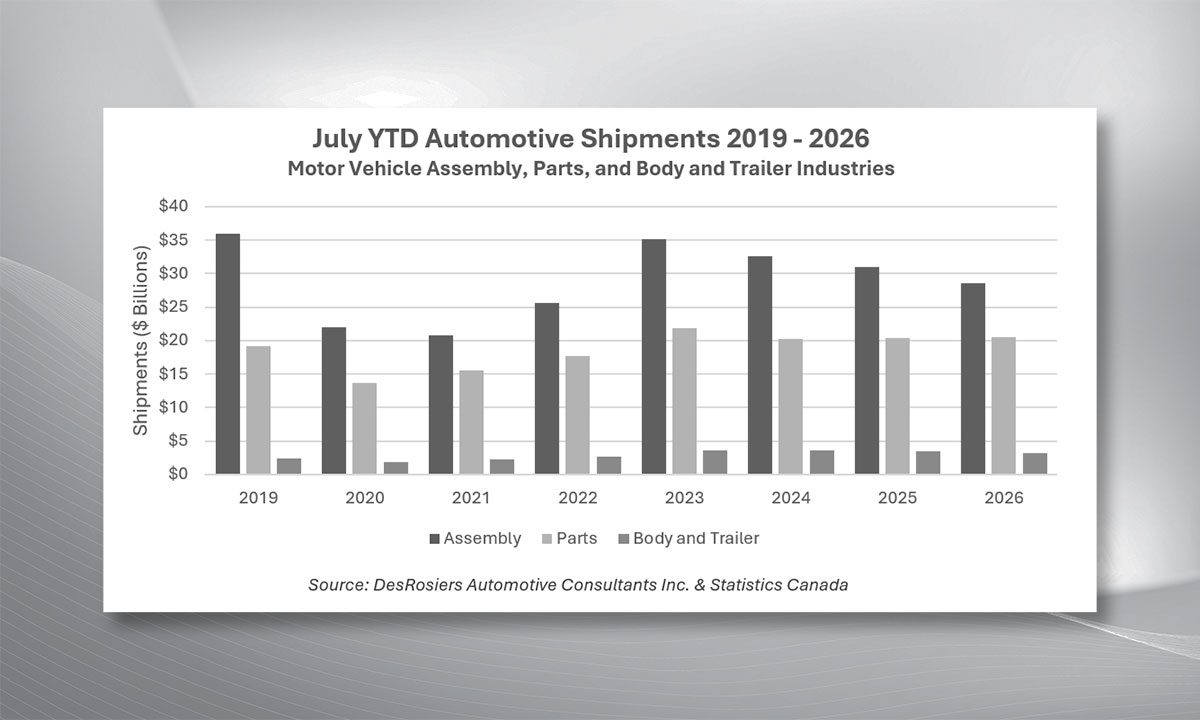
Canada’s automotive manufacturing sector is struggling to regain momentum, with motor vehicle assembly shipments continuing to decline amid trade tensions and production uncertainty.
According to DesRosiers Automotive Consultants (DAC), the recovery that began following pandemic-era supply chain disruptions has stalled, reversing earlier gains and leaving the assembly industry on a renewed downward trajectory.
The latest setback comes as the sector navigates changing electric vehicle strategies, ongoing trade disputes with the United States and uncertainty surrounding major manufacturing facilities.
DAC pointed to developments involving Stellantis and the potential sale of its Brampton assembly plant as another challenge for the industry. The threat of strike action at Stellantis, combined with the slow ramp-up of production at Ford’s Oakville facility, could further limit near-term growth.
The difficulties follow a longer-term decline in Canadian vehicle assembly that DAC traces back to the beginning of the century. However, the picture is somewhat more encouraging elsewhere in the automotive manufacturing sector.
According to DAC, automotive parts shipments have remained relatively resilient despite weaker vehicle assembly activity. Shipments in the smaller motor vehicle body and trailer manufacturing industry are also running above pre-pandemic levels.
“Manufacturing in Canada’s auto sector has been targeted by both fate and policy,” said Andrew King, Managing Partner at DAC, in a statement. “However, it is important that government at all levels support this critical sector of the Canadian manufacturing base during this unstable period.”
DAC said a resolution to ongoing U.S. trade disputes would be an important step toward improving the industry’s outlook and providing a clearer path forward for Canadian automotive manufacturing.