Americans are growing more accustomed to autonomous driving technology, but fully surrendering the steering wheel remains a harder sell.
Cox Automotive’s 2026 Autonomous Vehicle Study found familiarity with autonomous vehicles has risen to 58 per cent from 40 per cent in 2016. Meanwhile, 46 per cent of consumers believe vehicles will become fully autonomous during their lifetime, up from 37 per cent in 2021.
The technology is also becoming more common in consumers’ vehicles. Ownership of Level 2 and Level 3 vehicles nearly tripled over the past decade, increasing to 34 per cent from 12 per cent.
If all autonomy levels were available, 57 per cent of respondents said their next vehicle would be Level 3 or higher. However, interest is strongest when consumers retain the ability to take control: Level 4, which Cox defines as full autonomy with the option for a human to drive, was the most appealing level at 28 per cent. Only 10 per cent selected fully driverless Level 5 technology, down from 17 per cent in 2016.
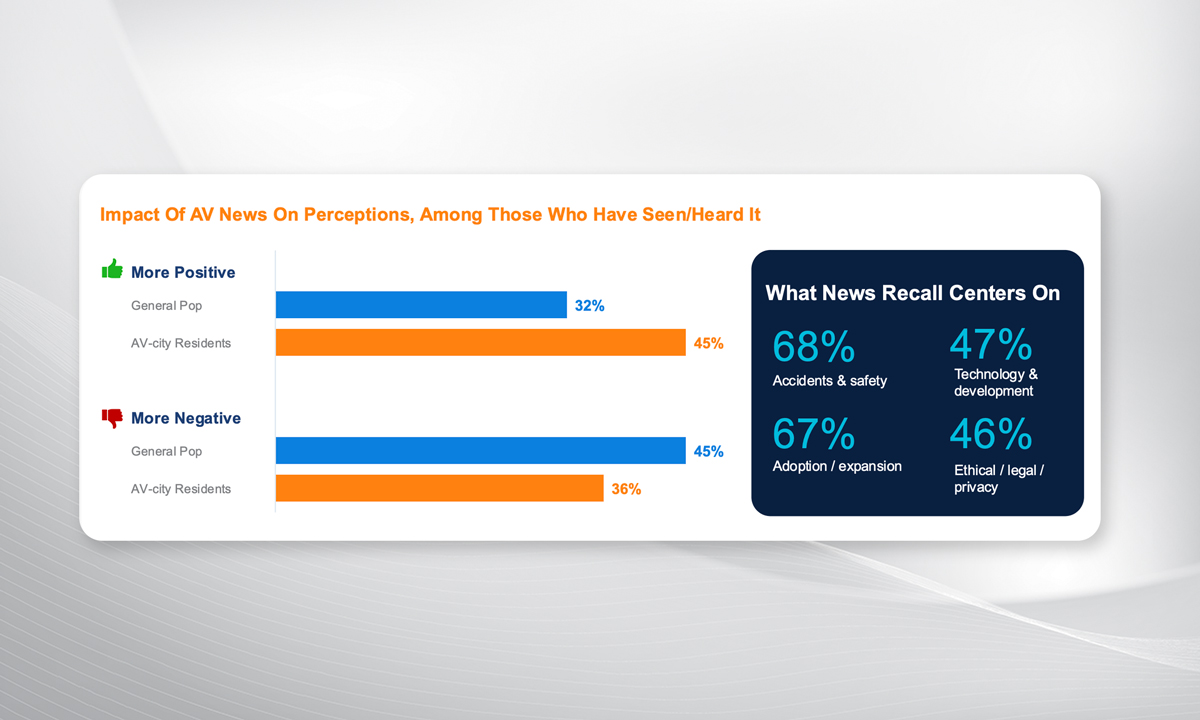
Robotaxis may be helping consumers become more comfortable with the technology. Awareness has reached 70 per cent nationally, although just 18 per cent reported having used one. Among robotaxi users, 67 per cent were extremely or very satisfied, while 83 per cent said the experience improved their perception of autonomous vehicles.
Still, safety remains a hurdle. Perceived safety declined as autonomy increased, with 66 per cent feeling safe with Level 3 technology, compared with 55 per cent for Level 4 and 38 per cent for Level 5.
The U.S. findings suggest consumers are increasingly receptive to advanced automated driving features, but still value control and reassurance around safety. Explaining what different levels of automation actually do — and their limitations — could become increasingly important as these technologies enter more vehicles.