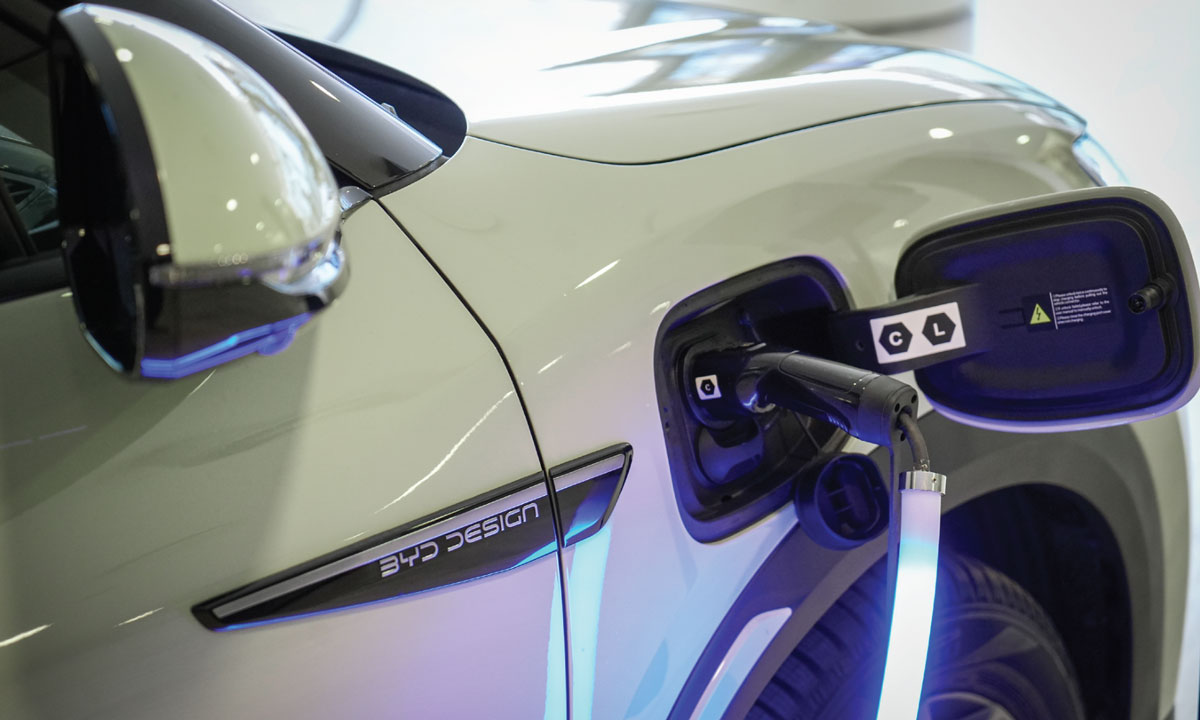
If you want a reminder of how quickly the automotive conversation can shift in this country, look no further than the reaction to Prime Minister Mark Carney’s recent announcement that Canada would allow up to 49,000 Chinese-built electric vehicles into the market.
Within days, the ripple effects were unmistakable. The United States threatened to impose 100 per cent tariffs on Canada should a broader trade deal with China proceed. Ontario Premier Doug Ford called for a boycott of Chinese EVs to protect domestic manufacturing jobs. Industry voices weighed in from every angle. The noise level rose quickly, and clarity became harder to find.
Lost in much of that discussion is a simple but critical question: what does this actually mean for Canadian dealers and Canadian consumers?
What is becoming increasingly clear is that Chinese OEMs are no longer a theoretical future possibility. They are already on the ground in Canada, meeting with industry stakeholders, exploring partnerships, and laying the groundwork for eventual operations here. Whether this happens sooner or later, the idea that Chinese brands will remain permanently outside the Canadian automotive landscape now seems far-fetched.
The Canadian Automobile Dealers Association is right to call for more transparency from the federal government. As CADA noted in its statement, “At this moment, many questions as to how the import quotas will be managed and what manufacturers or brands they will apply to are still unclear. We are engaging with the Federal government to review the full details of this agreement to ensure that affordability, competition and long-term market stability remain central considerations.”
That uncertainty matters, particularly for dealers who must make long-term capital and operational decisions with incomplete information. CADA is also advocating that Chinese OEMs operate through a franchised dealer retail network, an approach that makes sense not only for the industry, but for consumers who depend on local sales, service and warranty support.
For individual dealers and dealer groups, however, the real work lies beyond the politics of the moment. Strip away the protectionist rhetoric, the geopolitical tensions and the trade-war posturing, and the decision becomes a business one.
Are these products that your customers will want to buy? Can you sell and service them profitably? Will customers purchase them locally, or will alternative retail models undercut your role? What has the experience been like for dealers in other markets where Chinese OEMs already operate? What can you realistically expect in terms of product support, parts availability, training and long-term manufacturer relations?
And perhaps most importantly: is this a costly distraction with limited upside, or the beginning of a sustainable and profitable business relationship?
There is also a legitimate need for dealers to assess how any new Chinese franchise might interact with existing brands in their portfolio. In some cases, the overlap may be minimal. In others, the competitive implications could be significant.
One encouraging sign is the growing interest among dealers in learning more before drawing conclusions. CADA’s China study tours are designed precisely for this purpose, giving dealers firsthand exposure to OEMs, product pipelines, manufacturing capabilities and government officials. Last year’s tour was a success. This year, dealer participation has more than tripled for the upcoming April visit.
That alone tells you something.
China has never been hotter as an automotive topic, but Canadian dealers have always been pragmatic. They tend to think like business owners, not politicians. Some will see opportunity. Others will pass. Many will adopt a wait-and-see approach.
All are valid strategies.
As for consumers, history suggests many will care less about where a vehicle is built than whether it meets their needs, fits their budget and gets them reliably from A to B.