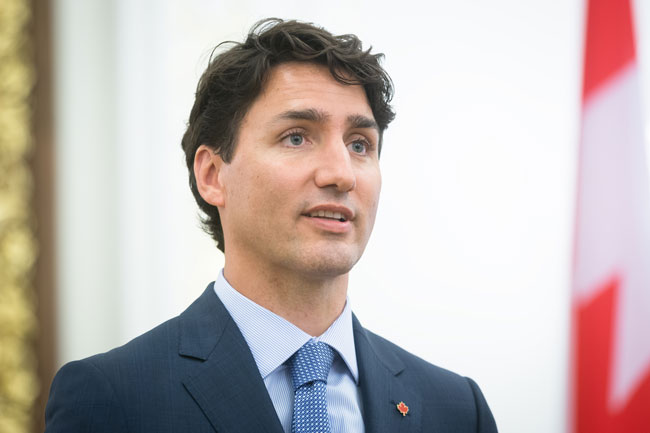
 The U.S. has officially lifted the steel and aluminum tariffs it imposed on Canada nearly a year ago during NAFTA renegotiations, according to a statement from Canada’s Prime Minister Justin Trudeau.
The move resulted in Canada lifting its counter tariffs and, according to CBC news, also dropping its case with the World Trade Organization, which argued that the U.S. imposed the tariffs illegally — under the guise of national security reasons through Section 232 of the Trade Expansion Act.
Brian Murphy, VP Research & Editorial at Canadian Black Book, told Canadian auto dealer the move is good news for the auto sector in Canada and Canadian consumers.
“Lower prices for commodities like steel and aluminium mean that the Canadian industry can defend its competitive position globally in the manufacturing of parts and vehicles, and consumers won’t be burdened with higher prices caused by unnecessary tariffs on materials that were not beneficial to anyone.”
However the tariff removal, which has been hailed by the Canadian Automobile Dealers Association (CADA) and the Canadian Vehicle Manufacturers’ Association (CVMA) as a welcome move, does have a few strings attached.
“The steel and aluminum tariffs are lifted, but there was language that the Americans decided to add to the deal that was signed on May 17, regarding the dumping of foreign steel and aluminum material into the United States,” said Oumar Dicko, CADA’s Economist.
The move may be seen as a way for U.S. President Donald Trump to block Canada from whatever imported steel and aluminum it receives from China and then re-export it to the U.S., particularly as the nation is in a mounting trade war with the East Asian country.
“The language regarding the surge (in steel and aluminum material) — and again, the surge is not clearly defined, there’s no number attached to it — but that language indicates that both countries will be monitoring the surge in the U.S. and Canada for steel and aluminum,” said Dicko.
As an example, he said if the import of this material to Canada — or even the export from Canada to the U.S. was to increase past a certain level, the U.S. government could choose to impose tariffs. “But this time the government can only impose tariffs on the commodity that is experiencing a surge,” which basically means on metal or aluminum, but not both.
It also means that Trump found a way to include quotas in the bargain without actually including quotas.
Still, the deal is hailed as a big achievement in the auto industry, and a welcome relief to the strain and uncertainty those particular tariffs causes.
“The automobile industry has been particularly affected with steel and aluminum being key to vehicle production,” said John White, CADA President and CEO. “Today’s agreement by both governments’ is good for the economy, good for consumers and good for dealers.”
Mark Nantais, President of the Canadian Vehicle Manufacturers’ Association said: “Resolving this trade issue is very important to support the competitiveness of the Canadian automotive manufacturing industry and its suppliers. We are hopeful it will also encourage continued progress towards approval of the Canada-U.S.-Mexico Agreement (CUSMA),” according to CVMA’s news release.