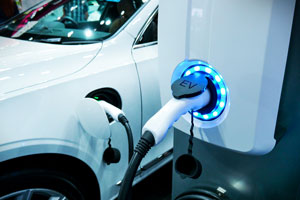
Much needed clarity on details of federal ZEV program will help spark sales.
New Federal ZEV incentive program
Over the past few weeks, there have been some interesting new developments on the federal government new zero-emission vehicle (ZEV) incentive program.
As we all recall, earlier this year the federal government has set a target to sell 100 per cent zero-emission vehicles by 2040, with sales goals of 10 per cent by 2025 and 30 per cent by 2030 along the way.
These targets were communicated without consensus with the provinces and consultation with industry. At the time the government did not provide any details on how to reach these ambitious targets.
In its 2019 federal budget, the government introduced a federal rebate program to increase demand for ZEVs, to make them more affordable for consumers and ultimately support their target.
The program was unveiled without the necessary details regarding eligibility, implementation, administration and official start date. This has created a lull in the market and stalled ZEV sales across the country.
Automotive consumers are very price sensitive and the lack of clarity and uncertainty around the program has left consumers waiting and dealers with mounting inventories of unsold ZEVs in their lots and bearing the cost.
Finally, after weeks of discussions with the industry, including CADA, the government revealed the parameters of the new ZEV incentive program. CADA was in constant contact with government officials throughout the process.
We have worked to ensure the new program is national in scope, “stackable” with existing provincial programs in B.C. and Quebec, and the eligibility criteria was expanded to include plug-in hybrids, so dealers and consumers in every region of the country can benefit.
The government is committing $300 million over three years and up to $5,000 in rebates on eligible ZEVs.
The incentive program is a step in the right direction. It will increase affordability and ZEV adoption across Canada while at the same time reduce the regional disparity in the market for these vehicles — 97 per cent of all plug-in vehicles sold in Canada were in Quebec, British Columbia and Ontario.
Sales have stalled in Ontario when the new elected government scrapped their generous incentive program last fall, reflecting the strong correlation between government ZEV incentives and the rate of adoption.
It is safe to expect a considerable increase in the demand for ZEV in B.C. and Quebec since the consumers in these provinces can now benefit from both the federal and provincial rebates. However, the new program will also increase uptake in other parts of the country.
Given the lag between the budget announcement and the effective start of the program — May 1st, the market will experience pent-up demand in the first few weeks of the program.
Therefore, it is critical that the government has an efficient administration system in place to expedite the claim process. If the government is contemplating a point-of-sale rebate program, they should emulate administration systems such as in Quebec and British Columbia to avoid inefficiencies and delays as it was the case in Ontario. It is important that the program be seamless for consumers and dealers in order to achieve the expected results.
Furthermore, the funding committed by the government for the program could cover up to 60,000 ZEVs, which can easily be reached by mid-2020 considering the current pace of growth of the ZEV market in Canada. There should be further clarification on the monies allocated to the program each year and claims when the funding allocated to the program has been expended.
The entire auto industry is mobilized behind electric vehicles and other alternative fuel technology. Manufacturers are restructuring and investing billions in R&D to develop new ZEV models and increase the supply in the market.
The industry is supportive of governments’ goals to reduce greenhouse gas emissions and fight climate change. However, it is critical that governments strike the right balance between implementing policies to support the adoption of ZEVs without limiting consumer choice and interfering with market trends.