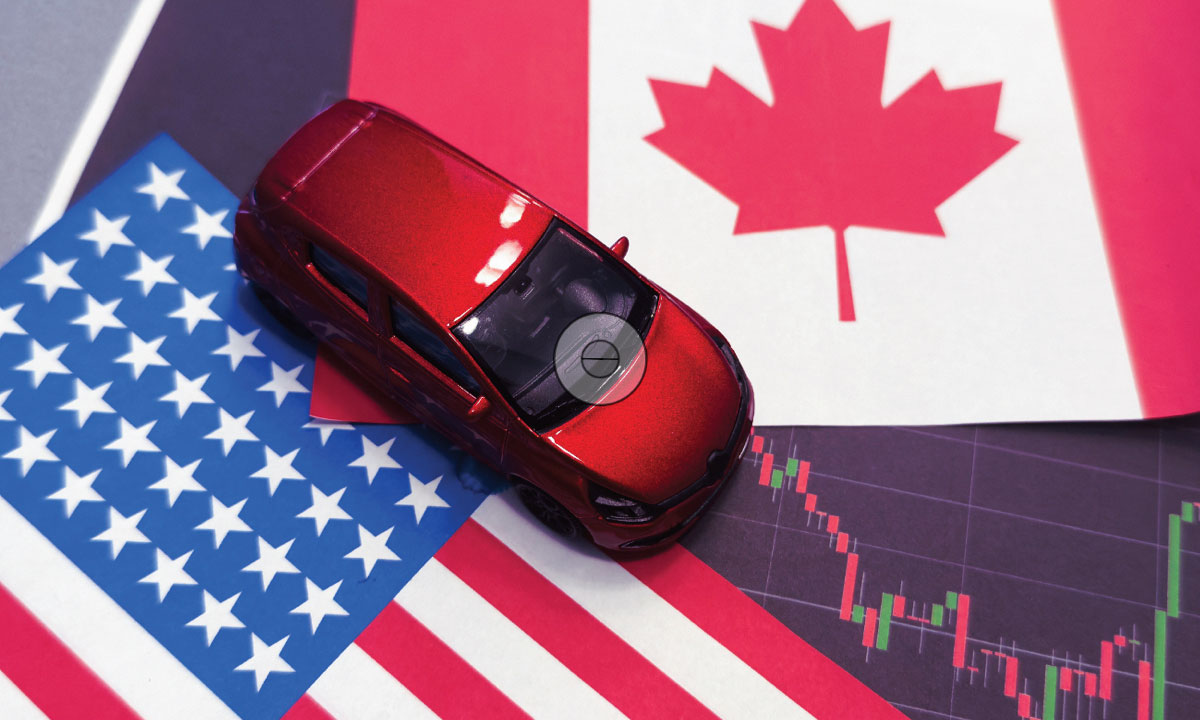
CADA’s Ottawa insider tells the tale of the lobbying, media and outreach campaign that helped ensure dealer voices were heard during trade talks.

On the night that President Donald Trump won the White House, CADA was co-hosting a major U.S. election night viewing party for politicians and political staff in Ottawa.
Watching U.S. politics for the Canadian political circle is like following the NFL, but with real life consequences. This viewing party was a little bit like a Super Bowl party, but with a very surprising ending, as the populist Donald Trump took over.
Everyone there knew immediately that Canada was in for a wild ride with the U.S. President who had campaigned hard on ripping up NAFTA. While candidate Trump had called it “the worst trade deal ever”, nobody could predict just how wild that ride would be for the Trudeau Government and the Canadian auto industry.
The leaders in the Canadian auto industry, including CADA were aware that the stakes were huge, for the almost one in seven Canadian jobs that depend on the auto industry. Keeping auto trade flowing was critical with over $400 million worth of automotive trade passed between the Canada/U.S. border on a daily basis — amounting to over 20 per cent of all trade (worth nearly $150 billion) between the two nations for the entire year.
Over 80 per cent of Canada’s annual automotive production is destined for the U.S. consumer, and Canadians in turn buy hundreds of thousands of U.S.-made vehicles every year, contributing to what was in 2017 the fifth consecutive record year for new vehicle sales in Canada.
With the consequences of the new President looming CADA began working on the trade agenda immediately. CADA promoted the need for a stable trading environment so as not to increase the costs of doing business for our over 3,000 dealer members.
As NAFTA negotiations rolled into 2017/18, CADA kept up the message that free trade in the auto sector was foundational to our economy. We went beyond Ottawa and shared with our U.S. dealer colleagues that NAFTA and auto trade needed support from stakeholders on both sides of the border.
I personally hosted a visit to Ottawa by a good friend who served as U.S. Vice President Mike Pence’s long time Chief of Staff. We organized for him to meet with key politicians, including the Prime Minister’s Office to help Canada better understand how the U.S. administration viewed NAFTA.
In 2018 when Trump imposed a 25 per cent steel tariff on Canada and the Trudeau government retaliated, the threat of a trade war became very real. CADA’s team observed how the steel sector felt confident in the Canadian government support only to get stunned by significant tariffs. Steel had taken a very modest public role and lost — CADA learned valuable lessons from that approach and took a different strategy.
On the heels of the steel tariffs the U.S. President then made the bold and very public threat to impose a 25 per cent tariff on all Canadian auto imports into the U.S. as a bargaining chip in the ongoing NAFTA renegotiations. The threat to Canadian dealers was crystal clear, our business model could not sustain a 25 per cent cost of retaliatory tariffs on cars coming into Canada. The consequences would be on par with the dealer devastation faced in the 2008 automotive crisis.
CADA immediately launched a multi-pronged campaign to ensure that Canada’s negotiating team prioritized the retail auto sector as part of their approach. We needed to protect our 3,200 dealers across the nation and our 156,000 Canadians working in our stores.
Under CEO John White’s leadership, CADA’s approach incorporated strategic media outreach, targeted advocacy both on Parliament Hill and at the grassroots level, and a coordinated industry approach through the Canadian Automotive Partnership Council. We went into overdrive, determined not to repeat the pattern of the steel industry.
In July 2018, CADA released a report analyzing the economic impacts that a 25 per cent auto tariff — and any proportional retaliatory measures implemented by Canada — would have on Canadian workers, businesses and the economy.
The findings were disastrous: over 100,000 Canadian auto sector jobs would be directly at risk, Canadian consumers would be paying an additional $4,000-$9,000 in taxes on top of the price of an average vehicle, and the impact on the economies on both sides of the border would pale in comparison to that of the 2008/2009 financial crisis.
On the industry front, CADA worked with the Canadian Automotive Partnership Council (CAPC) to support the continuation of current automotive trade framework.
In the U.S., the Centre for Automotive Research similarly reported that U.S. consumers would see the price of all new vehicles rise by as much as $6,800, that as many as 715,000 jobs would be a risk, and that U.S. automotive demand would fall by two million vehicles.
At the time of the report’s release, the impacts of these threats and potential tariffs were already cascading across the economy. Dealers in Canada were reporting that expansion plans were being put on hold due to the uncertainty these potential tariffs posed on the viability of their existing businesses and the decreased demand that would result from rising vehicle prices.
On the industry front, CADA worked with the Canadian Automotive Partnership Council (CAPC) to support the continuation of current automotive trade framework. Through CAPC, strategic discussions were held by the automotive industry with the Canadian government via the Department of Innovation, Science and Economic Development — including both the Minister and Deputy Minister.
CADA also worked with our counterparts in the U.S., the National Automobile Dealers Association, to deliver a unified retail auto industry message that these tariffs would be bad for business, bad for consumers, and bad for the economy on both sides of the border. The Standing Committee on International Trade in Ottawa and the U.S. Department of Commerce in Washington held respective meetings on the tariffs file, and CADA’s John White and NADA’s Peter Welch testified before their respective committees with this unified message.
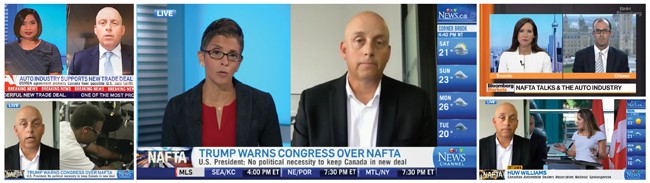
A targeted media approach included a press conference on Parliament Hill to launch CADA’s economic report, which in turn spawned almost daily commentary on the trade and tariffs issue. From early July through to the announcement of successful conclusion of negotiations, CADA was featured in every major publication in Canada in both official languages.
CADA’s leadership did countless interviews appearing on all of CBC’s top rated political, business and news shows. On CTV our team appeared multiple times on CTV National news, CTV News Channel, BNN and Power and Politics. CADA also dominated the French media market and talk radio. We published major opinion editorials in the Toronto Star and Le Soleil newspapers.
On Parliament Hill, CADA engaged with the Prime Minister’s Office, the Office of the Minister of Foreign Affairs and Global Affairs Canada to support the ongoing negotiations and find a positive resolution for the entire auto sector. CADA also mobilized our dealer member network in a national grassroots advocacy campaign that utilized an innovative online digital advocacy tool PushPolitics that enables users to send a personalized letter directly to Parliamentarians with a few clicks of a button. The dealers’ efforts resulted in over 5,000 letters sent to MPs and Senators across the country.
Through the steel and aluminum tariffs example that unfortunately continues to persist, it was clear to us that we could not take the threat of auto tariffs lightly. CADA recognized that Canada was placed in a very unique position where the U.S. President targeted the Canadian auto sector very publicly and directly as a strategic tactic to extract concessions from the Canadian negotiating team. However, rather than undercut the Prime Minister and Minister Chrystia Freeland in their negotiations, CADA’s approach focused on the importance of getting a deal, and the importance of the automotive sector for Canadian consumers, businesses and economy.
In the end, Canada’s negotiating team recognized the significance of Canada’s auto sector and the implications these tariffs would have on the entirety of the Canadian economy. CADA is proud of the work done by the Prime Minister, and Ministers Chrystia Freeland and Navdeep Bains, to ensure that the North American auto sector remained harmonized and tariff-free — and by extension, supported Canadian workers, businesses and families across the nation.
CADA will continue to work with government to ensure that Canada and the U.S. continue to see a harmonized auto sector on not only the retail and manufacturing sector, but on a variety of sectors ranging from fuel economy to automated and connected vehicles.
Thank you to the leadership of our Executive Committee and Board of Directors that made trade a priority for CADA. Thank you to the entire CADA team and provincial associations that supported the efforts in Ottawa. Finally and most importantly thank you to all the dealers that emailed those 5,000 letters of support to Ottawa and met with their local MPs and Senators.
Together we made an historic and important difference for our industry and the country.