NOT ALL OF OUR ECONOMIC CHALLENGES MAKE THE FRONT PAGE
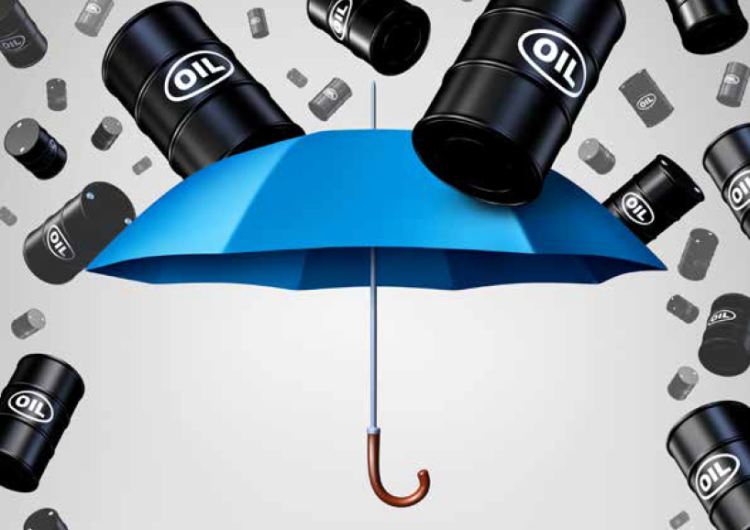 Though 2015 ended on a high note for the auto industry, the new year started with economic headwinds outnumbering good news stories by a wide margin.
The collapse in the price of oil — one of our most important exports — had sent our currency below 70 cents U.S. for the first time in more than a decade. Unemployment in resource-producing provinces is on the upswing, and the TSX has been on a mostly downward-facing roller coaster all year (as of this writing).
Everything from gasoline to cauliflower prices and their coverage in the media has people wondering if economic Armageddon really is at hand.
It can be hard for the average newsreader, investor, consumer, or anyone for that matter to make sense of what’s going on in the economy. And we do face our fair share of challenges this year and beyond. But I do feel a little perspective is in order.
Yes, the Canadian economy is undergoing what economists refer to as a “negative shock” for resource prices.
Put simply, the value of the major things we produce and sell to the world has been greatly reduced due to a host of factors, from global oil production to a slowdown in China to diplomatic rapprochement with Iran, all of which are fully beyond our control.
As a result, our national income has taken a hit both in direct terms (we get less for our exports than we did before) and in indirect terms (our currency, and with it our buying power on world markets, has decreased dramatically).
These are both significant challenges for Canadians and for the economy. But coverage and analysis of them would leave many wondering if it may be time to stock up on canned food and build bomb shelters for our families.
Despite media coverage, all economic news is not bad.
Everything from gasoline to cauliflower prices and their coverage in the media has people wondering if economic Armageddon really is at hand.
Our economy is not an “engine” whose only cylinders are in the Alberta oil patch. It is a complex ecosystem whose many components respond to one another in ways not captured by your typical headline.
Recall a few years ago when the dollar was above parity with the U.S. greenback. Most news coverage was similarly apocalyptic in response. Headlines warned of the hellish world to come when oil hit $200 a barrel, and that our collective living standard was heading for the ditch.
Compare this with today’s news coverage and the only logical conclusion is this: the only thing worse than a strong currency and expensive oil is a weak currency and cheap oil.
None of this is to downplay the genuine economic challenges we face.
But I am of the view that our most vexing economic problems have more to do with less headline-worthy issues such as the inexorable aging of the population, increasing dependency ratio (fewer workers for each retiree), public sector liabilities that far outstrip our ability to pay for them, and stubbornly low productivity growth. They are less tied to things like the value of oil or our dollar versus the U.S. currency at a given point, which are more symptoms than causes of the truly large challenges we face.
A weakened dollar responding to less expensive oil is a feature of our flexible exchange rate regime, not a bug. To use an extreme example, the lack of exchange rate flexibility in Greece brought about by membership in the Euro put that country in a straightjacket when recession and crisis hit several years ago. Lacking its own currency, a painful “internal devaluation” was required that came in the form of massive nominal wage cuts for most people employed in the country.
Thanks to our now-weakened currency, no such internal devaluation is required to absorb the negative shock of the oil price plunge in Canada.
So let us be candid about the economic challenges that will characterize the year before us. They are real and they are serious. But in the long sweep of our history they are far from insurmountable.
To adjust to a world of $30 oil, resources will be redeployed, workers will move to different industries, and income growth will come from other sectors of the economy.
We did not “bet the farm” on $120 oil, or “put all our eggs in one basket” in the heady days of high-priced commodities.
We responded with cool-headed rationalism to what the market was telling us, and we reaped significant rewards. And we will do the same again in 2016 and beyond.