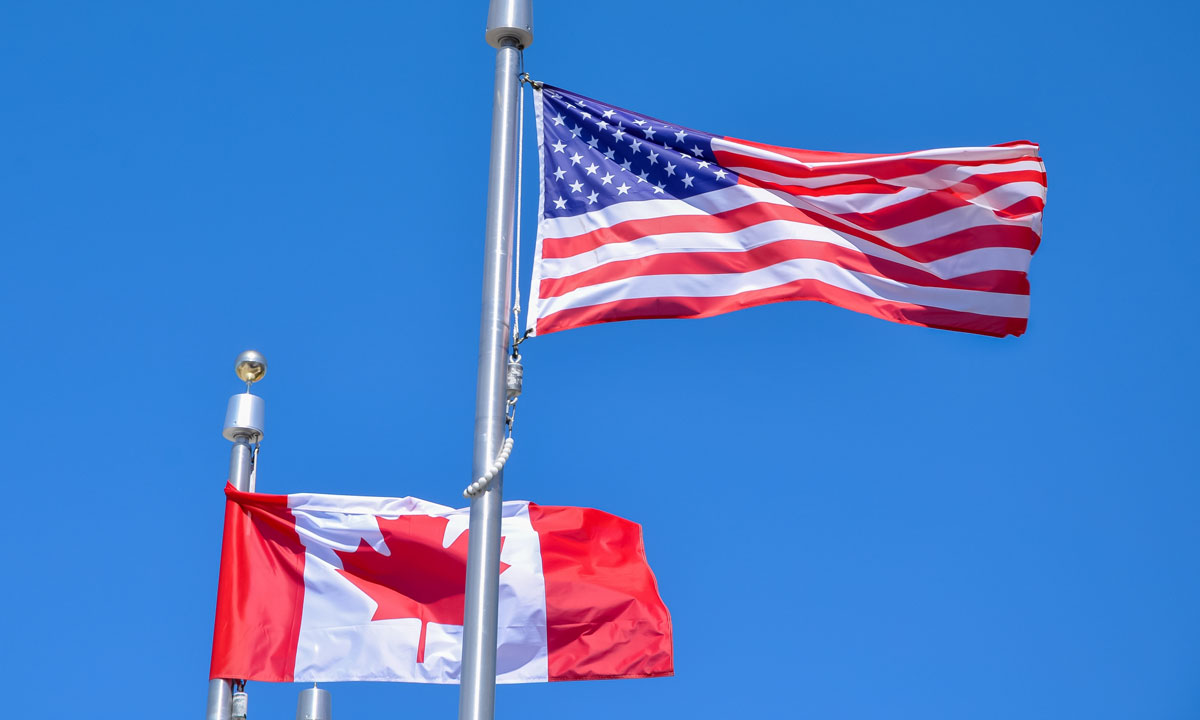
With a midnight tariff deadline looming, the Canadian Automobile Dealers Association says it is cautiously optimistic that Canada and the United States can reach an agreement that avoids another escalation in the trade dispute and provides relief for the auto sector.
No deal had been announced as of Friday morning, but negotiations are said to include a reduction in the U.S. tariff on Canadian-built vehicles from 25 per cent to 15 per cent, with content exemptions potentially lowering the rate.
The U.S. paused threatened 50 per cent tariffs on roughly $28 billion in Canadian goods for three days Tuesday while negotiators continued working on an agreement. The pause expires at the end of Friday, Aug. 21.
Canada-U.S. Trade Minister Dominic LeBlanc said Thursday the two countries were “very close” to an agreement following talks with U.S. Trade Representative Jamieson Greer in Washington.
For the automotive sector, one of the most consequential issues is the existing U.S. tariff on Canadian-built vehicles.
“CADA has been consistent in our message that tariffs on the auto sector are bad for the auto industry on both sides of the border, they are bad for jobs in the auto sector on both sides of the border, they are bad for dealers and most importantly they are bad for consumers,” said Huw Williams, CADA’s Public Affairs, in an interview with Canadian auto dealer.
Williams said CADA has delivered that message directly to officials on both sides of the border through trade missions to Washington and its ongoing advocacy with the Canadian government.
“We’ve made that same argument to the Canadian government to pursue a tariff-free environment to the greatest extent possible,” said Williams. “We’ve been in touch with negotiators throughout this process.”
U.S. President Donald Trump said Tuesday that the two countries had a deal “subject to the finalization of documents” when he announced the three-day pause. Prime Minister Mark Carney has been more cautious, saying substantial progress has been made but important work remains.
Williams described CADA’s outlook in a separate interview with CBC News as “cautiously optimistic with a heavy dose of reality.”
“We’re not going back to a total free trade environment. The world has changed,” Williams told CBC. “I think on auto, we’re getting close to a deal that the country can live with.”
Reports indicate the U.S. has proposed reducing its 25 per cent tariff on Canadian-built vehicles to 15 per cent. Under the current tariff structure, U.S.-origin content in CUSMA-compliant Canadian vehicles is exempt, which means the effective tariff on some vehicles could be significantly lower.
Williams said the final calculation will be particularly important because of the deeply integrated nature of vehicle production in Canada and the United States.
“Really what we’re looking for is what that final number nets out at, because the industry is so integrated on both sides of the border,” he told CBC.
Williams said Canada also has leverage in the negotiations because of its importance as a market for U.S.-built vehicles.
“We’re the largest customers of U.S.-made vehicles in the world,” he said. “The U.S. has to recognize that we are their largest customer and we need a trading relationship that works for both sides of the equation.”
The impact of the dispute also extends beyond tariffs placed directly on vehicles. Williams said steel and aluminum duties are already adding costs throughout the North American automotive supply chain.
“You layer automotive tariffs on top of that, then you start to have a real problem in terms of consumer affordability,” he told CBC. “We’ve got to look after both sides of the equation, the manufacturing equation, but also what can customers afford.”
Lucas Malinowski, President and CEO of Global Automakers of Canada, also expressed cautious optimism about the negotiations while stressing the importance of getting as close as possible to tariff-free automotive trade.
“I was glad to see they extended the deadline,” said Malinowski. “Ideally from the auto sector it gets us as close as possible to tariff-free trade and we can get back to supporting the competitiveness of the North American auto industry both in Canada, but also the U.S. and Mexico.”
Daniel Ross, Director, Strategic Market Insights at Canadian Black Book, said a deal would also help provide greater stability for an industry that has struggled to plan around rapidly changing trade conditions.
“I expect it to improve our footing,” said Ross. “This issue around tariffs and trade has put our market and business planning in constant turmoil.”
Ross said establishing a more concrete trading framework would allow companies to plan and execute strategies without continually adjusting to a “fast-moving target.”
“This has been the most important issue that has kept our business almost at a standstill, putting the auto sector in North America further behind other global markets month in and month out,” he said.