New-vehicle affordability in the United States held nearly steady in July, as income growth helped offset higher vehicle prices and elevated borrowing costs.
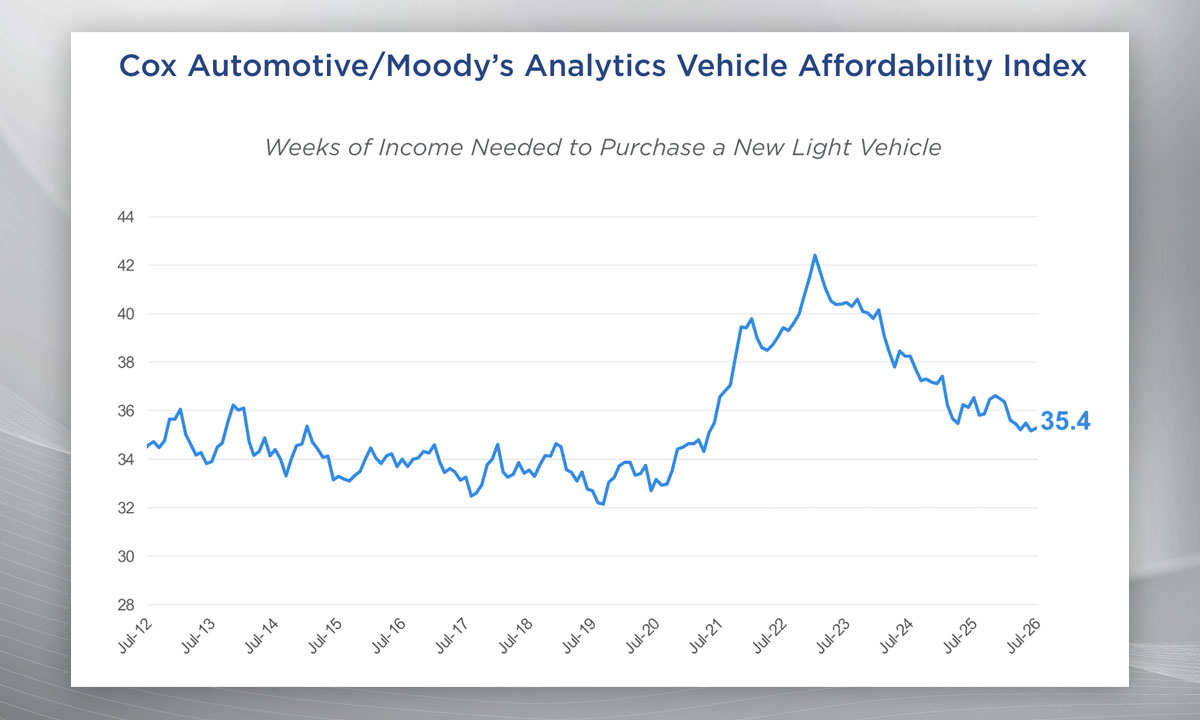
The latest Cox Automotive/Moody’s Analytics Vehicle Affordability Index found the average new vehicle required 35.4 weeks of median income to purchase, compared with 35.3 weeks in June.
Income increased 4 per cent year over year, while the estimated average auto loan rate remained unchanged from June at 9.52 per cent. That rate was two basis points higher than a year earlier.
Meanwhile, the average new-vehicle price increased 0.2 per cent during July to US$49,855, according to Kelley Blue Book data.
Monthly payments moved higher. The typical payment increased 0.7 per cent from June to US$768, representing a 2.9 per cent increase from July 2025. Despite that rise, payments remained below the US$795 peak recorded in December 2022.
Affordability showed a modest improvement when compared with a year earlier. In July 2025, consumers needed 35.8 weeks of median income to purchase the average new vehicle.
Cox Automotive said affordability improved 1.5 per cent year over year as rising incomes more than compensated for a 1.9 per cent increase in new-vehicle prices and slightly higher interest rates. Incentives provided less support for buyers, declining 2.4 per cent compared with a year earlier.
The index measures the number of weeks of median income needed to purchase an average new light vehicle and incorporates vehicle pricing, income and financing costs.