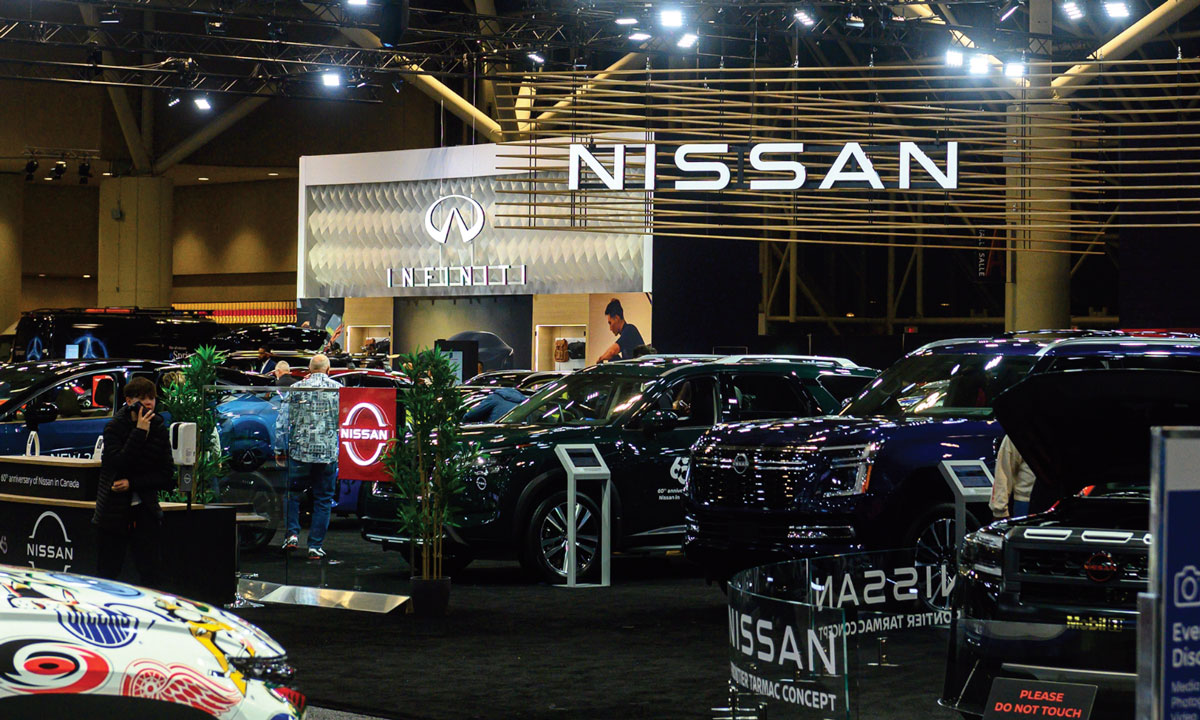
A firsthand look at how China is reshaping the automotive future
I have seen the future of the auto industry. It is China.
I recently accompanied 70 Canadian new car dealers on the CADA 2026 China Study Tour to Beijing.
For those dealers thinking of participating in the 2027 trip, I can’t recommend it highly enough. The feedback from dealers on this year’s trip was universally positive.
So what made this experience so valuable?
Let’s start by acknowledging the expertise of the organizer, Bruce Rosen, CADA Executive Director of Industry Relations and a China industry insider for nearly a decade in leadership roles with Volkswagen and local partners FAW and SAIC. Bruce’s knowledge of how the industry operates, along with his local contacts, ensured tour participants had a behind-the-curtain view.
As we’ve been saying for some time, it’s not a matter of if Chinese OEMs will come to Canada, it’s when.
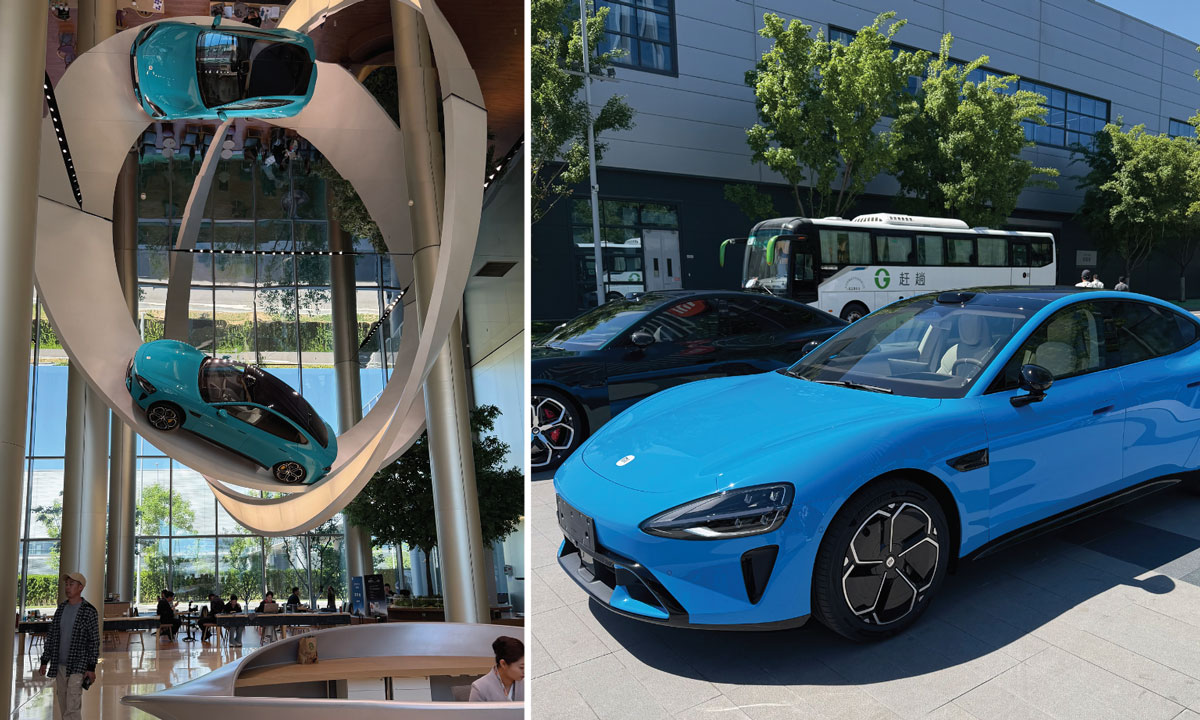
While the main draw was the Beijing auto show, Auto China 2026, the group had the opportunity to learn more about China’s innovation culture, visit two different OEMs, Xiaomi and BAIC, enjoy a behind-the-scenes visit to both a leading Chinese AV company and a humanoid robotics maker, and ride through the streets of Beijing in four of the newest premium EVs available. We also got to speak with one of the largest auto dealers in China.
I had several “aha” moments: things I may have read about before but didn’t fully understand or appreciate in terms of scale or depth. Consistent with the Toyota Way maxim “Genchi Genbutsu,” there is nothing quite like seeing things firsthand, especially when guided by local insiders.
It’s a long list of aha moments, but here are a few highlights I hope will illustrate why China automotive is the new global benchmark and provide a glimpse of how our own Canadian automotive industry may evolve in the coming years.
As we’ve been saying for some time, it’s not a matter of if Chinese OEMs will come to Canada, it’s when. After Ottawa’s recent trade deal with Beijing, “when” is most likely the first quarter of 2027.
The privacy versus digital efficiency trade-off
From the moment you land, you are met with thousands of surveillance cameras, no fewer than a dozen within 10 metres of deplaning. By the time I reached Customs, I’m certain the PRC authorities knew exactly who I was. This is daily reality for all Chinese citizens: every location and every digital click are tracked. I am passing no judgment, only highlighting what is.
But for the local citizens, most of whom seem willing to accept these rules, the trade-off comes in the form of the world’s most connected digital ecosystem.
Instead of separate, unconnected apps like WhatsApp, Instagram, Amazon and Waze, locals enjoy super apps like WeChat and Alipay, which deliver nearly every digital convenience one can imagine in one place, and with “know me” continuity across these different tasks.
I barely saw paper currency all week. Almost every business, large and small, encourages mobile payment. This level of integration and convenience is the outcome of making the privacy trade-off that many in the Western world are uncomfortable with.
Why does this matter?
Aside from making daily life easier, this level of connectivity and data integration creates an elevated expectation for Chinese consumers regarding how all products and services, including their vehicle, should perform.
This is one of many reasons why Chinese brands have taken so much domestic market share from legacy automakers over the last decade. Digital connectivity and convenience features better match consumer expectations, and the legacy automakers have yet to catch up despite offering a longer and more storied brand history.
This difference in approach is the key driver behind China’s innovation success. It certainly doesn’t hurt that the 1.4-billion domestic market allows that technology to commercialize and scale very quickly.
China’s innovation mindset
Where does this tech innovation leadership come from? Local Sinophile and innovation expert Tom van Dillen explained to us the fundamental difference between how China and the West approach innovation. While there is more to the story, essentially it boils down to this:
China: Innovate, then regulate. The West: Regulate, then try to innovate.
This difference in approach is the key driver behind China’s innovation success. It certainly doesn’t hurt that the 1.4-billion domestic market allows that technology to commercialize and scale very quickly.
Both of the tech companies we visited this week didn’t exist five years ago but today are generating revenue in the hundreds of millions, with valuations in the billions, in U.S. dollars.
Here are three examples of innovation leadership we had the opportunity to see firsthand:
We visited Pony.ai, a leading autonomous vehicle provider for both passenger and commercial vehicles, with thousands of AVs on roads across China, Singapore and Europe.
Everyone in our group took a 10-kilometre ride through the streets of Beijing with three passengers and no driver. What was most interesting is that the route was primarily left turns, across the flow of traffic at large, multi-lane intersections, which is the hardest use case to solve. No problem for Pony.ai.
The Chinese founders of the company are all U.S.-educated PhDs at premier schools like MIT and Stanford. Did they graduate and stay in Silicon Valley to launch their new company? No. The innovation culture in China drew them back.
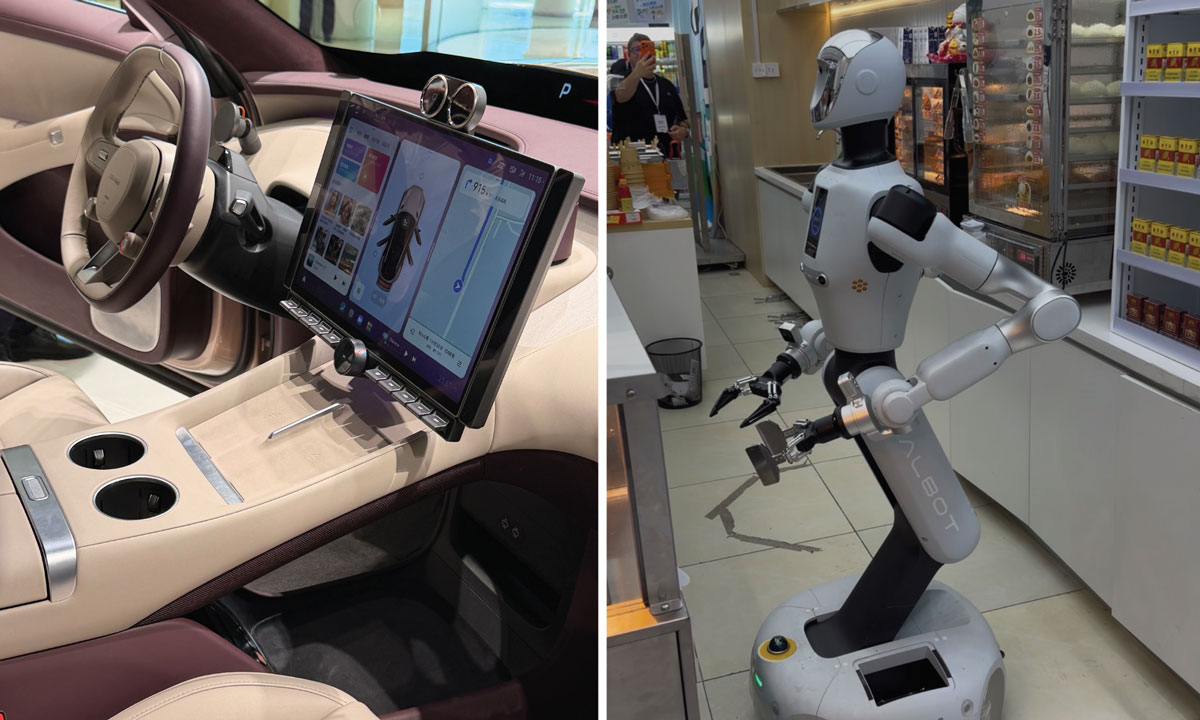
And then there was our visit to Galbot, short for Galaxy Robotics. The company was founded in 2023 and is valued today at US$3.5 billion, with blue-chip clients including Mercedes-Benz, Hyundai, Bosch, Geely and CATL.
Unlike many humanoid robots that are designed for controlled lab settings, Galbot robots are deployed in messy, unpredictable environments like convenience stores and coffee shops. And they don’t use rules-based software to operate, with if/then logic, which is very inflexible.
Instead, like the AVs we rode in, these robots can interpret the world around them in real time and solve problems. And while Galbot has humanoid robots, its focus is on semi-humanoid, wheel-based robots, which offer a lot more strength and reliability in factory and retail settings.
If we want to see where our industry is going, China provides the roadmap. Not every Chinese innovation will make sense for Canada. But the core competencies China enjoys in artificial intelligence, robotics and battery tech will need to be emulated by the legacy automakers to keep pace.
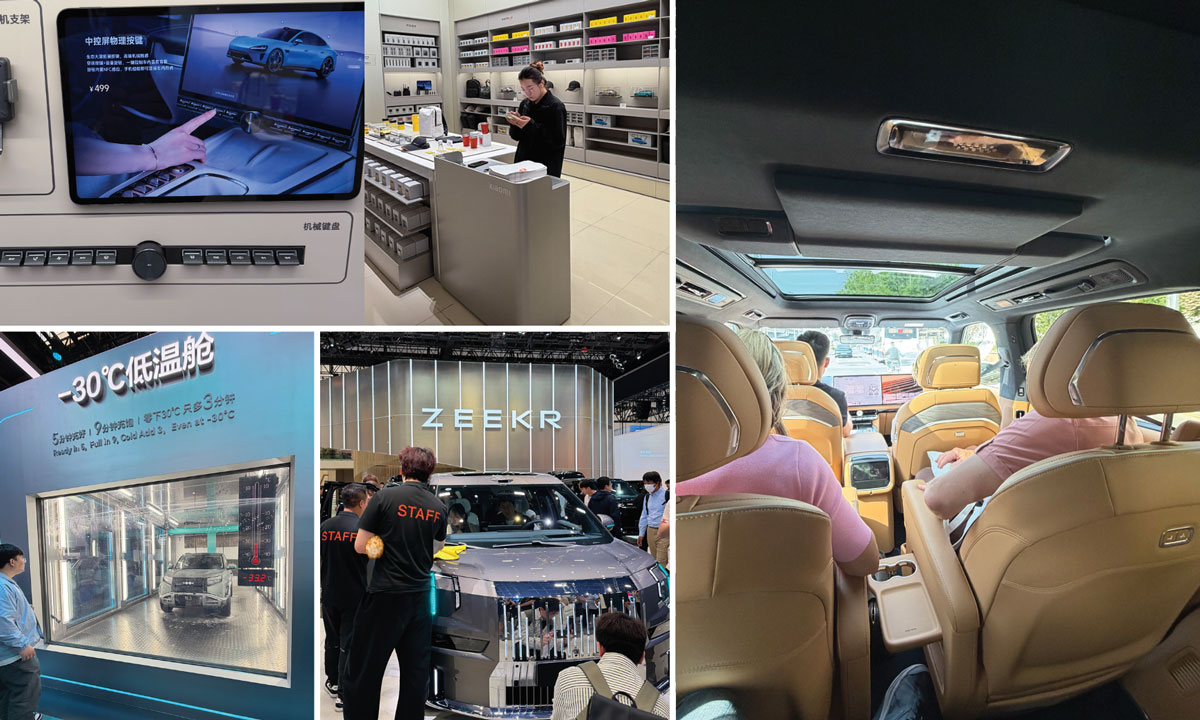
Another example of China innovation leadership: EV charging and batteries. At the Beijing show, two displays caught my attention.
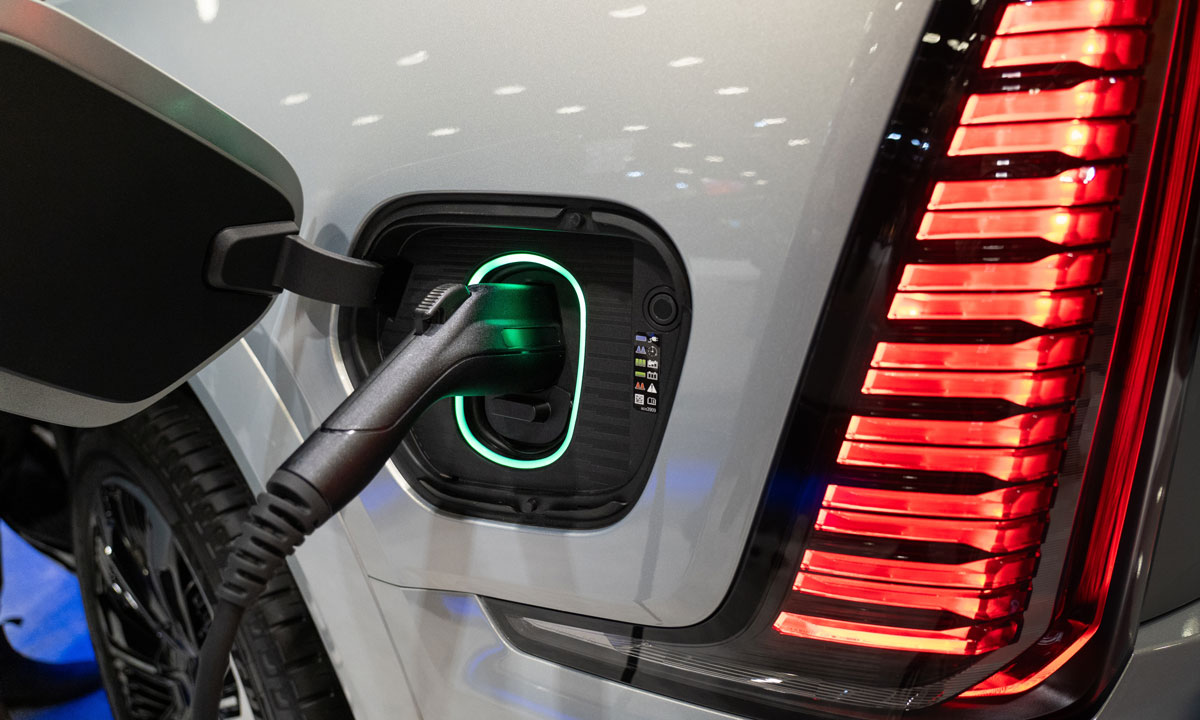
BYD set up two full-scale cold chambers, each with a vehicle inside, to demonstrate charging effectiveness in ultra-cold conditions of -33 C. This was an incredibly effective exhibit. Not only will BYD batteries charge from 10 per cent to 70 per cent in five minutes, it only takes three minutes longer in ultra-cold conditions. At eight minutes, we’re starting to come close to a gas station fill-up.
NIO is the brand that offers continuous battery replacement instead of charging. NIO has nearly 4,000 battery replacement stations across China, many located on major highways. At the show, they set up a real battery replacement pod and elevated its height so visitors could see the robotics underneath. The customer drives in, just like at a Mr. Lube in Canada, and robots beneath the car remove the old battery and install a fully charged replacement.
I watched three cycles: two minutes and 37 seconds every time. The customer never has to leave her vehicle. This kind of convenience and speed exceeds the combustion refuelling experience in every dimension.
Why does this matter?
If we want to see where our industry is going, China provides the roadmap. Not every Chinese innovation will make sense for Canada. But the core competencies China enjoys in artificial intelligence, robotics and battery tech will need to be emulated by the legacy automakers to keep pace. And not just the OEMs, but retailers as well.
The application of robotics extends far beyond factories. We’re already seeing robots deliver parts directly to technicians in Chinese dealerships based on the work order, and robotic technicians perform tire replacements continuously, seven days a week. In a world where we struggle to attract and retain technician talent, could robotics be part of the solution?
Incredible vehicles at an incredible show
To suggest Auto China 2026 in Beijing is a large show by global standards understates the reality. The show covered 4.1 million square feet, roughly 70 football fields. Our group spent most of the day at the show and covered maybe two-thirds of what we wanted to see. There were nearly 1,500 vehicles on display. The size and scale of the show is difficult to comprehend.
But what was easy to see is how far Chinese OEMs have come in terms of design and quality. From compact and sub-compact segment vehicles to large three-row premium SUVs, automakers like BYD, Chery, Geely, NIO, Xpeng and Xiaomi displayed vehicles as impressive, or more impressive, than legacy brands like Audi, Mercedes-Benz, Toyota and Volkswagen.
Why does this matter?
While the Japanese and the Koreans first came to Canada with design and quality that didn’t always match established standards, the same cannot be said for the Chinese when they arrive in 2027. While long-term reliability will need to be proven in Canada’s unforgiving climate, consumers will be drawn to the design, interior and exterior, fit and finish, and convenience features of these vehicles, and at a price that will match or beat segment competitors.
One example that really struck our group as brilliant: when Xiaomi engineers got feedback from some SU7 owners that they wanted physical buttons for things like HVAC and sound/radio instead of relying on the touchscreen menu or voice command, they quickly developed a button solution that plugs into the touchscreen from below and works seamlessly out of the box. And how much do Chinese owners of this high-performance sports sedan pay for this accessory? 600 CNY, or about $100 CAD, available in the retailer’s accessory store or in any Xiaomi mall store. Imagine how hard that elegant solution would be to replicate in a legacy OEM engineering environment.
The CADA study tour was a great primer to help understand the China innovation culture and the origin of “China Speed,” like the Xiaomi button example.
I am not suggesting the playing field is level when it comes to the advantages many Chinese OEMs enjoy as they seek growth in global markets outside their own. But the more I saw and learned on the tour, the more I wondered whether China’s “unfair advantage” is not government subsidies, but the incredible innovation ecosystem it has developed under the guidance of the Beijing central government’s Five-Year Plan.
When China declared in 2015 that the country would lead the world in EVs, it wasn’t kidding.
Buckle up.