Canadian used wholesale vehicle prices continued their downward trend in the week ending June 27, according to the latest Canadian Black Book (CBB) Market Insights report.
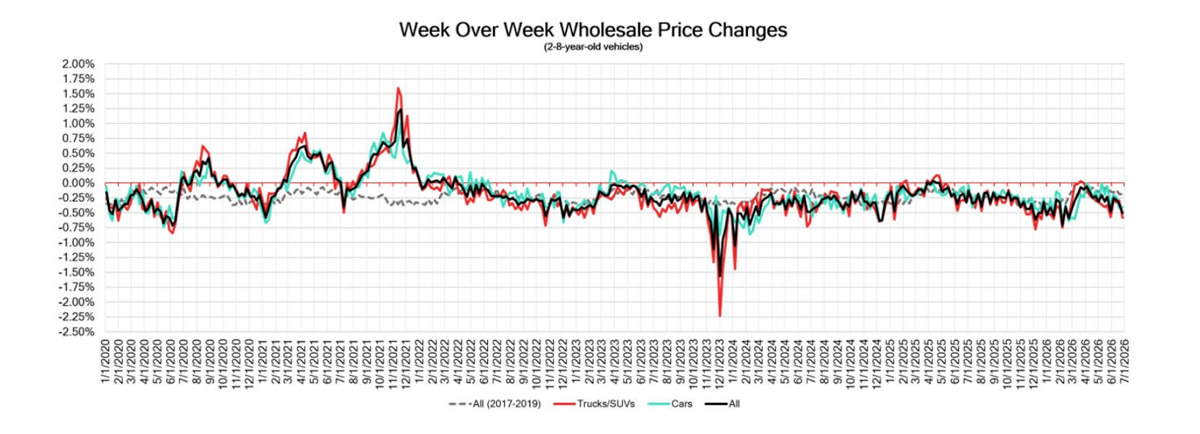
Overall wholesale values fell 0.50 per cent, steeper than the previous week’s 0.35 per cent decline and well below the historical average decline of 0.19 per cent for the same period between 2017 and 2019. Car segments declined 0.40 per cent, while truck and SUV segments dropped 0.58 per cent.
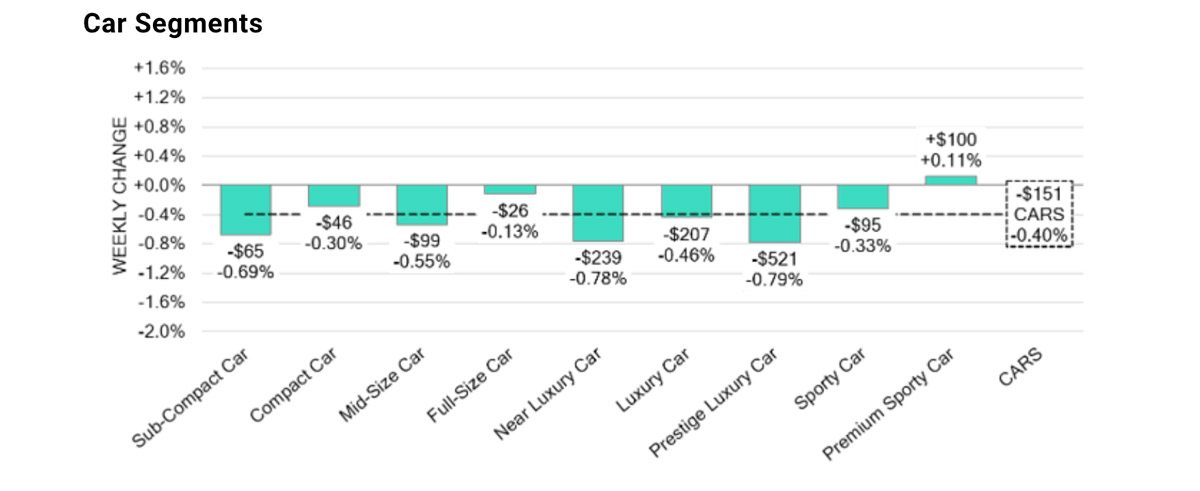
Among car segments, prestige luxury car values posted the largest decline at 0.79 per cent, followed by near luxury car (0.78 per cent) and subcompact car (0.69 per cent). Premium sports car was the only segment to record an increase, rising 0.11 per cent.
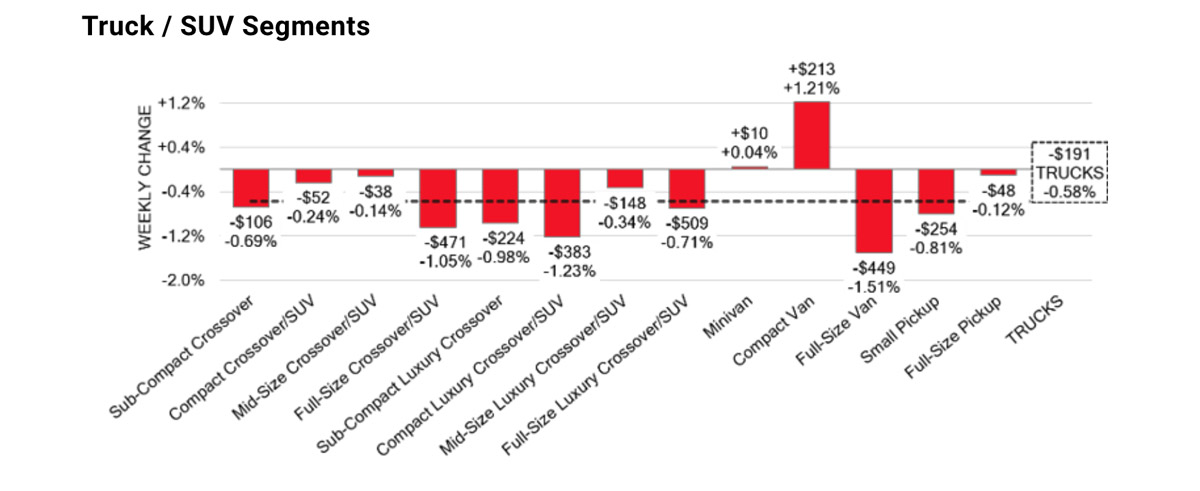
Truck and SUV segments experienced broader weakness. Full-size van values declined 1.51 per cent, followed by compact luxury crossover/SUV (1.23 per cent) and full-size crossover/SUV (1.05 per cent). Compact van values increased 1.21 per cent, while minivan values edged up 0.04 per cent.
CBB said auction performance remained inconsistent, with sale rates ranging from 46.6 per cent to 73.2 per cent, averaging 59.9 per cent. While auction inventory increased slightly, upstream channels continued to receive priority access to available vehicles, and demand for high-quality inventory remained strong on both sides of the Canada-U.S. border.
The average used vehicle listing price declined modestly to $36,900 based on approximately 169,000 vehicles listed on Canadian dealer lots.
Industry trends
Beyond the wholesale market, CBB highlighted several developments affecting the automotive industry. General Motors is expected to cut additional jobs at its Oshawa Assembly plant as production of the refreshed 2027 Chevrolet Silverado 1500 shifts later this year. Hyundai Canada announced two senior leadership appointments, naming Laura Nava director of marketing and Fabio Cappella director of product and corporate strategy. Meanwhile, Stellantis said it plans to expand the Ram brand with a broader product lineup targeting 825,000 global sales by 2030, while Lexus unveiled an eighth-generation ES that will be offered in both hybrid and battery-electric variants.