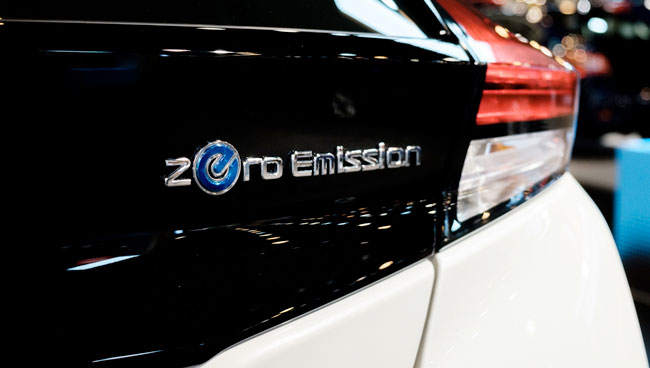
Ottawa’s “go it alone” approach for zero emissions vehicles misses the mark
If I may go back to Adam Smith, the invisible hand is the notion that without external intervention, consumers and firms in the market can create an efficient allocation of resources.
The famous 18th-century metaphor also suggests that government interference in market dynamics creates inefficiencies and results almost certainly in market failure.
It becomes even more problematic when government tries to dictate consumer choice and preference. The latest federal government Zero Emissions Vehicle (ZEV) targets are another good example of well-intentioned environmental policy infringing on normal market mechanisms, and too ambitious to succeed.
The federal government announced in January their goal for ZEVs to account for 10 per cent of all new vehicles sold by 2025; 30 per cent by 2030; and 100 per cent by 2040.
These targets were communicated without consensus with the provinces and consultation with industry stakeholders. The government did not provide any details on how Ottawa intends to achieve these targets.
This kind of unilateral decision is quite concerning given the fact that provinces, municipalities and industry stakeholders — including CADA — have worked extensively over the past two years with the federal government on the national ZEV strategy.
Furthermore, over the past decade, the automotive industry has been committed to drastically increase fuel economy for new vehicles and to mitigate environmental and carbon footprint.
Hundreds of billions of dollars have been invested by the major manufacturers to develop new vehicles that are far more fuel efficient and produce fewer greenhouse gas emissions than older vehicles.
It’s not just ZEVs that are greener. Internal combustion engines (ICEs) in new vehicles use modern fuel efficiency technology that makes them more fuel-efficient than ever before.
The fuel efficiency of new vehicles, in all segments, has been improving over the last few years. This trend was driven by the market aligning with consumer demand for greener and fuel-efficient vehicles.
The data suggests that Canadian demand for ZEVs has been increasingly growing. However, these targets are extremely ambitious and do not adequately reflect the consumer rate of adoption and the infrastructure capacity to handle an accelerated transition towards zero emissions vehicles.
In 2018, nearly 45,000 plug-in EVs were sold in Canada, which makes up less than 2.5 per cent of all new vehicles sold last year.
The government goal to increase consumer demand for ZEVs by more than four-fold within the next five years is unrealistic considering the current barriers to adoption and will require a robust set of policies and infrastructure investment.
At this time, 97 per cent of the ZEVs market is concentrated in Quebec, British-Columbia and Ontario — the only three provinces with incentives to purchase these vehicles. The uptake of ZEVs has been minimal in other parts of the country.
In fact, since Ontario scrapped their rebate program last fall, ZEVs sales declined by close to 15 per cent in that province, indicating the strong correlation between incentives and the ZEV rate of adoption.
Additionally, key impediments to consumers’ demand for ZEVs include higher upfront purchase cost, lack of charging stations, range and technology uncertainty, availability in a wide range of sizes and models, and lack of public awareness and education about ZEVs.
While the government targets are focused on increasing supply, it is as critical to overcoming these barriers on the demand side as well.
For the federal government plan to work, it needs to introduce a strong Canada-wide rebate program in the near future to incentivize transition towards these vehicles. A point-of-sale GST rebate could easily be administered.
At the same time, there is a critical need for infrastructure investment. Not only in hydrogen fueling and charging infrastructure across the country, but also in retrofitting existing residential and commercial properties to accommodate the increased electricity consumption.
The government will also need to consider the impact on electricity consumption generated by a much greater fleet of ZEVs and make the necessary investment for the current system to handle these needs.
The auto industry is committed to creating fuel efficient, greener vehicles and has made impressive progress in improving internal combustion engines (ICEs) while also developing and bringing to market ZEV technologies. Virtually every carmaker now offers a ZEV model and the availability of these models is increasing.
It is paramount for the government to work closely with the industry to implement realistic policies that support the growth of ZEVs in the market without limiting consumer choice and disrupting market trends.