 Could the decision by General Motors to close its Oshawa assembly plant have been avoided if the company invested in “re-skilling” workers?
Probably not, but the use of Artificial Intelligence (AI) can help re-train those 1,500 employees to work at GM dealerships, according to Alessio Artuffo, Chief Revenue Officer at Docebo (a Learning Platform).
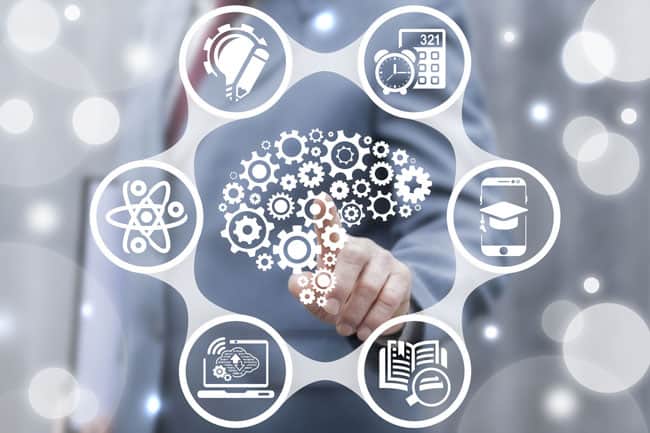
“Organizations are trying as much as possible to automate the distribution of information (in an efficient manner),” said Artuffo in an interview with Canadian auto dealer. “Virtual coaches are an example of that, and (are meant) to simplify a continuously trained engine of knowledge that allows an organization to distribute information better at any given time.”
In other words, AI can help change the way people learn by moving from a passive to a more active structure. Or rather, from formal to social learning. It can remove barriers that infringe on the way employees learn, or are trained for a job, by helping to dissolve biases about what they can and want to learn.
“We don’t believe in learning as a passive experience only, but rather it (should be) a sharing experience,” said Artuffo. “When you give people that opportunity, you see a lot of engagement that otherwise would not exist.”
Artuffo says they are trying to change a generation of learners from receivers of information (data) to receivers of knowledge (a collection of information made meaningful). And they want to empower them to “contribute to knowledge.”
Overall, it’s clear that AI has a lot to offer in terms of training employees, including the possibility of creating new jobs; accessing information more easily; creating content based on specific recommendations; and — ultimately for OEMs and dealers — resulting in Return on Investment and Return on Involvement. Although that ROI and the speed at which it is received varies from company to company, according to Artuffo.
The announcement by GM to close its Ontario plant is about more than its employees. New technologies, trends and vehicles sales, a shift in consumer preferences and buying behaviours, and possibly the uncertainty that lies with the new NAFTA 2.0 agreement (and potential tariffs) may have collided to create that result.
But changing the way certain OEMs are training their employees could perhaps minimize the impact of comparable situations in the future.