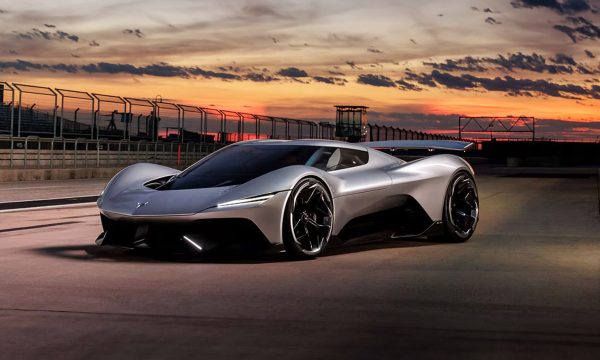
One of my earliest childhood memories is walking through Nuremberg with my parents and my father challenging me to name the marque of every passing car on the busy streets.
Our family had recently escaped communist Poland, where the drab selection of Soviet-approved personal transportation didn’t quite spark the imagination of this fledgling car enthusiast in the same way the shiny and bright offerings of West Germany did toward the end of the Cold War.
I was hooked, and have always taken pride in being able to identify even the most obscure OEM badges and models wherever my travels took me.
Windsor was where my family initially called home in Canada, and for the first time in my life I actually met people who worked in the auto industry. For a living!
The automotive industry has always been at the forefront of innovation and industrial imagination. Cars are safer, faster, more reliable, luxurious and technologically advanced than ever before, all while maintaining affordability relative to inflation.
Looking across the river at GM’s Renaissance Centre and visiting my first North American International Auto Show in Detroit ensured that initial obsession would always be in the back of my mind, no matter what I ended up doing in life.
Another obsession with history and politics took me down a professional path of working in government, communications and public affairs. But the passion for all things automotive was always there, albeit in a personal rather than professional capacity.
That all changed in 2023 when I jumped at the chance to merge the two things that keep me up at night and join the team at Global Automakers of Canada. The past three years have provided a unique opportunity to grow from being passionate about cars to understanding the automotive industry, which for more than a century has sparked imaginations and obsessions around the world.
Now, the members of Global Automakers have given me the privilege and responsibility of representing the interests of an industry in the midst of truly profound change.
The automotive industry has always been at the forefront of innovation and industrial imagination. Cars are safer, faster, more reliable, luxurious and technologically advanced than ever before, all while maintaining affordability relative to inflation.
We have a history of meeting and exceeding challenges initially thought insurmountable, and have grown into a globally integrated industry where innovation knows few borders. But many of the underpinnings of the past century’s success are being stressed in new and multiple ways at once, particularly in Canada.
Automotive tariffs and a rupture in the highly integrated North American market are adding significant costs across the supply chain and impacting the competitiveness of the region’s manufacturing base. We need to get back to tariff-free auto trade to keep North America competitive for the dozens of Global Automakers who build cars in the region.
The transition to electrification requires new product development and production methods, along with significant capital investments from automakers.
It also requires outside players, such as charging providers, to do their part to support consumer demand, along with new consumer education.
EVs are getting better every day, but a significant percentage of drivers remain concerned that they’re not the right fit for their needs, particularly in North America.
A significant turn away from electrification in the United States could create a situation down the road where North American drivers don’t have access to the latest and greatest vehicle technologies deployed around the world — an unimaginable thought for a younger me calling out every single nameplate my father pointed at.
Either of these developments on their own would represent a generational shift in the history of the industry. But we also have to add the incredibly rapid rise of Chinese automotive manufacturing and significant export capacity that is making its impact on markets around the globe.
Automakers are competitors by nature and have always compared their own products against segment leaders to find ways they can improve the next generation. But there are serious and real questions about how competing with Chinese OEMs can be done on a level playing field.
As it looks to open our market to these new entrants, the Government of Canada will face a significant challenge in balancing fair competition that supports the benefits of our own domestic manufacturing with the need to address affordability for drivers.
I must admit that on a recent family vacation to a Central American country with significant Chinese imports, for the first time in my life I found myself passing cars with nameplates I’d never seen or heard of before. While humbling, it was also exciting to be reminded that there’s always something new to learn about automotive.
This is a daunting time for our industry, but we have shown over and over again our ability to adapt and thrive despite the roadblocks ahead. And as we all know, it’s the twisty roads that make for the best driving.