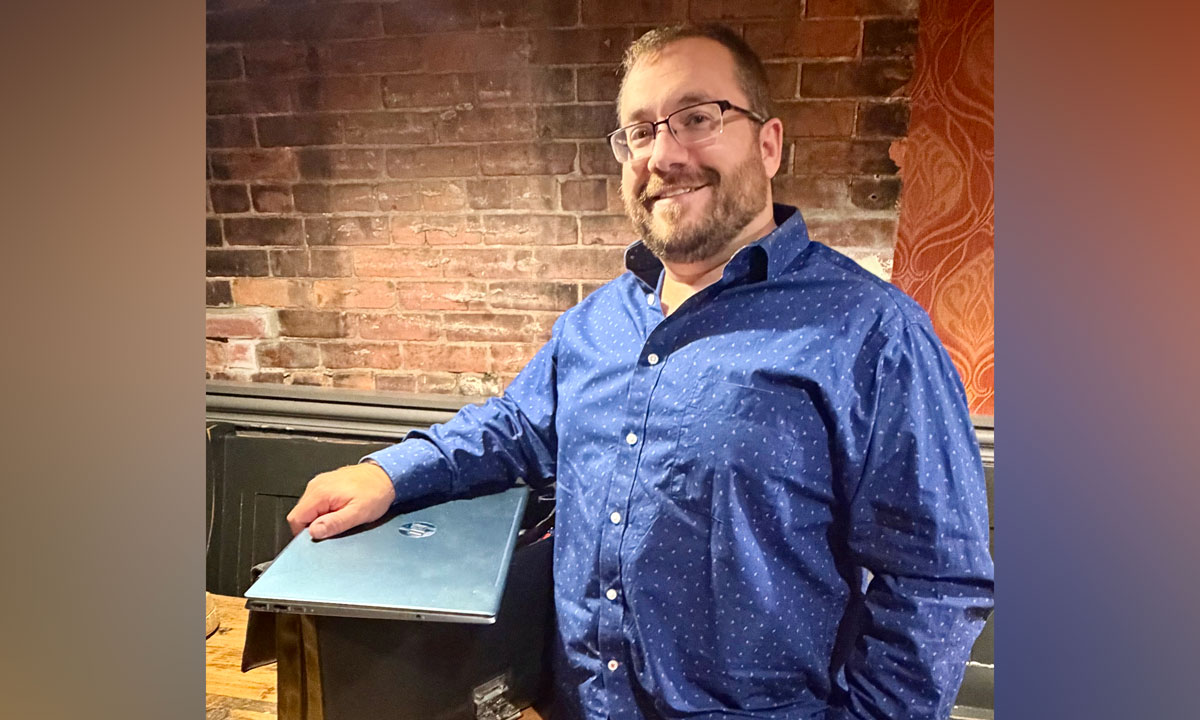
Harris Bocknek is waging a campaign to clear his name and get back to working in the auto industry he loves.
A year after the Crown withdrew all 176 criminal charges against former Rouge Valley Mitsubishi employees Harris Bocknek and Fadi Zeto, the fallout from Project Warden continues.
The two men say they remain unable to return to registered auto-retail work, their finances and reputations have suffered, and they are still trying to correct a public record shaped by the original allegations.
Their nearly $11-million lawsuit against Toronto Police is moving ahead, while separate provincial regulatory charges remain pending. The allegations in the civil claim have not been tested in court, while the separate provincial regulatory charges remain unresolved.
Canadian auto dealer reported on Project Warden when Toronto Police announced the charges in November 2024. Since then, the criminal case has ended, but Bocknek and Zeto say its consequences have not.
Bocknek had faced 92 criminal charges and Zeto 84. The Crown withdrew all 176 charges in August 2025, citing no reasonable prospect of conviction. Neither man was convicted of a criminal offence arising from Project Warden.
Both had worked in sales and finance roles at Rouge Valley Mitsubishi and had left the Scarborough dealership before they were arrested.
In June 2026, the two men launched a civil lawsuit seeking nearly $11 million from the Toronto Police Service Board, Chief Myron Demkiw, and several officers. The statement of claim alleges false arrest, negligent investigation, public humiliation, and substantial financial and reputational damage.
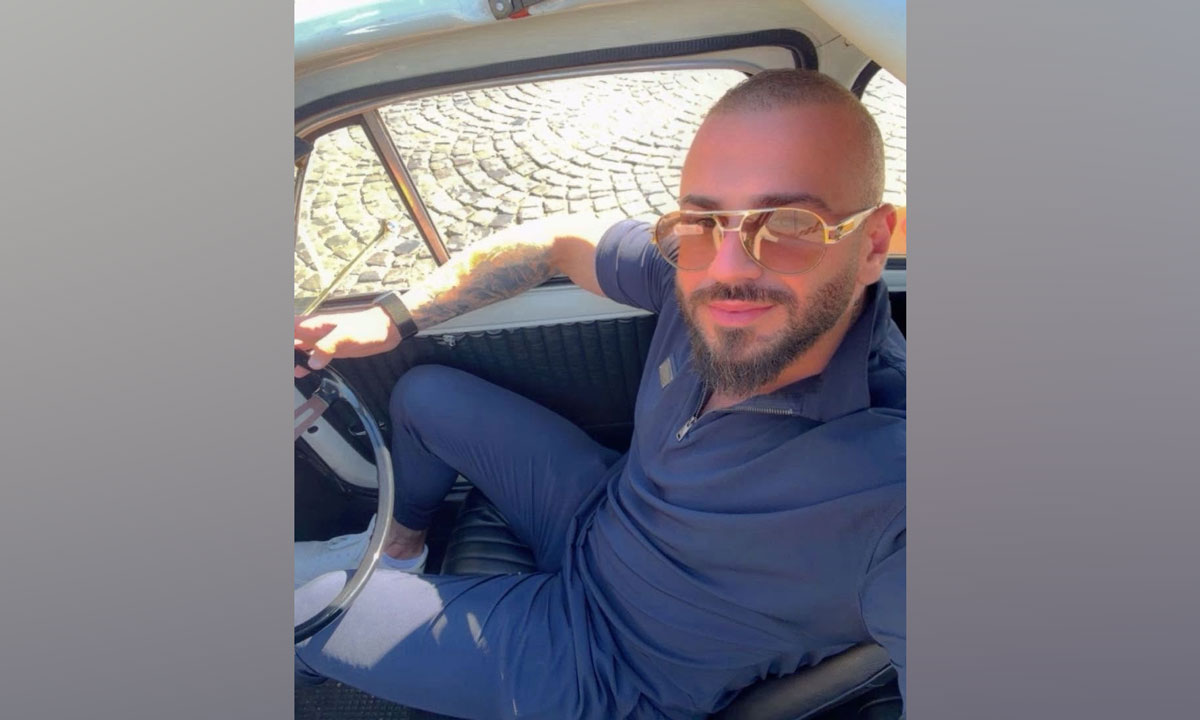
Fadi Zeto says he was arrested and detained and had no idea what it was all about. He says he’s suffered financial losses and career damage from the ordeal.
In response to an inquiry from Canadian auto dealer, Toronto Police Service provided a written statement.
“Police do not determine whether charges proceed or are withdrawn. However, a decision to withdraw charges does not mean the conduct was lawful, that the arrests were improper, or that police lacked reasonable grounds to lay the charges in the first place.”
TorontoToday reported on Aug. 25 that the police defendants in the lawsuit filed a statement of defence on Aug. 14 denying wrongdoing and maintaining there were reasonable and probable grounds for the charges, and that the investigation was not motivated by “malice, ill-will or improper purpose.”
“The statement of defence seems both generic and boilerplate. At times the materials, positions taken by Toronto Police Services are contradictory. We look forward to demonstrating such inconsistencies when the matter goes before the courts,” said Bocknek in a statement issued to Canadian auto dealer on Aug. 27.
For Bocknek and Zeto, the lawsuit is part of a broader effort to restore their reputations and eventually return to the industry.
The day everything changed
Neither man was still employed by Rouge Valley Mitsubishi when police arrested them on Oct. 21, 2024.
Bocknek was at home in Barrie celebrating his daughter’s sixth birthday when he received a call from Toronto Police. He verified the officer’s credentials and returned home, where he was arrested at his dining room table.
Zeto’s arrest unfolded differently. After leaving Rouge Valley Mitsubishi, he had purchased a small automotive business in Vaughan. Zeto said police arrived without warning, arrested him, and took him to Toronto Police’s 53 Division, holding him for more than 24 hours.
“My whole life, I didn’t even have a ticket,” said Zeto. “I’ve been in this country for over 16 years. Thank God I never had a problem. Not with police, not with anything.”
Project Warden announced
A little more than two weeks later, the allegations became public.
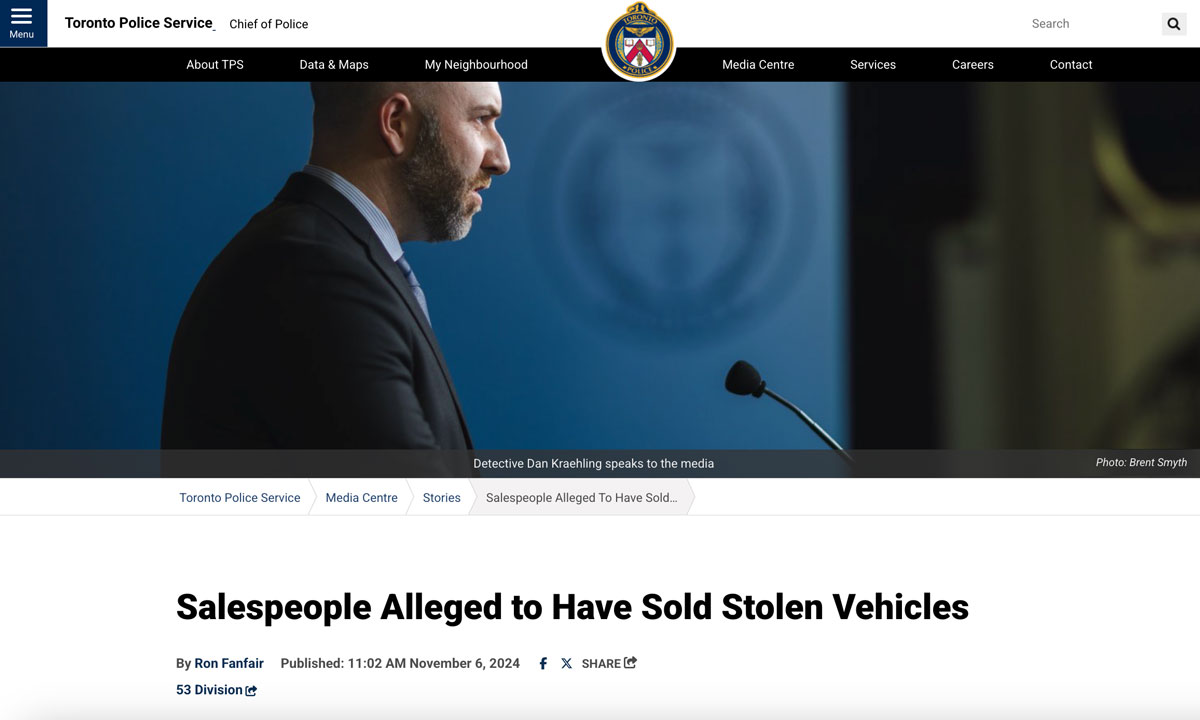
At a Nov. 6, 2024 press conference, Toronto Police alleged Bocknek and Zeto had used their positions at the dealership to acquire stolen vehicles through numbered companies, use dealership funds to purchase them, create fictitious sales documents using fraudulent vehicle identification numbers (VINs), and alter CARFAX reports. Police claimed the investigation linked the men to 22 vehicle sales and approximately $2.18 million in losses.
The announcement came amid heightened public concern about organized vehicle theft and re-VINning across Canada. The allegations, along with the names and photographs of Bocknek and Zeto, appeared across national media.
“It’s very, very overwhelming. I had to shut my phone off,” said Bocknek during an interview with Canadian auto dealer in Orillia.
As this article was being written, a Toronto Police webpage about Project Warden remained online detailing the original allegations. A note at the bottom states: ‘The charges mentioned in this story have since been withdrawn by the Crown.’
Working back through the records
When Bocknek met with Canadian auto dealer in Orillia, he brought a laptop with meticulously organized folders containing court documents, vehicle purchase invoices, CARFAX reports, reference numbers, media reports and regulatory correspondence.
Over several hours, he retraced transactions and explained the audit trail created when vehicles were acquired and sold. Canadian auto dealer conducted follow-up interviews with Bocknek and a separate interview with Zeto. Toronto Police and OMVIC provided written responses outlining their positions.
“I am meticulous with all the paperwork,” said Bocknek. “If my name went on it, I had a copy.”
One of the central Project Warden allegations was that Bocknek and Zeto had altered CARFAX reports. Both deny doing so.
Bocknek said he obtained vehicle-history reports through his own dealership login and retained copies. He maintains that reports generated when the vehicles were being acquired or sold did not contain the same information investigators later relied upon.
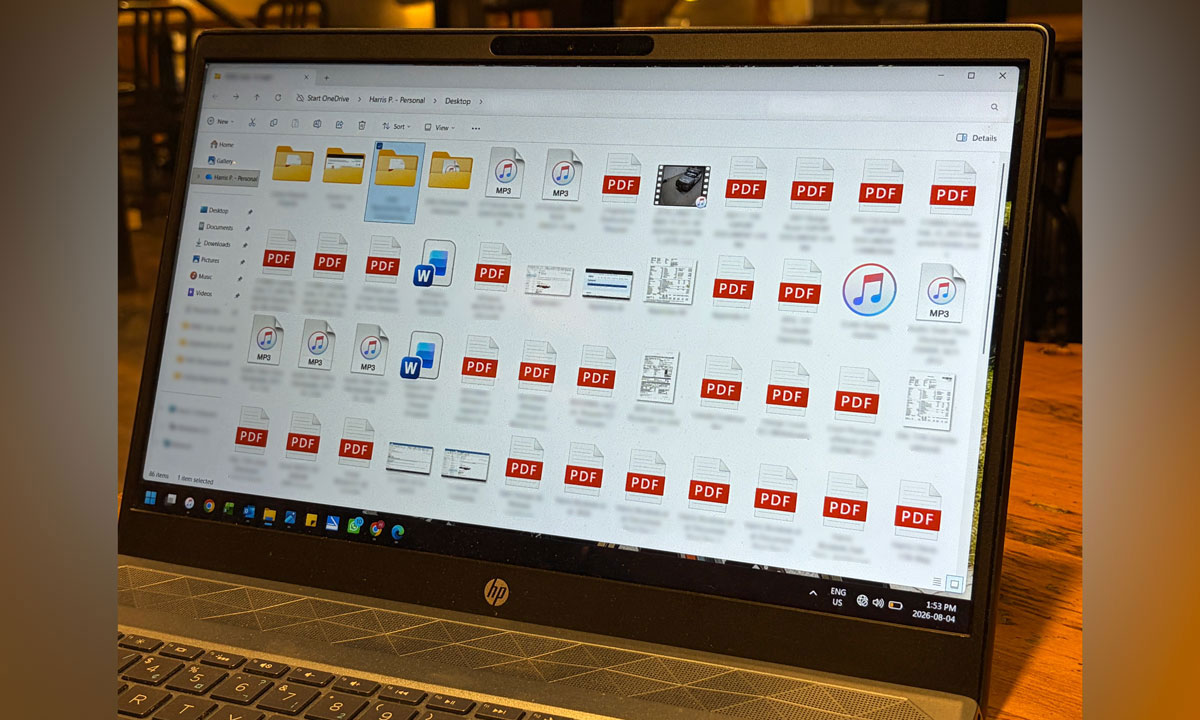
Harris Bocknek says by maintaining meticulous records he was able to mount a defence he says will ultimately clear his name.
His explanation centres on query dates. In one example reviewed with Canadian auto dealer, Bocknek pointed to a CARFAX report generated approximately nine months after the dealership had sold the vehicle. He said the later CARFAX report showed that the vehicle had subsequently been reported stolen and carried a different query date and reference number than the earlier dealership record.
“You have to know what you’re looking for,” said Bocknek.
Bocknek maintains the historical reports and reference numbers could be checked directly against CARFAX’s records.
A question of automotive expertise
For dealership management and general managers, the case underscores a growing issue: complex vehicle transactions require specialized industry understanding.
Bocknek argues that investigations involving re-VINning, fraudulent registrations, financing, and vehicle histories require a practical understanding of how vehicles move through a store. An investigator unfamiliar with those internal workflows may not immediately understand the significance of a report query date, how a lien payout is handled, or which employee controls specific administrative steps.
“If you’re policing the people that do it, you should have some experience in the challenges and some of the things that they face every day,” he said.
He believes investigators should have direct access to experienced dealership operators when evaluating complex deal records before drawing conclusions.
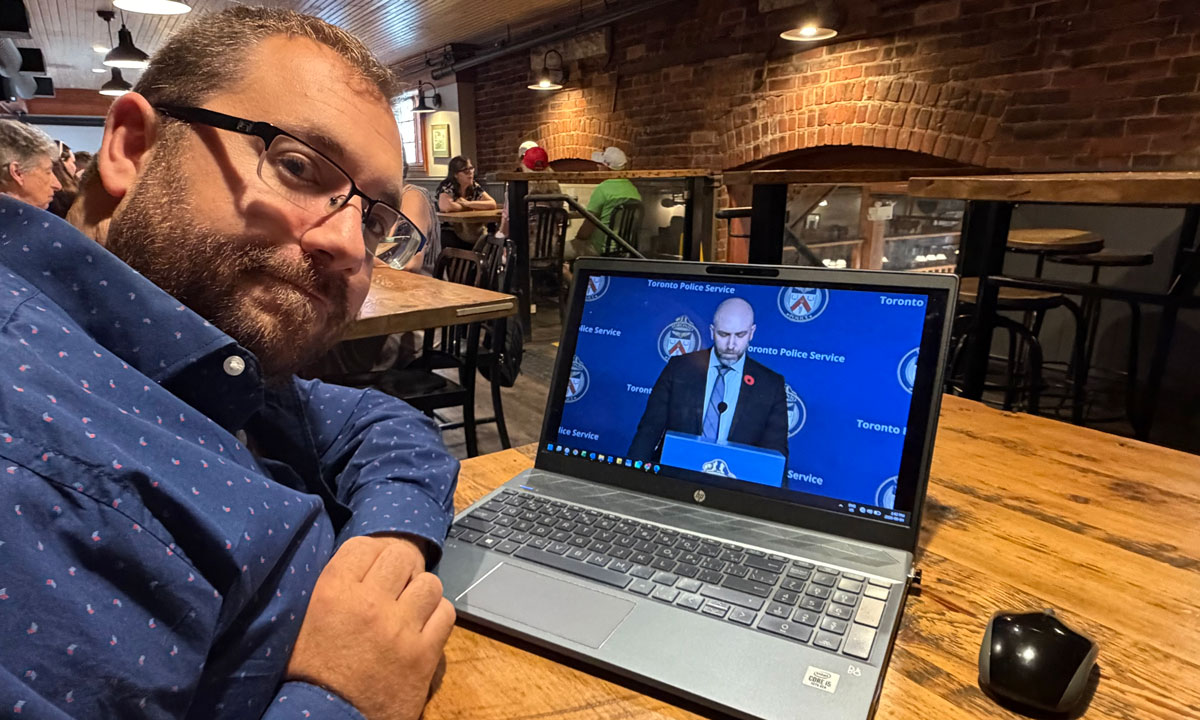
Harris Bocknek re-watches the Toronto Police Services Project Warden press conference that upended his life. He’s suing the police for damages.
How the investigation began
The police investigation originally began after Rouge Valley Mitsubishi brought internal concerns to police.
The dealership’s then-owner, Chris Olschewski, previously told media he began reviewing files after a customer reported a vehicle could not be insured due to a stolen-vehicle flag. That led him to flag other transactions to police. Bocknek disputes the conclusions drawn from those records.
Olschewski’s dealership group later faced severe financial difficulties. The stores were subsequently placed into court-ordered receivership and sold to new operators.
Canadian auto dealer reached out to Olschewski via LinkedIn, as he could not be reached through his former dealership group, but did not hear back in time for this article.
OMVIC proceedings and industry impact
The withdrawal of the criminal charges did not clear the administrative hurdles facing the two men.
OMVIC told Canadian auto dealer that provincial charges remain pending and said it could not comment further while the matter is before the court.
Asked why the regulator can take action against a registrant before criminal allegations have been proven, OMVIC cited its authority to issue immediate temporary suspension orders when there is concern about an immediate risk of consumer harm. OMVIC said ITSOs form part of its broader risk-based compliance and enforcement framework.
In Zeto’s case, OMVIC issued a proposal in April 2025 to revoke his registration. Zeto did not appeal the proposal, and the revocation was carried out. Bocknek says he also remains unable to return to registered auto sales while the provincial proceedings continue.
The consequences have been severe. Zeto said he lost his home and had to leave Mississauga, while Bocknek says the publicity affected his banking relationships, personal credit and employment prospects.
A lesson in the paperwork
For general managers, dealer principals, and sales and finance staff, Bocknek’s story carries a clear message on operational risk management: protect your paper trail.
Dealership staff routinely handle ownerships, purchase invoices, lien payouts, credit applications, vehicle-history reports, and signatures. Once a vehicle leaves the lot, those records often sit forgotten.
Bocknek’s records were scrutinized more than a year after he left the dealership. He says the historical deal records he was able to produce proved critical in challenging the allegations.
His advice to anyone on the sales floor or in the finance office is straightforward: “Be relentless with your paperwork. And make sure that what’s in them is correct.”
Canadian auto dealer will continue to cover this story as developments unfold.