Organized crime groups are changing how they acquire vehicles in Canada, shifting from conventional theft toward increasingly sophisticated financing fraud that can allow vehicles to be exported before anyone realizes a crime has occurred.
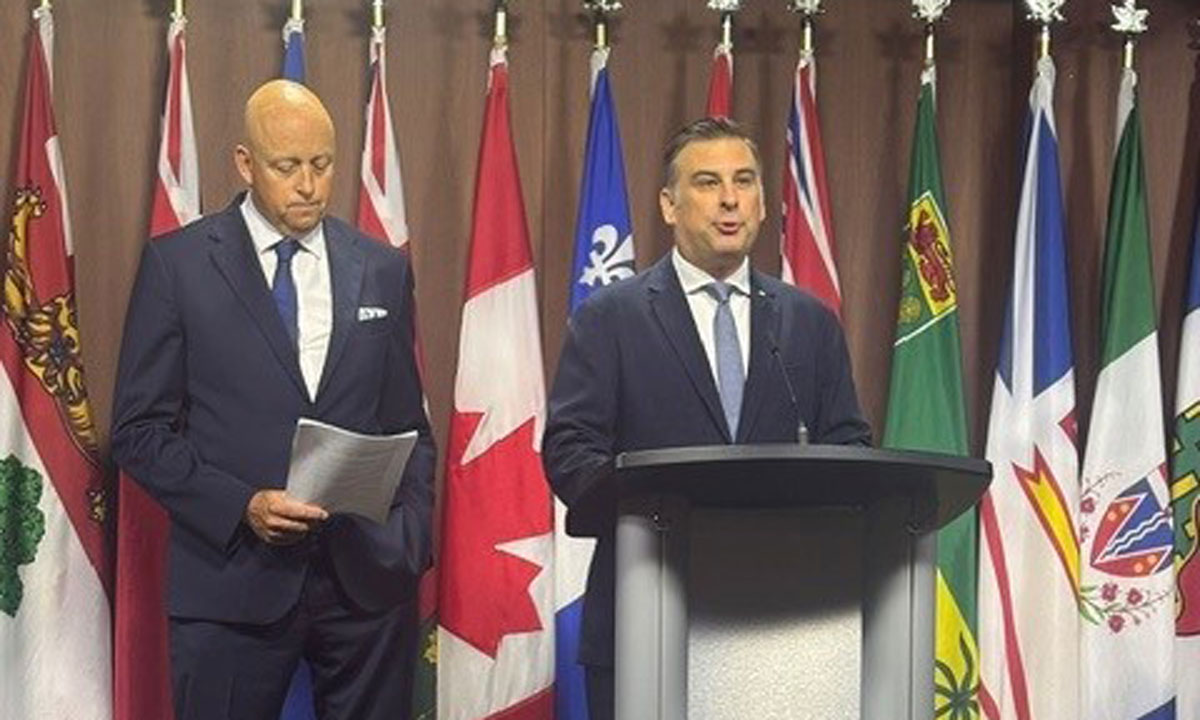
That was the warning from the Canadian Finance & Leasing Association (CFLA) and Canadian Automobile Dealers Association (CADA), which held a joint press conference in Ottawa on Tuesday to release a new report and call for federal action to close a significant gap in Canada’s vehicle export system.
Michael Rothe, President and CEO of the CFLA, said Canada has made measurable progress against conventional vehicle theft. Estimated losses that had reached approximately $1.5 billion annually have declined to about $900 million, he said, following increased efforts by governments, police and the Canada Border Services Agency.
But criminals have adapted.
The CFLA report, Fraudulent Financing and Illegal Vehicle Exports, says instances of fraudulently financed vehicles being directed toward export through major Canadian ports have increased 72 per cent year-over-year.
“Current enforcement systems are designed to identify stolen vehicles,” said Rothe. “Fraudulent finance vehicles often don’t appear as stolen when presented for export.”
In many cases, criminals use stolen or synthetic identities to finance vehicles legitimately through the retail and lending system. The fraud may not be discovered until payments fail or the real identity holder becomes aware of the transaction. By then, Rothe said, the vehicle can already be outside the country.
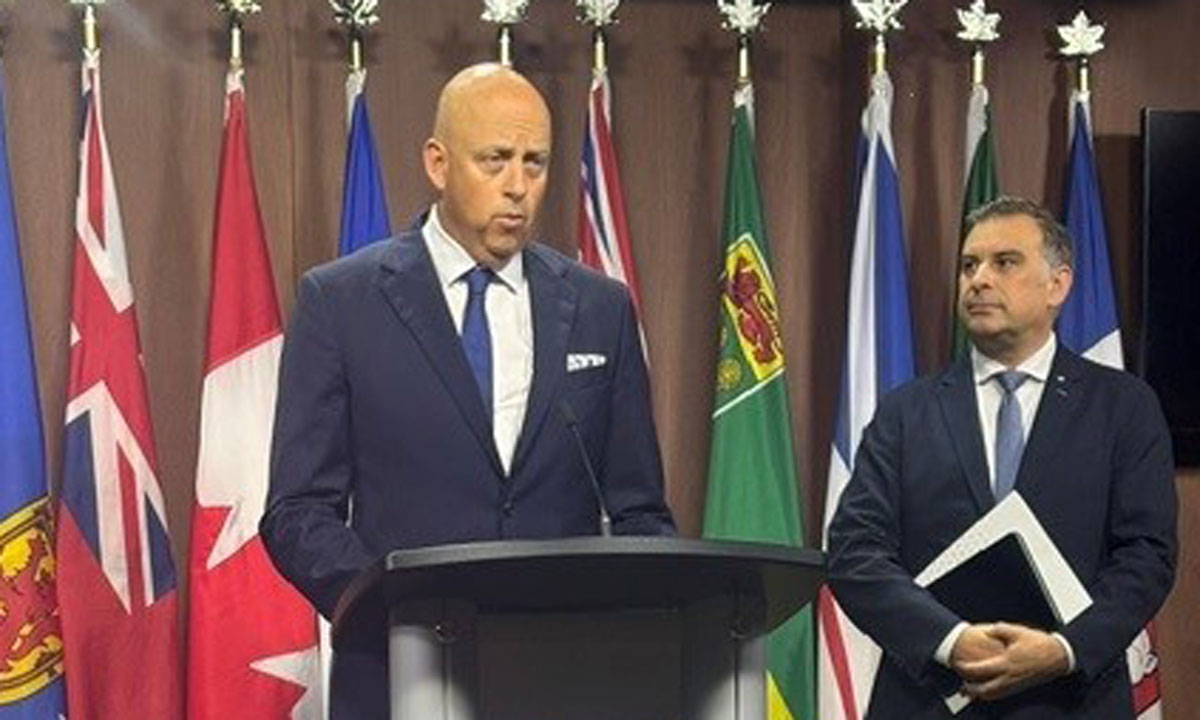
Huw Williams, CADA’s Public Affairs, described the evolving tactic more bluntly: criminals no longer necessarily need to “steal a car with a gun,” when they can “steal it with paper.”
The two associations are asking Ottawa to adopt a six-point plan that would require exporters to declare whether vehicles have liens, provide lien-release documentation and allow CBSA officers to independently verify liens.
They are also calling for a national lien database accessible to border officials and police, automated lien and stolen-vehicle searches, and clearer rules allowing information to be shared between government, law enforcement and industry.
For dealers, however, the challenge begins well before a vehicle reaches a port.
Asked by reporters during the news conference about vulnerabilities at the dealership and lender level, Rothe acknowledged that privacy rules can complicate attempts to share information about suspicious applicants and known bad actors. “Industry is not waiting for the government to catch up,” he said.
Rothe said lenders are increasingly sharing information through credit bureaus and among themselves to identify attempted fraud, including what the industry calls “bust outs” — situations where someone using a synthetic or fraudulent identity attempts to purchase multiple vehicles at different dealerships within a short period.
“It is definitely an arms race and an ongoing effort,” he said.
Williams said dealerships, banks and automotive finance companies are also increasing scrutiny of transactions, but have to strike a difficult balance.
With millions of new and used vehicle transactions taking place every year, he said, the industry needs systems resilient enough to combat organized crime without creating so much friction that legitimate customers face an unnecessarily difficult sales and financing process.
“Part of that is making sure that we’re doing our job and due diligence at the front end,” said Williams.
He stressed that fraudulent vehicle acquisition is not simply a loss for an individual dealer or lender. “This is not a victimless crime,” said Williams, arguing that profits generated through vehicle fraud and theft are being funnelled back into other organized criminal activity.

CADA has also increased its efforts to help dealership employees recognize suspicious transactions. Williams said the association has revamped its anti-fraud guides and delivered webinars and educational sessions for dealers and frontline employees.
But those countermeasures are also being studied by sophisticated criminal organizations.
“As we put out more information on how to spot these things, organized crime is watching,” said Williams. “These are not mom-and-pop operations.”
That is one reason both associations say preventing fraud at the retail level cannot be the only line of defence.
Rothe said the industry will continue working with police and other partners to improve detection, but argued Canada has an opportunity to shut down a critical part of the criminal business model by preventing fraudulently obtained vehicles from being exported.
Williams said that because a vehicle is a physical asset, authorities ultimately have another opportunity to intercept it before criminals can monetize the transaction overseas.
“What we need is the political will to say we’re no longer going to be a stolen vehicle export country,” he said.
For Rothe, the problem is increasingly one of execution rather than authority or technology.
“It’s akin to having locked your front door, but leaving the back screen open,” he said.