Rising fuel costs are creating both risk and opportunity for dealers
I recently went on a day trip with a friend, and we took his next-to-new GMC three-quarter-ton pickup.
A majestic beast, loaded with every possible option, the truck must have retailed for well over $120,000.
Before setting off, we decided to top off the tank from just over a quarter full. As my friend pumped diesel and the total climbed past $200, I started thinking about how dealers are once again facing an external force they can’t control: fuel prices.
The price of gasoline and diesel is one of the stickiest numbers in the minds of consumers.
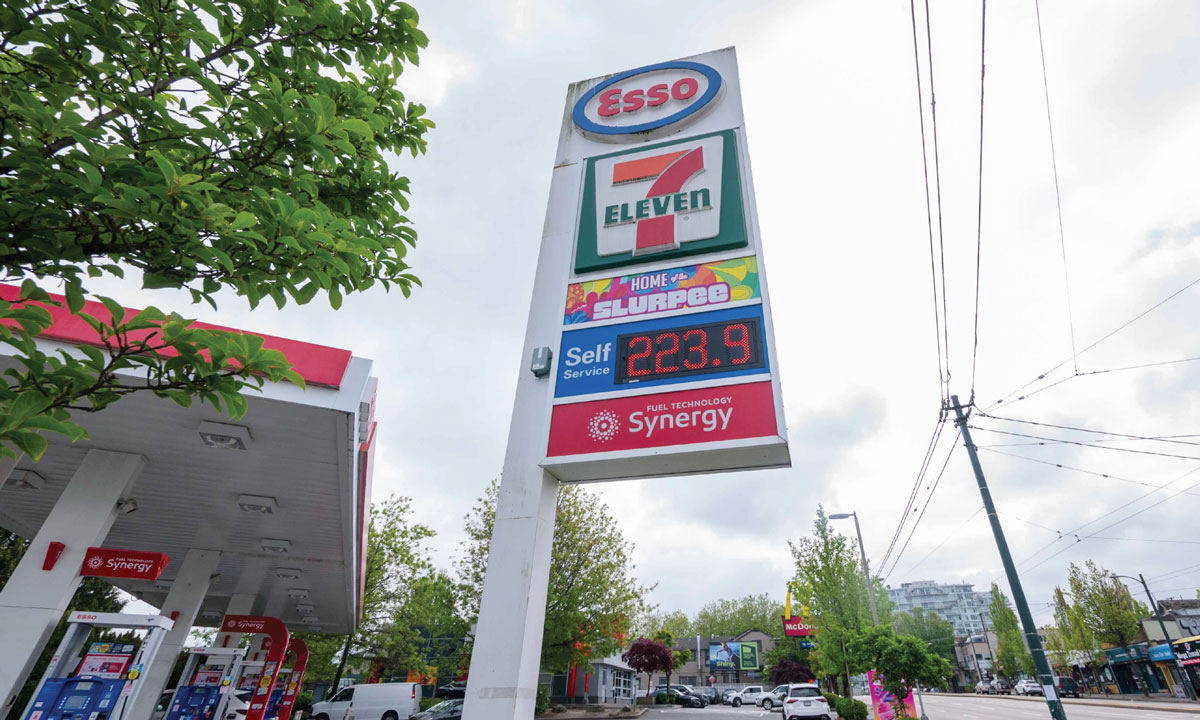
Drivers see it multiple times a day, posted in large numbers on station signs. Outside of financial markets, it may be the most visible economic indicator tied to global events, including the current conflict involving Iran.
Every cent-per-litre increase brings more hesitation and, ultimately, changes in buying behaviour.
When my friend finished fueling up, I asked whether the cost might make him reconsider his vehicle choice.
We quickly got into the math. For what he spends on fuel each month, he could likely lease a small economy car and still have money left over.
The next day, I filled up my own vehicle, a Mazda CX-5.
It’s reasonably efficient, but not a hybrid. And in my view, the fuel tank feels about 10 litres too small. Even with modest driving, I seem to be at the pump more often than expected.
As those visits became more expensive this spring, I did what many consumers are doing. I went online and started researching hybrid and EV alternatives.
The Toyota Prius Prime stood out. With incentives and the latest government rebate, the lease looked attractive. I texted a friend who runs a local Toyota dealership.
The answer was several months’ wait. The same applied to most Toyota hybrids.
Back to the drawing board.
Demand for more efficient vehicles moved quickly, yet incentives in the form of low rates and cash support were still in place. That combination created a rare window of opportunity for buyers and for dealers who were prepared.
I remembered another friend, a GM at a Subaru store, telling me late last year they were struggling to move Solterra inventory. When I visited him this time, the situation had flipped. They were now asking the manufacturer for more units as demand surged alongside fuel prices.
I saw the same pattern at Volkswagen with the ID.4 and at Ford with the Mach-E. Vehicles that had been slow-moving and heavily incentivized were suddenly in demand.
The speed of this shift is notable.
Demand for more efficient vehicles moved quickly, yet incentives in the form of low rates and cash support were still in place. That combination created a rare window of opportunity for buyers and for dealers who were prepared.
Dealers today have more tools than ever to respond to these shifts.
At the first sign of rising fuel prices, marketing teams can pivot quickly. Search campaigns can be adjusted to focus on fuel efficiency. Website content can highlight hybrid and EV inventory.
Sales teams can be refreshed on how to position total cost of ownership, not just purchase price.
Forward-thinking dealers may also look to acquire additional hybrid or EV inventory from stores that have not yet seen the same demand shift.
There is also an operational side to consider.
Rising fuel costs don’t just affect customers. They impact the dealership’s own expense structure.
Service loaner fleets become more costly to maintain. Parts delivery routes may need to be reviewed for efficiency. Policies around fueling vehicles for delivery may need to be reconsidered.
These are small decisions individually, but they add up quickly.
As always, the strength of the retail automotive sector lies in its adaptability.
Dealers who respond quickly can meet changing customer demand while also tightening their own operations.
The opportunity is twofold: serve the customer better and run a more efficient business in the process.
The best operators will do both.