
The 2026 CADA Summit opened Wednesday in Toronto with OEM Quick Takes, a rapid-fire series of interviews moderated by journalist Jason Stein, host of SiriusXM’s Cars & Culture. The session brought together Canadian OEM leaders to outline 2026 priorities, market demand, policy uncertainty and affordability.
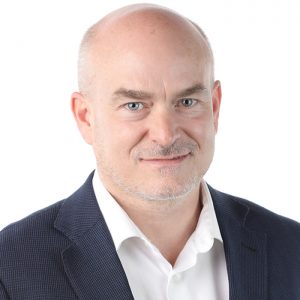
TD Auto Finance, the exclusive sponsor of the 2026 CADA Summit, also participated, with Maher Markabi, Vice-President of TD Auto Finance Canada, offering a lender’s perspective on performance trends and leading indicators.
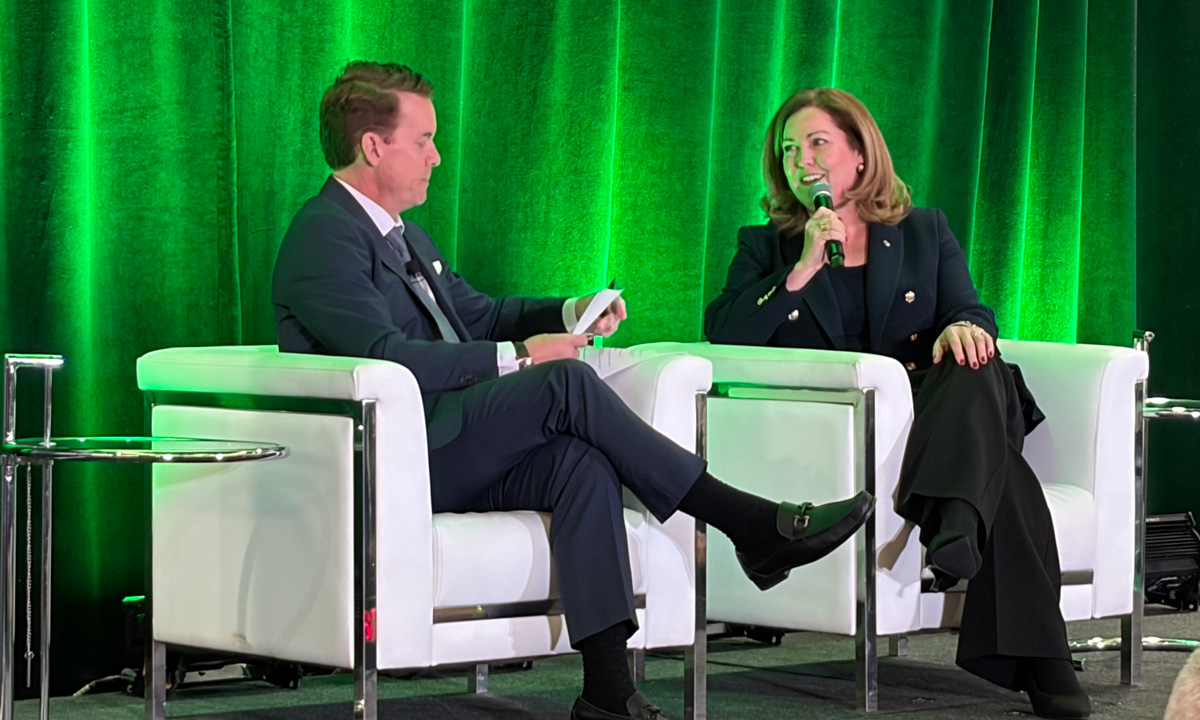
Amy Fleming, President and CEO of Mazda Canada
Mazda Canada: strong results, policy uncertainty
Amy Fleming, President and CEO of Mazda Canada, said she is just over 120 days into the role and described active planning with Mazda’s head office. “Plans are really in flux,” she said, pointing to ZEV regulations and “now double GHG regulations.”
Fleming said Mazda is coming off a strong year, finishing 2025 with its “third best sales year in our history,” alongside “record profitability for our retailers,” and growth “across all of our car lines, despite all the disruption.”
On consumer behaviour, Fleming said buyers are pushing through the noise. “Consumers are starting to get a little numb to the news,” she said. “If they’re in the market for a vehicle, they’re in the market for a vehicle.”
She also described Mazda’s ability to pivot during disruption tied to tariffs affecting a U.S.-built product, noting the vehicle represented “about 15 per cent of sales” and production was paused. Fleming said Mazda shifted production across other lines and credited both head office support and dealer execution.
On the federal government’s proposed credit-based approach, Fleming said key details remain unclear. “I still think TBD because we don’t know what that credit system will look like, what the cost of those credits are going to be,” she said.
On affordability, Fleming said Mazda is seeing lift across segments and pointed to certified pre-owned as an entry point. “Our CPO sales grew 20 per cent last year,” she said. She also said Mazda has focused on shorter trade cycles and “driving some shorter terms” where possible.

Steve Flamand, President and CEO of Hyundai Auto Canada
Hyundai Auto Canada: record pace and a focus on execution
Steve Flamand, President and CEO of Hyundai Auto Canada, said 2025 was an “all-time record,” adding, “every month was an all-time record.” Despite a slow January start due to weather, he said Hyundai still ended January with “an all-time record also.”
Flamand said uncertainty remains a major planning factor, citing trade, CUSMA and evolving programs and incentives. He said policy rollouts can leave unanswered questions. “Things are not thought through all the way when they’re rolled out,” he said, adding Hyundai expects “a bit of resurgence in terms of the EVs” tied to a new program and is working to align supply.
On agility, Flamand said the industry needs stability because pivots take time.
He said Hyundai’s preparedness hinges on execution dealers can control, especially customer experience and aftersales processes. He argued that strength in service and sales fundamentals can help mitigate disruption, including potential new entrants.
On affordability, Flamand said portfolio breadth matters, from entry-level through luxury, and said Hyundai is planning for affordability across the market as the industry transitions further into EVs.
Looking ahead, Flamand said Hyundai is aiming for continued growth and profitability. “We want to make it our sixth straight year of growth with an all-time record,” he said, adding a 2026 focus on “volume, but also profitability from both the dealer side and our side.”
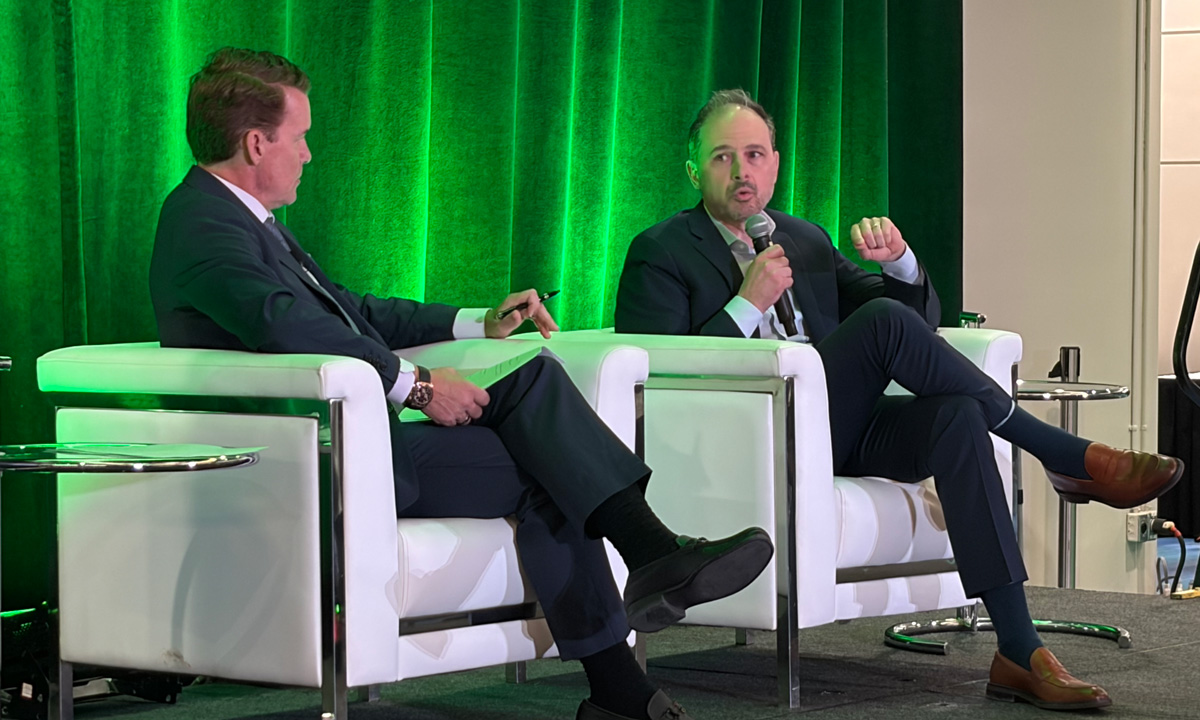
Steve Rhind, President of Nissan Canada
Nissan Canada: clarity, hybrids and a growth agenda
Steve Rhind, President of Nissan Canada, said the environment remains defined by uncertainty, particularly around trade and EV mandates, but said recent announcements offered “a bit of clarity” that helps decisions and aligns with Nissan’s plans.
Rhind highlighted near-term product cadence, including a plug-in hybrid launch in March and an “all-new Rogue” in the fall that will also be a hybrid. He said the lineup positions Nissan well “to take advantage of the situation.”
Rhind said Nissan’s dealer advisory board has emphasized throughput volume and growth. He said Nissan grew “about eight per cent last year” despite challenges, including a pause affecting U.S.-built products. He said Nissan worked to restart U.S. model production “even with the 25 per cent tariff,” with April production planned and a ramp-up thereafter.
On the proposed credit-based system, Rhind said he sees potential benefit if credit costs come in below tariffs. “The cost for the credit should be less than paying the full 25 per cent tariff,” he said, calling it “a real positive.”
Rhind said affordability remains central, noting lease uptake is increasing and customers are focused on payment. He also addressed dealer concerns tied to Nissan’s global financial headlines, saying a key priority is shifting perception. “No concern about Nissan. We’re going to be here long term,” he said.
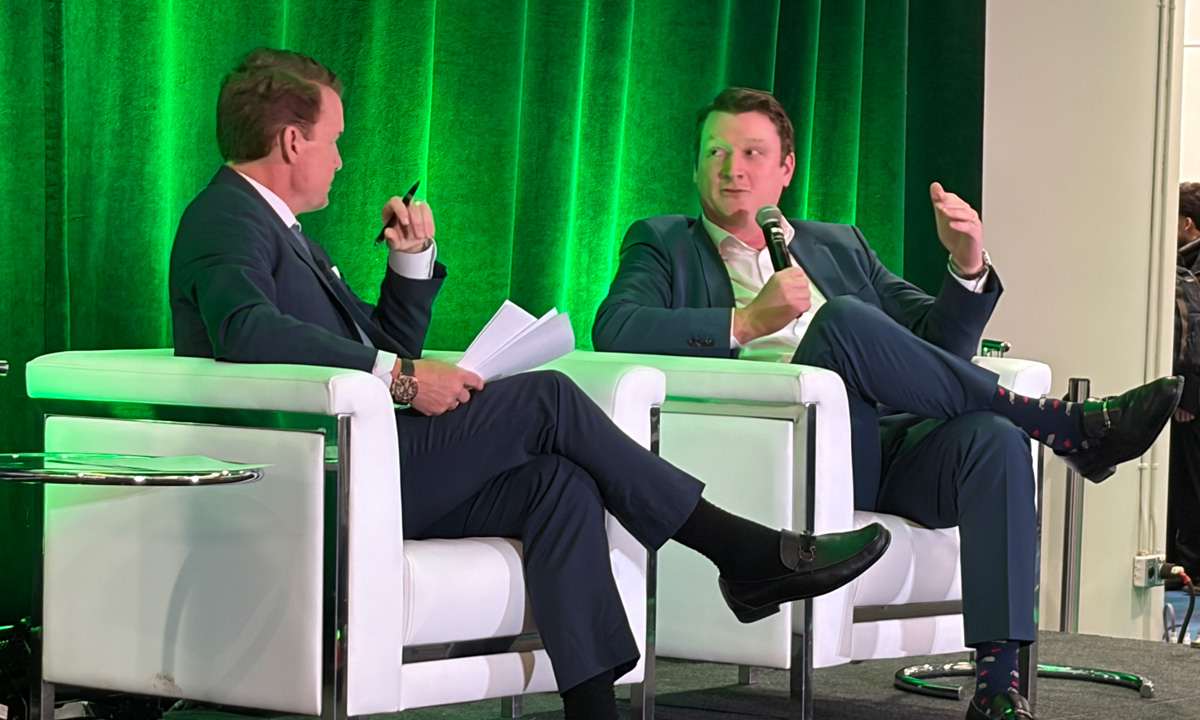
Trevor Longley, President of Stellantis Canada
Stellantis Canada: rebuilding with people, product and clarity
Trevor Longley, President of Stellantis Canada, said his early focus is “always about the people,” emphasizing that dealer relationships and organizational alignment are foundational to performance.
Longley said his first meeting in the role was with the dealer council in Edmonton, describing it as an important step in rebuilding partnership and progress tracking. He said Stellantis is adding headcount and “building ourselves back for a better performance for 2026.”
On product, Longley said affordability remains a dominant theme and noted Stellantis has been absent from key segments. He said Jeep Cherokee is returning, describing it as “back in the biggest segment in the country,” and said it will be “all hybrid.”
Longley called for regulatory clarity, particularly around GHG expectations, arguing manufacturers need long-term certainty to plan investments and product. He said Stellantis is focused on flexibility, including a range of powertrains, to respond to customer needs as policies evolve.
Longley also emphasized competing on value and experience. “You protect things by offering incredible customer value and incredible customer experience,” he said. He said Stellantis has seen momentum, noting “four months in a row” of market share growth, while adding there is more work to do.
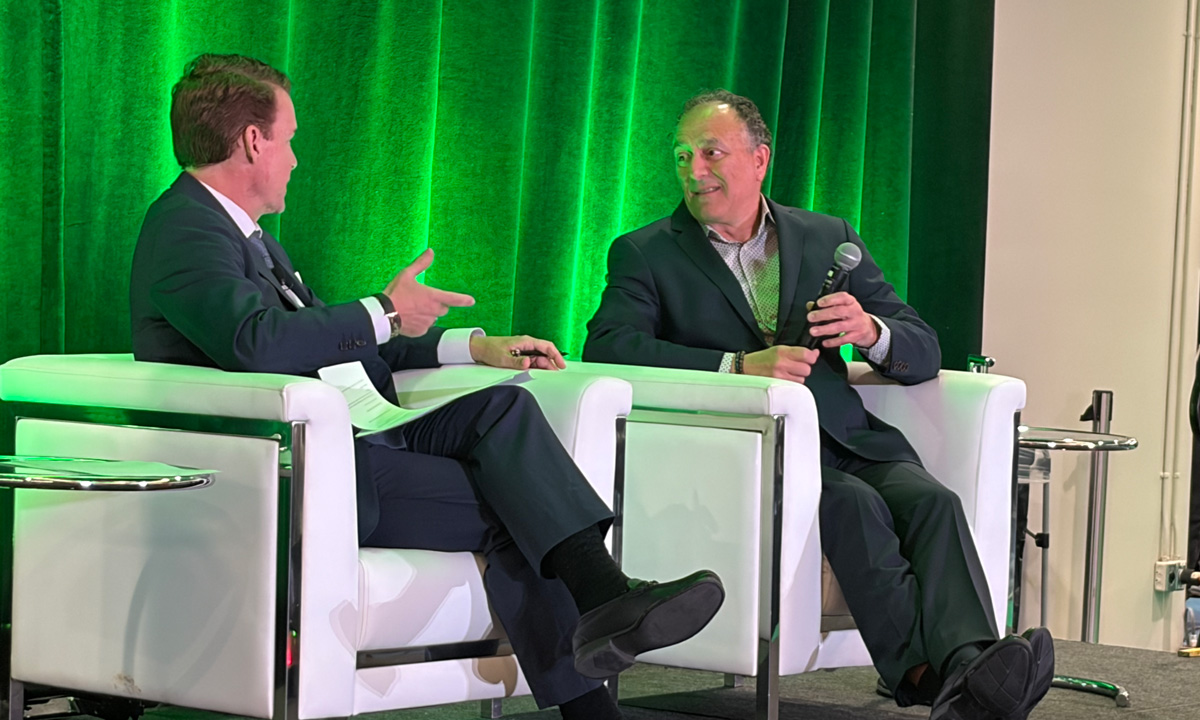
Cyril Dimitris, President and CEO of Toyota Canada
Toyota Canada: multi-pathway strategy and Canadian manufacturing
Cyril Dimitris, President and CEO of Toyota Canada, said Toyota had a strong 2025, with both divisions posting records and, for the first time, selling a “quarter million vehicles.”
Dimitris said consumers are becoming more educated on powertrains and are choosing based on lifestyle and price point, reinforcing Toyota’s approach. He said Toyota’s “multi-pathway approach” is built around customer choice and noted “50 per cent of what we sold last year was electrified.”
He also emphasized Toyota’s long runway in hybrid adoption. “It’s taking us 25 years really to get to the point where people are very, very comfortable with hybrid technology,” he said.
On policy, Dimitris said Toyota plans against multiple scenarios and welcomed the move toward greenhouse gas standards, saying it gives OEMs room to use multiple technologies while meeting demand. He added that standards should be achievable and applied fairly across the industry.
Dimitris also emphasized Toyota’s Canadian manufacturing commitment and recent investment. “We are building … today 45 per cent of the vehicles built in Canada. Most of those go to the U.S.,” he said, adding Toyota has invested in retooling to build the next-generation RAV4 and has “never laid off a worker.”
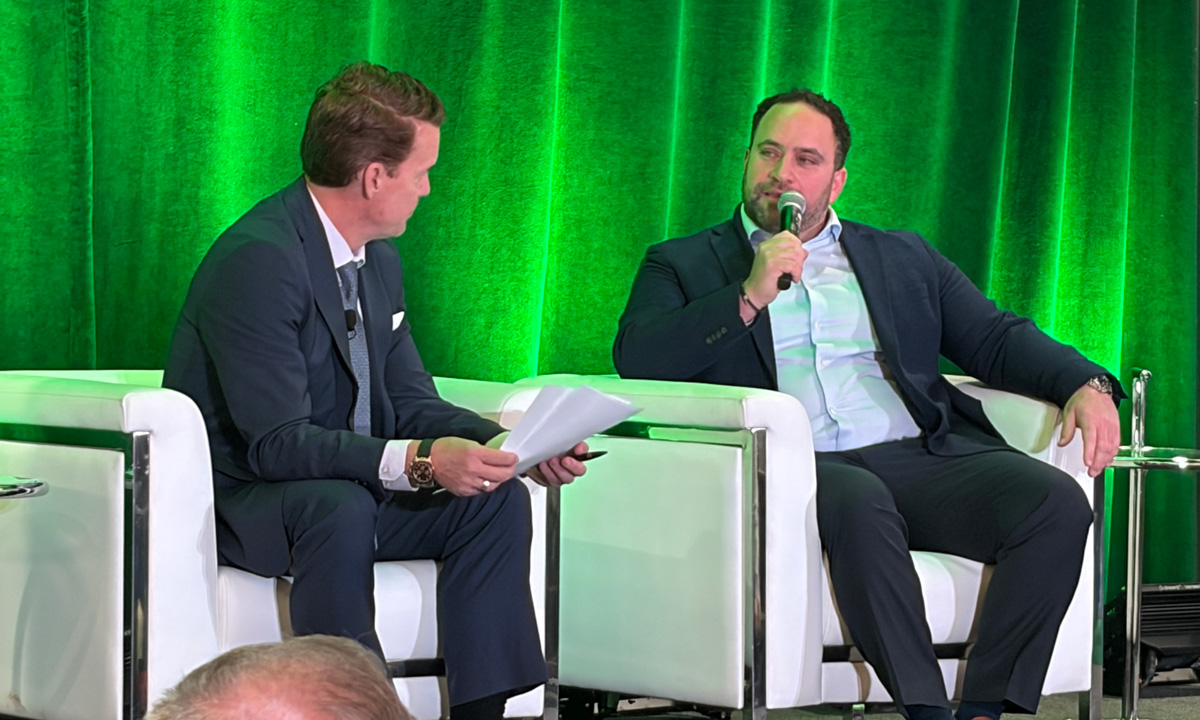
Maher Markabi, Vice-President of TD Auto Finance Canada
TD Auto Finance Canada: stable outlook, affordability pressures
Maher Markabi, Vice-President of TD Auto Finance Canada, said the market finished 2025 stronger than expected, with new vehicle sales reaching “two million units in Canada,” and used vehicles remaining “pretty resilient.” He said the EV market “took a big hit down 35 per cent year over year,” and noted gross profit per unit compressed, affecting profitability across the industry.
Markabi said TD Auto Finance saw “record originations on the retail side” and strong growth in commercial. Looking ahead, he said TD Economics is forecasting a similar year for new-vehicle sales, around two million units, but with headwinds tied to tariffs, a softer economic cycle and limited rate relief. He also pointed to federal immigration policy changes that could slow population growth and affect demand.
On indicators, Markabi said consumers are stretching terms. “We’re seeing more and more consumers go towards the longer term amortization, longer term loans,” he said, calling it “a potential concern for the long run.” He said delinquency rates have improved from 2023 and 2024 highs, but flagged that “over 90 day arrears” remain elevated.
On consolidation, Markabi said TD expects 2026 to be active for M&A and positioned the bank to support both acquisitions and exits, citing “strong liquidity” and “strong balance sheets” among many dealer groups.