
Three of auto retail’s most respected dealer principals shared personal lessons and practical insights at the CADA Summit, offering a grounded view of what leadership looks like in today’s environment of volatility and change.
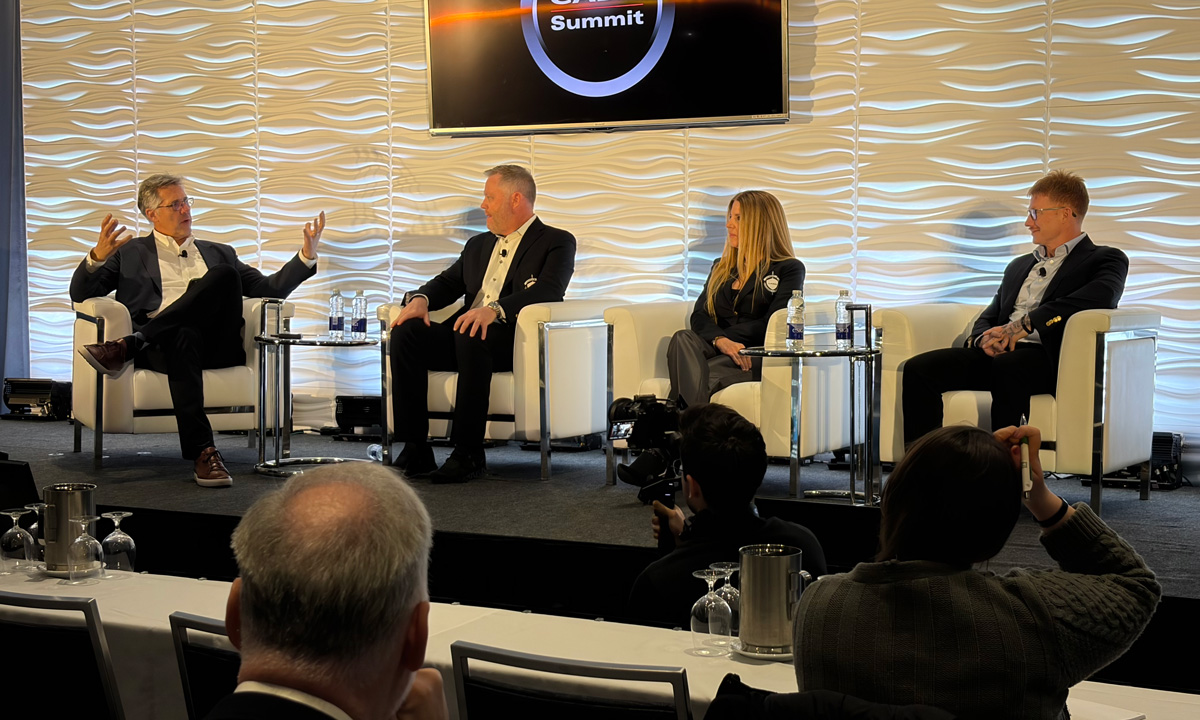
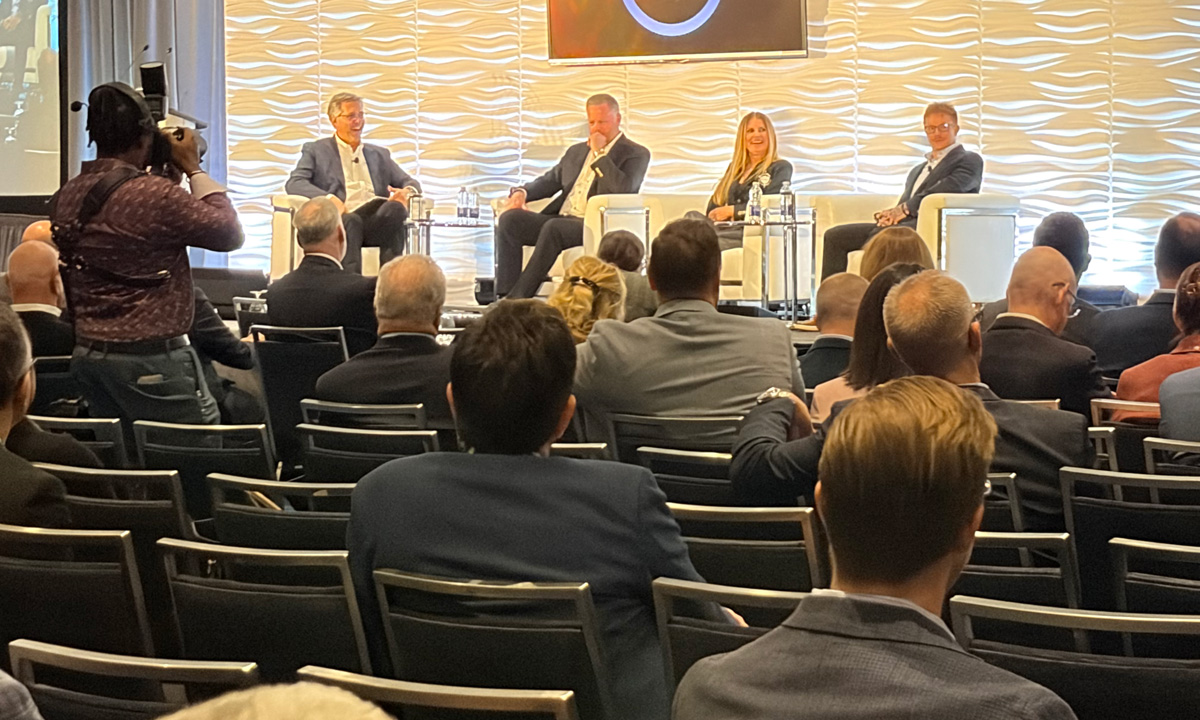
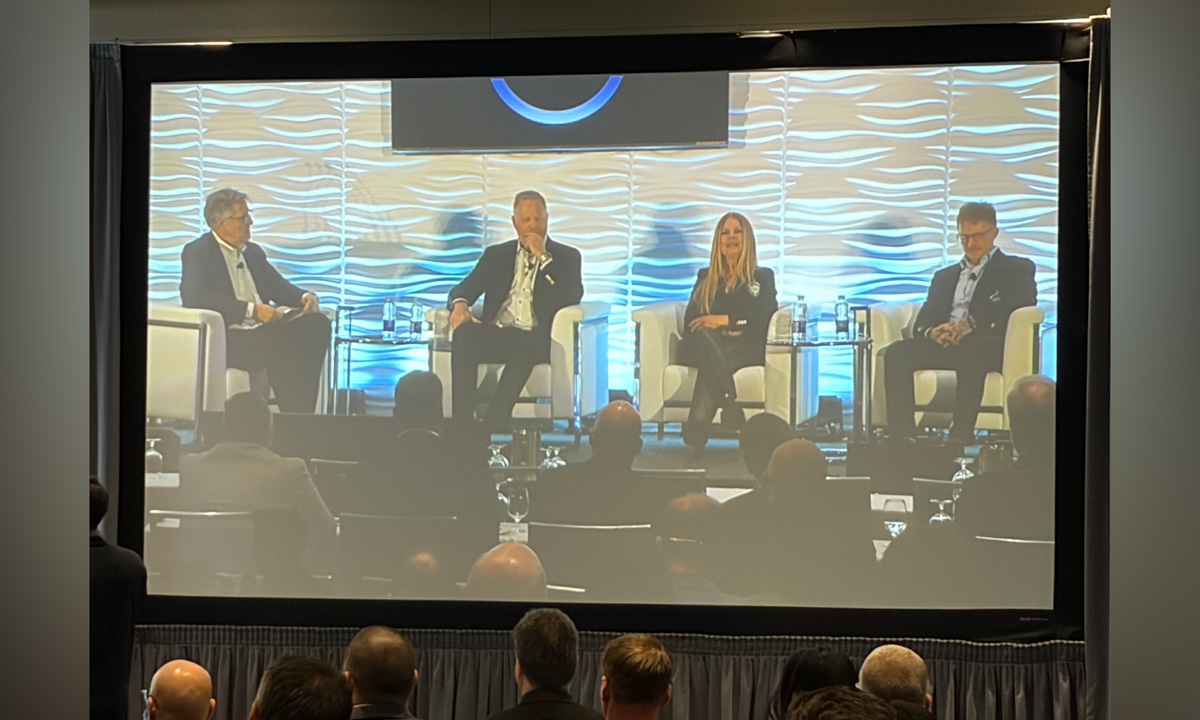
Interviewed by Canadian auto dealer publisher Niel Hiscox, 2025 CADA Laureates Brent Ravelle, Annie Laliberté and Michael Wyant discussed everything from OEM alignment and employee retention to facility economics and succession planning.
Laliberté said the day’s sessions underscored how quickly the industry’s language and expectations are evolving.
“What struck me today is the new vocabulary that I’m learning in the automotive industry,” she said. “I heard ‘pivot’ — I’ve never heard the word pivot so many times in my career. I heard sustainability. I heard clarification, resilience. This is a vocabulary that we have to get used to in this new era of our industry.”
For Laliberté, who has worked in both retail and OEM roles over a 37-year career, adaptation is part of the job. After spending a decade with Kia Canada helping build out its dealer network, she returned to retail with a deeper appreciation of the challenges on both sides of the franchise relationship.
“It’s a tough job,” she said of OEM leadership. “And I’m really, really happy that I have this experience because when I talk to them… I understand now what they’re going through.”
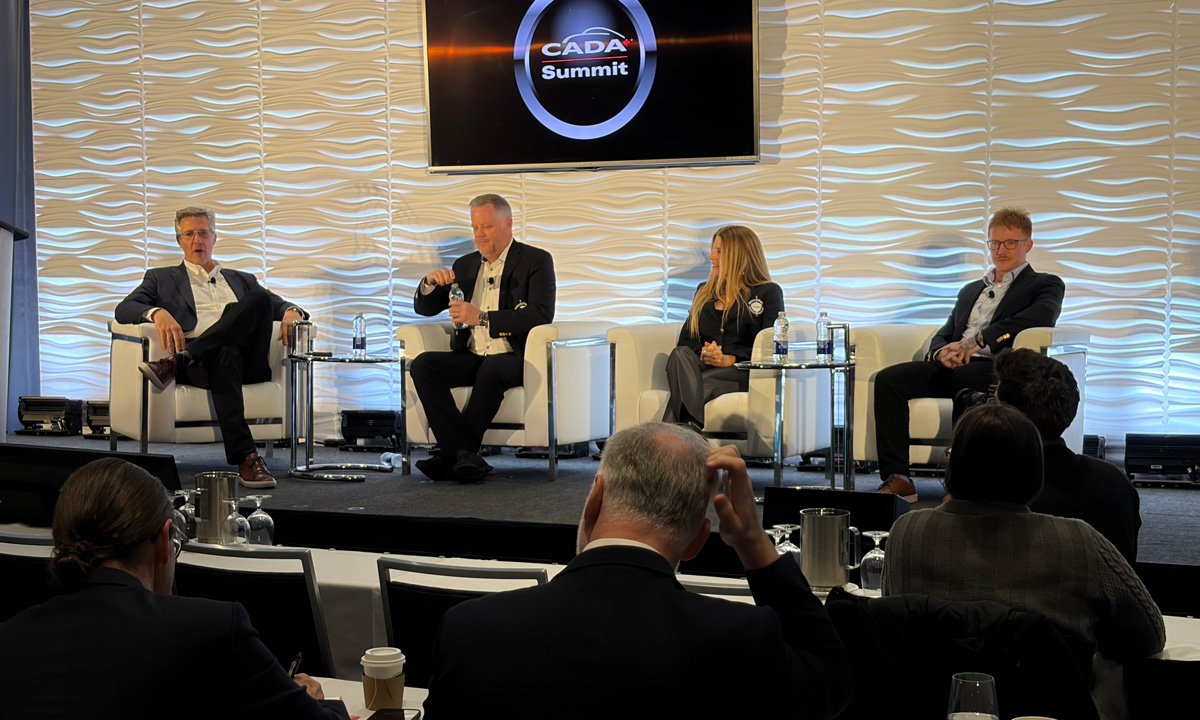
The panel repeatedly returned to the theme of communication between manufacturers and dealers.
Wyant said the most successful OEM–dealer relationships are built on transparency and two-way dialogue.
“Having a transparent, honest, open relationship with the dealers is what really brings success,” said Wyant. “If you’ve ever served on a council or committee with an OEM that truly listens to its dealers, you understand the value in that process. We are aligned in our goals. We want to sell more cars. They want to deliver more cars.”
Ravelle agreed, arguing that clarity at the OEM level directly affects dealership leadership and morale.
“When there’s division, where you’re not understanding anybody’s plan, we don’t know what our plan is,” he said. “It reflects within your own staff because your leadership is hindered from the communications.”
He added that strong leadership at the manufacturer level can quickly change performance trajectories. “You look at leaders that have come and gone and OEMs that have been in a pretty bad place become top of the charts and fall back down again. We need to continue to work together.”
Asked what it means to be a CADA Laureate in a period of rapid change, Laliberté framed leadership as intentional and human-centred.
“Leadership, it’s a choice. We chose to be leaders,” she said. “There’s a lot of good things and there’s a lot of stress. What I like about it, though, is that it’s all about the people.”
She emphasized the fundamentals: satisfying customers, retaining employees and maintaining close ties with OEM partners.
“Stay close to customers, stay close to employees, stay close to OEM,” she said. “When I’m close to those three groups, this is when everything goes well.”
Ravelle described his own evolution from directive leadership to a more participatory approach.
“You really need the input from everybody around you to be successful,” he said. “It goes back to clarity and where we’re going. It’s not a difficult thing. We have products, we have consumers that need that product, and in between we need to follow it up with our own culture.”
Wyant, a second-generation dealer whose father, Vaughn, is also a CADA Laureate award winner, said earning trust remains foundational, especially when introducing change.
“They’re not going to do anything until you earn their trust,” he said, recalling lessons from trying to implement early CRM systems. “Go help them be successful before you start trying to change their environment.”
In today’s environment of “constant kind of chaos,” from supply-chain disruptions to inflationary pressures, he said leaders must filter noise and focus on what they can control.
“We’ve got to show up for them every single day,” he said of dealership teams. “Block out the noise that we have no control over and give them the tools and resources to be successful.”
While consumer demand has proven resilient, Wyant raised concerns about structural pressures on the retail model.
“Everything is getting more expensive,” he said. “Affordability is a concern for our customers… the fixed expense to build and renovate facilities continues to go up and yet margins keep getting compressed.”
In some metro markets, he suggested, “it doesn’t pencil anymore” to build new facilities under traditional image programs.
Ravelle questioned whether the industry could rethink single-brand, single-site footprints.
“Real estate is far too expensive today to continue to do what we’re doing in the future and expect us to keep our margins,” he said, pointing to potential economies of scale through shared facilities.
Still, both acknowledged that despite the rise of digital tools, the physical dealership remains central.
“Customers are not fundamentally buying their cars online,” said Wyant.. “They use digital tools and they still end up in store.”
Beyond operations, all three Laureates stressed community engagement as a defining responsibility.
In her smaller market, Laliberté said giving time can be as important as giving money. “We are very, very lucky,” she said. “Aside from our customers, aside from the community, our vendors, our families… whenever we get involved in something that has to do with people in need, the community is very giving.”
Ravelle called community involvement an obligation. “We better be present. We better be carrying that story,” he said of operating in a town of 7,000 people. “It’s the right thing to do.”
Wyant said in a larger dealer group, engagement often scales through employees. “We really rely on our staff,” he said. “Because the culture is such that we support that, they love to engage.”
For Laliberté, the biggest concern is human resources — ensuring employees feel supported in an era of heightened transparency and mobility.
“I always worry that it’s not enough,” she said. “Now we know everything that’s going on… I’m always worried that something’s better somewhere.”
Ravelle pointed to missed opportunities as his recurring thought. “For some reason, I can’t stop thinking about opportunities,” he said.
Wyant’s focus is structural risk. “What does the future look like in our industry when it comes to the investments we need to make?” he asked, noting that costs are unlikely to decline.
When asked for the single most important lesson of their careers, the panel circled back to relationships and legacy.
“Every interaction you have with a person is important,” said Wyant. “The one thing that legacy leaves is your reputation. How did you treat people along the way? … If you look back on how you did it and can be proud of it, the result’s probably going to be something you can accept and be proud of.”
Ravelle echoed that sentiment, tying legacy to succession. “When I’m done… I want to be able to give people an opportunity that somebody gave me one day,” he said. “That’s a legacy in that community.”
iA Dealer Services is the exclusive sponsor of the CADA Laureate award program.
TD Auto Finance is the exclusive sponsor of the CADA Summit.