Image factory programs evolve, but sticking points remain
Auto makers are forever adjusting their factory image programs to address evolving trends, with the latest inspirations coming from electric vehicles, digital retailing, and the eternal quest for a better customer experience.
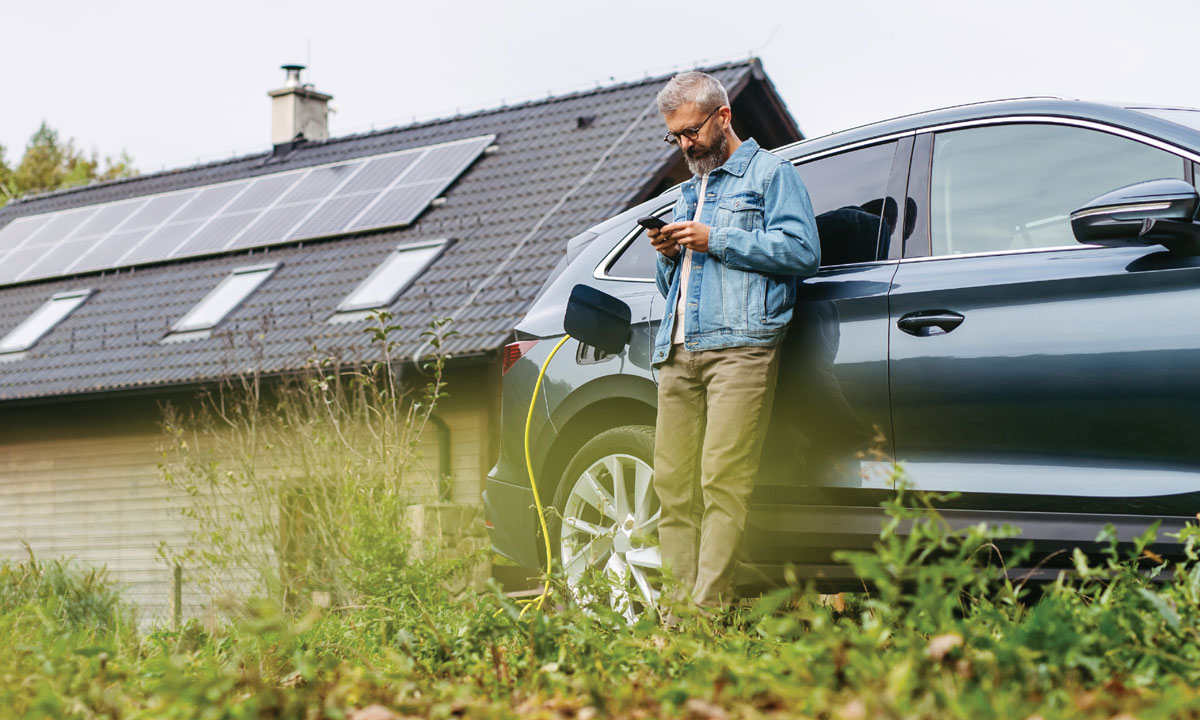
Where EVs are concerned, indications of this big push by the OEMs are visible on the front- and back-end of the dealership through the addition of chargers, new tools and equipment, new fixtures, and the furniture that supports this shift.
The biggest challenge is not so much on the expansion of bays and even equipment specs, because dealers can “calculate pretty clearly how fast you can fill the service bay,” said independent automotive researcher Glenn Mercer.
It’s also not like the OEM is saying: “‘Make it grey versus blue’ or something,’” he told Canadian auto dealer. “It’s very straightforward. If you have a growing number of EVs on the road in your area, you need to calculate how many service bays and how much equipment you will need to serve them.”
There are a variety of additional costs involved in servicing EVs, from needing special fire-suppression equipment (regular sprinklers may not do the job for EV fires), to requiring a stronger lift because the vehicles are heavier. Or if the technician pulls a battery out of the vehicle, they will need a separate battery storage facility.
“You spend more money, but in theory you get it back through the repairs and maintenance,” said Mercer. “And even if EVs over time may require less service work, a dealer should see higher retention: as one Nissan dealer told me: ‘I don’t make a lot of money on each Leaf, but I get 100 per cent of the Leafs in the area, since independent garages are not yet up to speed on EVs.”
He said the EV impact on service bays remains unclear at this point: “How fast investment in EV service pays off is probably a matter of how long this current plateau in EV demand lasts.”
Mercer is the author of a February 2013 NADA-CADA research project that looked at the implications of facility investments, mainly through factory image programs. Here’s how he said the report’s findings could be boiled down: a) expansion had a higher probability to pay off, b) modernization occasionally did, and c) standardization never did. The findings are also applicable today.
“I would repeat the findings from (over) a decade ago, which would be that, when it comes to image programs, get the calculator out and work it out with the OEM, in terms of service space. And be especially sharp penciled with electric service space, because they cost so much more,” said Mercer. “But it will be pretty easy to agree. And when it comes to modernization, it’s table stakes. You’re going to have to do it.”
As for standardization, he recommends pushing back on OEM demands and asking for good, hard business cases from the factory — asking for the numerical case as to why the dealer will sell more cars, sell them at a higher price, or make more money as a result of this kind of standardization.
“We are still very highly skeptical of the value of standardization,” said Mercer. He said he ran into dealers in certain rural areas in the United States who said they lost revenue when they fixed up the store. “As frugal rural buyers said, ‘I’m not paying you to put money into shiny chrome and glass for the store.’”
The customer experience
Marcelo Andrade, Director of Design Studio at WEIS and Associates, offered an OEM perspective on how factory image programs have shifted and why dealer buy-in is so important.
“These OEM programs are going more towards a hospitality boutique experience than in the more traditional sense that we’re used to,” he said, noting that the investment from dealers is “really not on the finishes on the wall, but everything: it’s the logo, it’s how the brand sees itself, and it is a partnership.”
“I know it comes down to dollars and cents, and at the end of the day a $5,000 chair is not going to make you sell more cars than maybe a $2,000 chair. But it’s the whole combination of factors and that’s how the brand sees its success,” he added.
Andrade oversees OEM implementation programs from clients that they manage at WEIS and Associates, and the implementation of different sorts of retail practices in automotive. Everything he does is based on the design master plans for different OEM implementations of how those programs would look like in Canada.
“Some of the German brands, for instance, they’re kind of moving away from that more traditional process and going with something that they see (as having) more flexibility — changing the customer journey, but also the way that the dealer interacts with the customer,” he said.
For example, the customer can be taken anywhere in the dealership with a tablet, or another type of hand-held device, which allows the salesperson to start their consultation in a way that is perceived as more casual. According to Andrade, that approach changes what the furniture and the feel of the dealership will look like.
“There is no longer a sea of desks in the showroom, where everyone’s working like you’re in the middle of an office anymore,” he said.
He said it becomes more of an open environment, where the OEM wants to make the customer feel like they can navigate through the dealership more seamlessly. All the back-of-house components are still there; it is the front-of-house components and the pieces that the customer will interact with.
“The strength of the brand is really what you’re investing on here. Without consistency and without a strong brand, the product suffers,” he said. “The dealer needs to believe in the brand for the brand to be successful. Without the buy-in from the dealers, neither will be successful.”
Digital retailing: who gets the data?
When it comes to digital retailing, the conversation often centres around data — particularly in Quebec. The province’s Law 25 means that websites, including those of dealers and OEMs, must obtain user consent before using data tracking technologies like cookies.
“Dealers invest a lot to drive customers to their website, where they want to have leads,” said Dominic Sigouin, President and CEO of Quebec-based Noahvik Consultants. If they follow the law in Quebec, dealers can acquire the data upon a user’s consent. The problem, according to Sigouin, is that not everyone follows the rules.
As part of Law 25, companies need to receive user opt-in to allow things like cookies on their devices, similar to the European Union’s General Data Protection Regulation. The law aims to ensure transparency around data collection and how it is used, providing a higher level of user rights around their information.
“If you go to a dealer’s website that respects the law, you will have the cookie button: the pop-up that is well and legally set up. You will have the ‘accept’ and ‘reject’ button, same color, same size,” said Sigouin. “In one click you can reject or accept all the cookies. And by default everything is turned off. That’s the law.”
He said a consumer can visit a dealership website that offers them transparency and respect, and the user can decline the cookies and tracking. But while browsing the site, they might click on the vehicles or the build and price, for example, and end up in the digital retail ecosystem of the OEM.
Sigouin said that some OEMs only offer one option for consumers to click on: “accept.” Or there is no option. When the manufacturer does this, it allows them to track information and collect data in this way, while the dealer is not able to because the user declined their tracking option.
“For you as a dealer, you lose that investment from the customer that you tried to bring to your website. You lose all the information that (the OEM) will collect — all the data they will track,” said Sigouin, adding that dealers have to “pay to ‘lease their website monthly’” and add things like a chatbot and other applications.
“They put in hundreds of thousands of dollars, because it’s an obligation a lot of the time, and everything that is done (ends up driving the traffic back to OEM),” he said, noting that there is “too much pressure to just keep rolling.”
“No one seems to be taking the time to build a new process,” he said. “It’s always running, running, running.”