 Does Quebec have the worst roads in the country? According to a study by the Canadian Automobile Association (CAA), Quebecers are paying significantly for poor roads, to the tune of nearly $1.4 billion per year.
“Canada’s roads are vital for commuters and businesses and to connect communities,” said Ian Jack, CAA’s Vice President of Public Affairs. “This study shows for the first time the hidden cost to drivers of below-average roads. And it demonstrates that governments would save money in the long run if they brought roads up to — not perfection — but a good standard.”
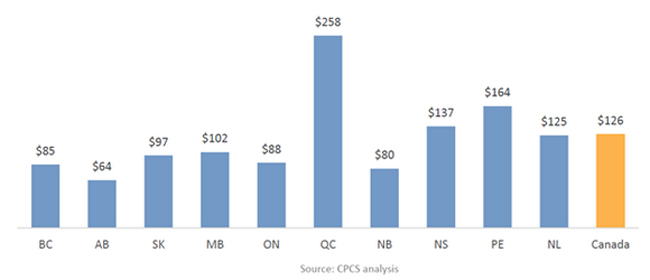
The average vehicle travels 16,685 kilometres per year in the province and costs an additional $258 for drivers to maintain, thanks to Quebec’s poor quality roads — which is more than double the Canadian average of $126.
In a news release, CAA said poor quality roads directly contribute to premature tire wear, increased fuel consumption, and additional expenses for repairs and maintenance. The damage caused by poor road conditions also has an impact on the resale value of vehicles, as it tends to lower it.
“What’s worse, we’re only talking about the unpredictable costs on top of what drivers in the province already pay each year,” said Sophie Gagnon, CAA-Quebec’s Vice President, Public Affairs and Road Safety. “And since the average age of passenger vehicles and light trucks in Quebec is about eight years, we’re talking about over $2,000 per vehicle!”
She said the cost is significantly higher for Quebecers, and that poor-quality roads also affect ride quality, comfort, and the safety of everyone on the road — pedestrians, cyclists, drivers and motorcyclists.
CAA reviewed approximately 113,000 kilometres of Quebec’s roads and found that 12 per cent were rated as being in very poor condition, 17 per cent in poor condition, and 22 per cent in fair condition. Fifty-one per cent of the roads in the province failed to get a passing grade. “The distribution is similar for Quebec’s highways and non-highway road network,” said CAA.
“Whether Quebecers are driving on a country road or a highway, they shouldn’t have to worry about encountering a sudden hazard or their vehicle suffering premature wear and tear that they then have to pay for out of pocket every year,” said Gagnon. “Today we’re putting a number on the direct cost for drivers for the first time, but we’ve been advocating for a quality road network for all users for a long time.”
CAA said previous reports from the Canadian Infrastructure Report Card estimate the total replacement cost of Canada’s “fair, poor, and very poor” roads to be $125 billion. However, the associations said there are things that can be done more quickly to improve the situation and reduce the financial burden on governments, municipalities, and drivers:
- pavement preservation and preventive maintenance;
- a rapid response from governments to fill potholes and other major surface deformations;
- strategic prioritization that involves investing in targeted and preventive repairs to high-volume and strategically important roads; and
- notify Worst Roads 2021 — which is an online reporting tool from CAA-Quebec.
As for the rest of the country, CAA’s study indicates that 43 per cent of roads are not in good condition and that the average Canadian driver pays an additional $126 per year due to poor road conditions. Altogether, it adds up to $3 billion in repairs, maintenance, and other related expenses. And Quebec accounts for almost half of that amount.
More details about the study can be found here.