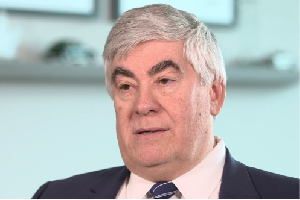
Canadian auto dealer interviewed Chuck Seguin, President of Seguin Advisory Services, and the author of the CADA report on the future of auto retail. Seguin talks about where he gathered his insights, his key findings, and shares his opinion on the future for dealers. This is an edited version of that interview.
Canadian auto dealer: What was the scope of your research?
Chuck Seguin: What CADA asked me to do was really to talk about the future of auto retailing, going out to about 2030. I’m very fortunate that they really placed no restrictions on what I could do. They wanted a clean, open, and honest interpretation of what the views are out in the marketplace, and what would be of importance to dealers. So, I was fortunate enough to do that. A huge amount of research went into this. A lot of personal interviews talking with dealers, talking with associations, students — a lot of different people. I got really good on-the-ground information there. CADA also sent a survey to every dealer in Canada, and we got really good information and a great response rate from that. That was supplemented by months of in-depth research and attending conferences.
CAD: What were you hearing?
Seguin: The basic premise that I started with was that this is a global issue, not just a Canadian issue. I started looking beyond our borders. There was an awful lot of chatter, a lot of reports, from one end of the field to the other. Some were saying that retailing was going to change, others were saying retailing is going to stay the same. So there was really quite a broad range of information that was out there, and what I tried to do was to gain a solid insight or a solid feeling of what would be possible in Canada.
CAD: What were your main findings?
Seguin: What I fell upon, was that there were really three critical areas that are going to affect auto retailing in Canada in the future: one is what the automakers will do. That’s a big one. All dealers are franchises, and whatever their automakers do, they basically have to follow those rules. The second is about what general retailing is doing. What is happening to the consumer, what’s shaping the consumer’s mind, and what are they experiencing every day? Lastly, what’s the finance community doing? Because that impacts the way consumers transact money. Those three things really have an impact on auto retailing. As those three areas change dramatically, then dealerships have no other option but to change; they have to follow suit. So that’s where influences are going to come from, and then that led me in certain directions.
CAD: Those three forces of change are areas dealers don’t have a lot of control over.
Seguin: Car dealerships are franchises. As a franchise, by definition, you really can’t veer too far from the road that’s carved for you. This love-hate relationship that has gone on over the years, really has to become one of: “We’re all after the same thing, let’s work together to accomplish it.” The automakers are developing the brand, they’re creating the vehicles, and doing the design. But the customer touchpoints, the customer interaction really is still happening at the dealership level. It’s important that they are all on the same page, so that they can deliver this omnichannel experience. When you look around, the automotive industry’s very broad and new car dealers have generally been very narrow in their focus. I think the real opportunity is broadening that out and really taking advantage as entrepreneurs, not necessarily as franchisees, but as entrepreneurs with what opportunities are in your local market.
CAD: So what should car dealers be doing to adapt and change?
Seguin: Well, it’s important that dealers not only work in their business, but they work on their business. They need to sit back on a regular basis and think about what could be, what’s going to happen, what’s my market going to do? Where’s my bank going, where are my employees going, how are they changing? All of that has to be reviewed on a regular basis, and the opportunities, I believe, are there for those that want to expand and take a broader role in the automotive ecosystem in their local markets. Not everybody’s going to want to do that. But for those that do, there’s going to be a tremendous opportunity.
CAD: When is the change coming, and what specifically can we expect to see?
Seguin: Everything is not going to change overnight. It’s not going to be one big step and you are going to wake up the next morning and there are going to be all new rules. It’s going to be a series of small steps that take place over time. Things like connectivity. The connected car is going to lead to the connected dealership. The dealership has the opportunity to be the conduit for all of that. Dealerships can connect with cars, that can connect with smart cities. Also, in areas like data, historically, dealers have not managed their own data. They’ve had a third-party DMS, they’ve had a third-party CRM, and a number of different things that they have not controlled. I think there’s going to have to be some sort of vision as to how can they play with their own data in their own market so that they can take advantage of that and perhaps monetize that data.
CAD: While you sound optimistic, do you still see turbulence ahead?
Seguin: Yes, the next ten years are going to be pretty messy. There’s not going to be a clear-cut vision. OEMs are definitely going to experiment. We’re starting to see that now, and that’s only going to increase as they try to capture more of that auto retail market and the consumer. They are interested in creating customers that are loyal to their brands. Some of the stuff that’s happening now is maybe direct-to-consumer, subscription services, things like that. Those will evolve over time. Some of them will be effective and some of them won’t. A lot of the experiments will not work. It’s going to be difficult for dealers who have to really follow the brand mandate. It’s going to be a little bit difficult and a little bit messy. And that’s why dealers really do have to work together closely with their brands to make sure they minimize the failures and really take advantage of the potential in those experiments and those opportunities.